I don't know whether I was attentive enough, but in fact I could not find in the works of Taras Hryhorovych Shevchenko a single mention of Russia's people as Russians…
I don't know whether I was attentive enough, but in fact I could not find in the works of Taras Hryhorovych Shevchenko a single mention of Russia's people as Russians.
Muscovites.
Everywhere, always, steadfastly and unbendingly, Taras Hryhorovych wrote only about Muscovites, about the Muscovite nation, about katsaps.
I read his "Dream", this manifesto accusing the Muscovite autocracy, a harsh text, repulsive to any nomenklatura scribbler, this verdict.
I understand why they hated him so, why they disliked him, why they did not understand him.
Why the flunkeys and lackeys of those times and of ours could not accept him, however hard they tried.
You know, when people compare two great poets, of Ukraine and of Muscovy, Shevchenko and Pushkin, I see no reason or criterion by which one could unite them or compare them.
Yes, Pushkin is a great poet, but it seems to me that his main merit lies, in large part, precisely in having made the mixture of Church Slavonic and Ukrainian, known to us today as Russian, artistic and literary.
Shevchenko did not make Ukrainian literary or artistic; it was so before him and remained so after him.
A great many educated Ukrainians had labored before him to make the Ukrainian language cultured, literary, artistic.
Shevchenko's merit lies elsewhere: he became the voice of the country, the voice of Ukraine.
He found the strength in himself not to become a nomenklatura yes-man of the regime, not to become a lackey, a slave of power, its devoted servant, at a time when no one but him acted otherwise.
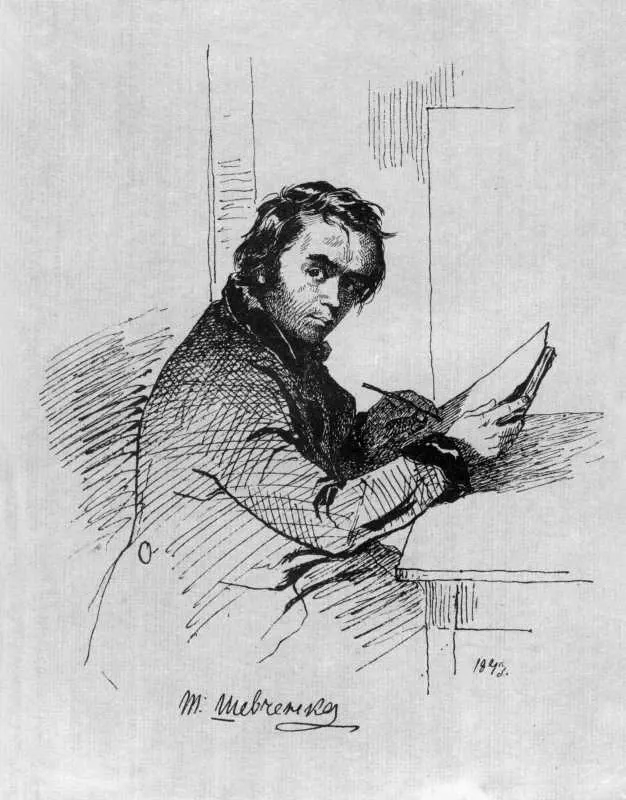
I always laugh: how easily, and without much help, a man can fall, sell himself, become the sovereign's jester, a faithful servant, a slave.
It seems to me he does it even without much coercion, without torture and without pain.
Why?
Because he adapts, changes shape, survives, shows unseen flexibility, for the sake of life, for the sake of honors, for the sake of a title.
That is exactly why, when speaking of whom I would compare Shevchenko with, I would compare him with Yanovsky.
One Land gave them to the world, one country.
In their veins flows the blood of the special Ukrainian people, free, of Cossack stock.
They are contemporaries, they are writers, they are, however much some might wish otherwise, Ukrainians!
Only one is a fierce supporter of the regime, a man who found it in himself to betray for the sake of fame, recognition, money.
To betray both his language (and Yanovsky could not have become a popular Muscovite writer had he written in Ukrainian), and his faith, and to renounce his nation and the truth; an excellent example of which is the revisions to his great, many-sided work Taras Bulba:
"When Bulba came round a little from his blow and looked at the Dniester, he saw his Cossacks below, getting into the boats. His eyes flashed with joy. A hail of bullets poured down on the Cossacks from above, but they paid no attention and pushed off from the banks. 'Farewell, gentlemen-brothers, comrades!' he called to them from above. 'Remember me now and then! And do not trouble yourselves about my fate! I know my fate: I know that they will tear me apart alive, piece by piece, and that they will not leave a scrap of my body on the earth, but that is my own affair... Be well, gentlemen-brothers, comrades! And mind you come again next summer, and make merry, properly!'"
He wrote that, and then corrected his own text:
"When Taras Bulba came round from the blow and looked at the Dniester, the Cossacks were already in their boats and pulling at the oars; bullets poured down on them from above, but did not reach them. And the old ataman's eyes flared with joy: 'Farewell, comrades!' he cried to them from above. 'Remember me, and come back here again next spring and make merry properly! What, got it, you devilish Poles? Do you think there is anything in the world a Cossack would fear? Wait, the time will come, the time will come when you will learn what the Orthodox Russian faith is! Already now the peoples far and near sense it: a czar of their own is rising from the Russian land, and there will be no power in the world that will not submit to him!'"
As we can see, in the first version of Taras Bulba there is no talk of a Russian czar, and not a word about the Poles either!
What made Gogol rewrite the ending, to strengthen it ideologically?
The Polish historian Janusz Tazbir writes: "In Gogol, Russian national self-consciousness always struggled with the Ukrainian one!"
The Pole is lying, deceiving: it did not struggle and did not fight, because Gogol-Yanovsky sold Ukraine, traded it for a comfortable life, renounced his homeland, his nation, and he wrote under a funny pseudonym not because he was in a merry mood.
But because he wanted to be a Ukrainian, imagined himself one, but could not, could not, and Yanovsky became a KHOKHOL!
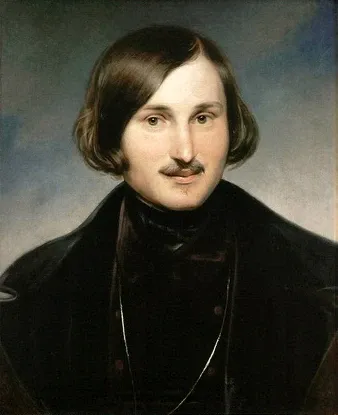
HOHOL is how his surname is written in Latin letters, and not at all GOGOL as modern translator-linguists write it.
He called himself a khokhol, whether as a joke, as a punishment, or as an example.
Was he ashamed that he had not become a Ukrainian but became a khokhol?
I think so; that is why his conscience devoured him, why he could not find a place for himself, could not calm down, because he was strangling the Ukrainian within himself, and the Ukrainian spirit was stronger than he was, than his wish to be a khokhol, to be a serf, even a rich and recognized one.
There is a well-known saying of Vynnychenko: "Where the Ukrainian question begins, the Russian democrat disappears"...
No one has ever asked why that is.
The reason lies in character, in history, in the truth that Russians know.
The truth they disown, and for which they hate Ukraine so ferociously.
Reading the hate posts of Muscovites about Ukrainians, I somehow keep stumbling over the thought that the reason for the hatred toward us is that we are the original, real Russians.
We, not they, are no forgery!
A pitiful, cheap, inferior forgery, and therefore ostentatiously proud of having occupied, trampled and tormented its, if not historical, then certainly cultural ancestral homeland, mother Ukraine!
That Russia is a forgery of Rus', of Ukraine, of our culture, of our traditions, of our history, has long been known, but this truth was known to few, one might even say to the chosen.
To chosen fabulists, falsifiers, haters. They knew the truth, and for that they hated us even more...
And this hatred was, is and will be impotent, inescapable, ancient and senseless, because it is based not on contempt, not on feeling, but on fear: the fear of exposure, the exposure of a crime unparalleled in its baseness.
I repeat: before, only a handful knew the truth; now many Russians know it. And so it sits like a splinter at the level of their national consciousness, their national pride, and they can neither remove nor defeat it, just as neither the Mongols nor the Tatars, nor their own Muscovite ancestors, could do before them.
It is hard, practically impossible, to grasp that if not by blood, then by religion and culture, the great-great-grandfathers of Russians were precisely Ukrainians. And precisely for that, their history was stolen from them: not rewritten, not copied, but seized, expropriated. As was the name of the people, the foundation of the so-called "Russian world, the Russian nation"!
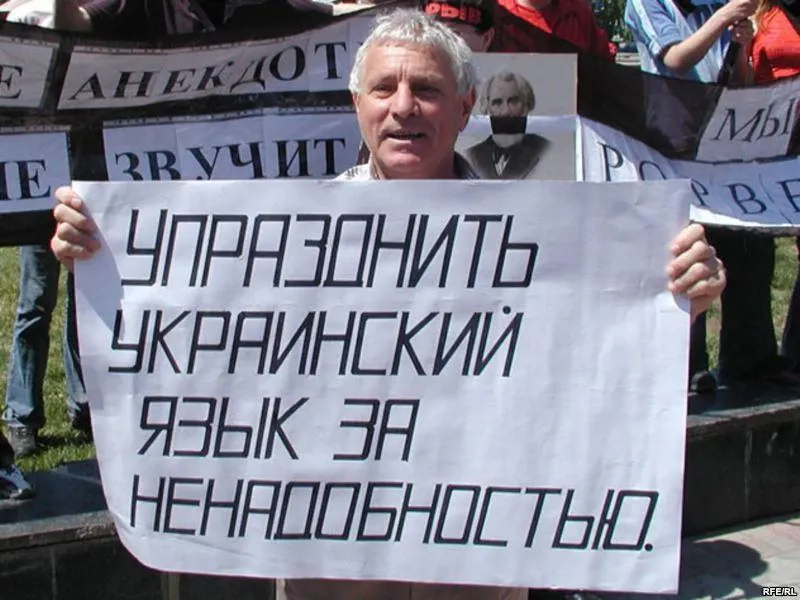
Before the war I knew few Russophobes, but Russians have always been Ukrainophobes!
Hatred of everything Ukrainian, rejection, denial of Ukrainian traditions, language, cultural heritage, was in their blood, from birth.
Hatred of Ukraine, like some cultural value, like an achievement, like a relic, was passed down from father to son for many years, for centuries...
How they hate us for our primogeniture, for our seniority, for our patrimony, for our culture, raped by Moscow. By Moscow with its imperial swagger, its chauvinism, its autocracy, its obscurantist Third Rome.
With what hatred they call us Little Russians, not-quite-Russians, khokhols.
How they destroy, with what frenzy, even today, when everything is already known to everyone, any mention of the true Rus'.
How they rage, how they jeer, but they do not understand the main thing: it is not because we are not related, but because we are different.
We are not slaves, we are free people, we are rebels, we are headstrong, we are proud, we are worthy.
We are the builders of Rus', we are its heirs, not they!
We know what honor, dignity, chivalry and one's word are; they do not.
And they need to learn from us how to build a world, a new world, a Ukrainian World, if you like!
Instead of trying to impose on us their own Mongol-Byzantine "Russian Myth", a horror tale from the past, a vestige, an anachronism, an example of the dead-end development of a statehood founded on theft and hatred.
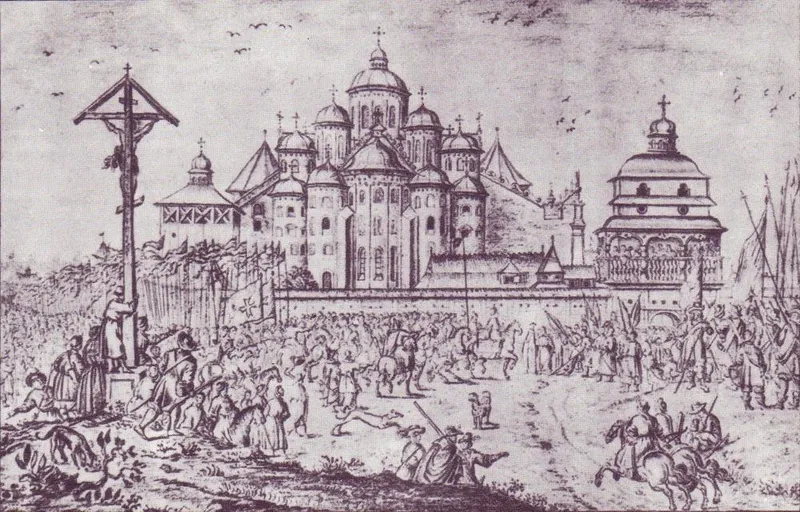
Rus' gave the world not Moscow but a faith. A special Christian faith, a new current. Thanks to Yaroslav, the Rus'ian Church became independent. Not Orthodox, not Catholic, but precisely Rus'ian!
Kyiv became the Center of the Christian World, and that is why Moscow fought for it, why it did everything to move its center to Moscow, and precisely why it destroyed memory and the real truth.
A nation is not always a community of people; religion can also become the basis of a nation, as religion became it here. And precisely for this reason the Novgorodians, Belarusians and Lithuanians were Rus'ian!
Precisely because the inhabitants of different peoples, of different language groups of Rus', shared one faith.
And precisely for that reason we became hostages of Moscow, which led our faith into captivity, enslaved our peoples, and desecrated our meaning and our culture.
But
Hundreds of years of oppression, falsifications, threats, deaths and open genocide could not rewrite history, and Moscow remained the bastard of Rus', with all its motley-tribed people.
And Kyiv?
Kyiv, like Ukraine, has passed through the thickness of time and preserved its heritage, its roots, and so it will stand for more than a thousand years yet, and be the center of Rus', of Rus'-Ukraine, the cradle of Ukrainian, Rus'ian culture.