Just as sex is not discussed in polite society, demography was not supposed to be discussed in good scientific society
S. P. Kapitsa's last article. It is too good to be forgotten, because it gives answers to many questions of our time.
After the collapse of science in our country, I was forced to spend a year abroad in Cambridge, where I was born. There I was attached to Darwin College, which is part of Trinity College, of which my father was once a member.
The college deals mainly with overseas scholars. They gave me a small stipend, which kept me going, and we lived in the house my father had built. It was there, thanks to a completely inexplicable combination of circumstances, that I stumbled upon the problem of population growth.
I had previously worked on global problems of peace and equilibrium, on what made us change our view of war with the appearance of the absolute weapon, which can destroy all problems at once, although it cannot solve them. But of all global problems, the main one is in fact the number of people who live on the Earth. How many there are, where they are being driven. It is the central problem in relation to everything else, and at the same time the one least worked on.
It cannot be said that nobody had thought about it before. People have always worried about how many of them there are. Plato calculated how many families should live in an ideal city, and he arrived at about five thousand. Such was the visible world for Plato: the population of the poleis of Ancient Greece ran to tens of thousands of people. The rest of the world was empty, simply did not exist as a real arena of action.
Strangely enough, such a narrowness of interests existed even fifteen years ago, when I began to work on the problem of population.
Discussing the demography of humanity as a whole was not done: just as sex is not discussed in polite society, demography was not supposed to be discussed in good scientific society.
It seemed to me that one should start with humanity as a whole, but such a subject could not even be discussed.
Demography developed from the smaller to the larger: from the city and the country to the world as a whole.
There was the demography of Moscow, the demography of England, the demography of China.
How could one deal with the world when scholars barely coped with the regions of a single country?
To break through to the central problem, I had to overcome a great deal of what the English call conventional wisdom, that is, generally accepted dogmas.
But of course I was far from the first in this field. The great Leonhard Euler, who worked in the most varied areas of physics and mathematics, wrote the main equations of demography back in the 18th century, and they are still used today. And among the general public the best-known name is that of another founder of demography, Thomas Malthus.
Malthus was a curious figure. He graduated from the faculty of theology, but he was very well trained mathematically: he placed ninth in the Cambridge mathematics competition.
If Soviet Marxists and present-day social scientists knew mathematics at the level of the ninth rank of a university, I would calm down and consider them sufficiently equipped mathematically. I was in Malthus's study in Cambridge and saw there Euler's books with his pencil marks; one can see that he fully mastered the mathematical apparatus of his time.
Malthus's theory is quite coherent, but it is built on wrong premises.
He assumed that the number of people grows exponentially (that is, the growth rate is higher the more people already live on the earth, give birth and raise children), but that the growth is limited by the availability of resources, for example food.
Exponential growth until the complete exhaustion of resources is the dynamic we see in most living creatures. Even microbes grow this way in a nutrient broth. But the point is that we are not microbes.
People are not beasts
Aristotle said: The main difference between man and animal is that he wants to know.
But to notice how greatly we differ from animals, there is no need to climb into our heads: it is enough simply to count how many of us there are.
All creatures on Earth, from the mouse to the elephant, obey one dependence: the greater the body mass, the fewer the individuals. There are few elephants, many mice.
With a weight of about a hundred kilograms, there should be on the order of hundreds of thousands of us.
Now in Russia there are a hundred thousand wolves, a hundred thousand wild boars. Such species exist in balance with nature. And man is a hundred thousand times more numerous!
Even though, biologically, we are very similar to the great apes, wolves or bears.
In the social sciences there are few exact figures.
Perhaps the population of a country is the only thing that is known unconditionally.
When I was a boy, I was taught at school that two billion people lived on the Earth.
Now there are seven billion. We lived through such growth within the lifetime of a single generation.
We can say approximately how many people lived at the time of the birth of Christ: on the order of a hundred million.
Paleoanthropologists estimate the Paleolithic human population at about a hundred thousand, exactly as many as we should have according to our body mass. But since then growth has begun: at first barely noticeable, then faster and faster, and in our day explosive.
Never before has humanity grown so rapidly.
Even before the war, the Scottish demographer Paul McKendrick proposed a formula for the growth of humanity.
And this growth turned out to be not exponential but hyperbolic: very slow at the beginning and rapidly accelerating at the end.
According to his formula, in 2030 the number of humans should tend to infinity, but this is an obvious absurdity: people are biologically incapable of bearing an infinite number of children in a limited period of time.
Much more important is that such a formula describes the growth of humanity in the past excellently. And this means that the growth rate has always been proportional not to the number of people living on the earth, but to the square of that number.
Physicists and chemists know what such a dependence means: it is a second-order reaction, where the rate of the process depends not on the number of participants but on the number of interactions between them.
When something is proportional to n squared, it is a collective phenomenon.
Such, for example, is the chain nuclear reaction in an atomic bomb.
If every member of a community writes a comment to all the others, then the total number of comments will be exactly proportional to the square of the number of participants.
The square of the number of people is the number of connections between them, a measure of the complexity of the system, of humanity.
The greater the complexity, the faster the growth.
No man is an island - we live and die not alone.
We reproduce, we eat, differing little in this from animals, but the qualitative difference is that we exchange knowledge.
We pass it on by inheritance, we pass it on horizontally in universities and schools.
That is why our dynamics of development are different. We do not simply breed and multiply: we have progress.
This progress is rather difficult to measure numerically, but the production and consumption of energy, for example, can be a decent criterion. And the data show that energy consumption is also proportional to the square of the number of people, that is, the energy consumption of each person is higher the larger the population of the Earth.
Our development consists in knowledge: this is the main resource of humanity.
Therefore to say that our growth is limited by the exhaustion of resources is a very crude way of posing the question.
In the absence of disciplined thinking, a great many all kinds of bogeys appear.
For example, a couple of decades ago people seriously spoke of the exhaustion of silver reserves, silver being used to make film stock: supposedly so many films are made in India, in Bollywood, that soon all the silver on earth would go into the emulsion of these films.
Perhaps that is how it would have been, but then magnetic recording was invented, which requires no silver at all.
Such estimates are the fruit of speculation and ringing phrases meant to strike the imagination; they serve only a propagandistic and alarmist function.
There is enough food in the world for everyone; we discussed this question in detail in the Club of Rome, comparing the food resources of India and Argentina.
Argentina is a third smaller than India in area, but India has forty times more population.
On the other hand, Argentina produces so much food that it could feed the whole world, not only India, if it strained itself properly.
The point is not a lack of resources but their distribution. Someone, it seems, joked that under socialism there would be a shortage of sand in the Sahara; it is a question not of the quantity of sand but of its distribution.
Inequality between individuals and peoples has always existed, but as growth processes accelerate, inequality increases: the balancing processes simply do not have time to act.
This is a serious problem for the modern economy, but history teaches that in the past humanity solved such problems: the unevenness was evened out in such a way that, on the scale of humanity, the general law of development remained unchanged.
The hyperbolic law of human growth has shown remarkable stability throughout history.
In medieval Europe, plague epidemics carried off up to three quarters of the population in some countries.
On the growth curve there are indeed dips in these places, but a century later the number returns to its former dynamics, as if nothing had happened.
The greatest shock experienced by humanity: the First and Second World Wars.
If we compare the real demographic data with what the model predicts, it turns out that the total losses of humanity from the two wars amount to about two hundred and fifty million, three times any estimates of historians.
The population of the Earth deviated from the equilibrium value by eight percent.
But then, within several decades, the curve steadily returns to its former trajectory.
The global parent proved stable despite a terrible catastrophe that affected most countries of the world.
The connection of times fell apart
In history lessons many schoolchildren are puzzled: why do historical periods become shorter and shorter over time?
The Upper Paleolithic lasted about a million years, and for all the rest of human history only half a million remain.
The Middle Ages: a thousand years, and only five hundred remain. From the Upper Paleolithic to the Middle Ages, history seems to have accelerated a thousandfold.
This phenomenon is well known to historians and philosophers.
Historical periodization follows not astronomical time, which flows uniformly and independently of human history, but the system's own time.
And own time follows the same dependence as energy consumption or population growth: it flows the faster, the higher the complexity of our system, that is, the more people live on the Earth.
When I began this work, I did not suppose that the periodization of history from the Paleolithic to our days followed logically from my model.
If we consider that history is measured not by the Earth's revolutions around the Sun but by human lives lived, the shortening historical periods are instantly explained.
The Paleolithic lasted a million years, but the number of our ancestors then was only about a hundred thousand; it turns out that the total number of people who lived in the Paleolithic is about ten billion.
Exactly the same number of people walked the earth during the thousand years of the Middle Ages (the number of humanity being several hundred million), and during the one hundred and twenty-five years of modern history.
Thus our demographic model slices the whole history of humanity into equal (not in duration but in substance) pieces, during each of which about ten billion people lived.
The most surprising thing is that precisely such a periodization existed in history and paleontology long before the appearance of global demographic models.
Still, the humanities scholars, for all their problems with mathematics, cannot be denied intuition.
Today ten billion people pass across the earth in just half a century.
This means that a historical epoch has shrunk to a single generation. It is no longer possible not to notice it.
Today's teenagers do not understand what Alla Pugacheva was singing about thirty years ago: and you won't be able to wait out three people at the payphone
What payphone?
Why wait?
Stalin, Lenin, Bonaparte, Nebuchadnezzar: for them these are what grammar calls the pluperfect, the long-past tense.
It is now fashionable to lament the breaking of the link between generations and the dying out of traditions, but perhaps this is a natural consequence of the acceleration of history.
If every generation lives in its own epoch, it may simply have no use for the legacy of earlier epochs.
The beginning of the new
The compression of historical time has now reached its limit; it is bounded by the effective length of a generation, about forty-five years.
This means that the hyperbolic growth in the number of people cannot continue: the basic law of growth simply has to change. And it is already changing.
According to the formula, there should be about ten billion of us today. And there are only seven: three billion is a considerable difference, one that can be measured and interpreted.
Before our eyes a demographic transition is taking place, a turning point from unrestrained population growth to some other way of progressing.
For some reason many like to see in this the signs of an approaching catastrophe.
But the catastrophe here lies more in people's minds than in reality.
A physicist would call what is happening a phase transition: you put a pot of water on the fire, and for a long time nothing happens, only a few lonely bubbles rise.
And then suddenly everything boils.
That is how it is with humanity: internal energy accumulates slowly, and then everything takes on a new form.
A good image is the floating of timber down mountain rivers.
Many of our rivers are shallow, so this is what is done: a small dam is built, a certain number of logs is gathered, and then the sluices are suddenly opened. A wave runs down the river carrying the trunks on it, and it runs faster than the current of the river itself.
The most terrible place here is the transition itself, where all hell breaks loose, where the smooth flow upstream and downstream is separated by a stretch of chaotic movement. That is exactly what is happening now.
Around 1995 humanity passed through the maximum rate of growth, when eighty million people were being born every year.
Since then the growth has noticeably slowed.
The demographic transition is the transition from a regime of growth to the stabilization of the population at a level of no more than ten billion.
Progress, naturally, will continue, but at a different pace and on a different level.
I think that many of the troubles we are living through, the financial crisis, the moral crisis, the unsettledness of life, are a stressful, non-equilibrium state connected with the suddenness with which this transitional period has set in.
In a certain sense we have landed in the very thick of it.
We are used to the idea that unstoppable growth is our law of life.
Our morality, our social institutions and our values were adapted to the regime of development that remained unchanged throughout history, and now it is changing.
And it is changing very fast.
Both the statistical data and the mathematical model indicate that the width of the transition is less than a hundred years. And that is despite the fact that it does not happen simultaneously in different countries.
When Oswald Spengler wrote The Decline of the West , he may have had in mind the first signs of this process: the very concept of the demographic transition was first formulated by the demographer Landry using France as his example.
But now the process is affecting less developed countries too: population growth in Russia has practically stopped, and the population of China is stabilizing.
Perhaps the prototypes of the future world should be sought in the regions that were the first to enter the zone of transition, for example in Scandinavia.
It is curious that in the course of the demographic transition the lagging countries quickly catch up with those that set out on this path earlier.
For the pioneers, France and Sweden, the process of population stabilization took a century and a half, and the peak fell at the turn of the 19th and 20th centuries. But in Costa Rica or Sri Lanka, for example, which passed the peak of the growth rate in the eighties, the whole transition takes a few decades.
The later a country enters the phase of stabilization, the more acutely it goes through it.
In this respect Russia gravitates rather toward the countries of Europe: the peak of our growth rate was already behind us in the thirties, and so we can count on a milder scenario of transition.
Of course, there are grounds for fearing this unevenness of the process in different countries, which can lead to a sharp redistribution of wealth and influence.
One of the popular bugbears is Islamization . But Islamization comes and goes, just as religious systems have come and gone more than once in history.
The law of population growth was changed neither by the crusades nor by the conquests of Alexander the Great.
The laws will operate just as inexorably during the demographic transition. I cannot guarantee that everything will pass peacefully, but I do not think the process will be all that dramatic either.
Perhaps this is simply my optimism against the pessimism of others.
Pessimism has always been a much more fashionable current, but I am rather an optimist. My friend Zhores Alferov says that only optimists are left here, because the pessimists have left.
I am often asked for recipes, people are used to asking, but I am not ready to answer. I cannot offer ready-made answers in order to play the prophet. I am not a prophet, I am only learning.
History is like the weather. Nature has no bad weather. We live in such-and-such circumstances, and we must accept and understand these circumstances. It seems to me that a step toward understanding has been made.
I do not know how these ideas will develop among the next generations; that is their problem.
I did what I did: I showed how we came to the point of transition and indicated its trajectory.
I cannot promise you that the worst is already behind us. But the terrible is a subjective notion.
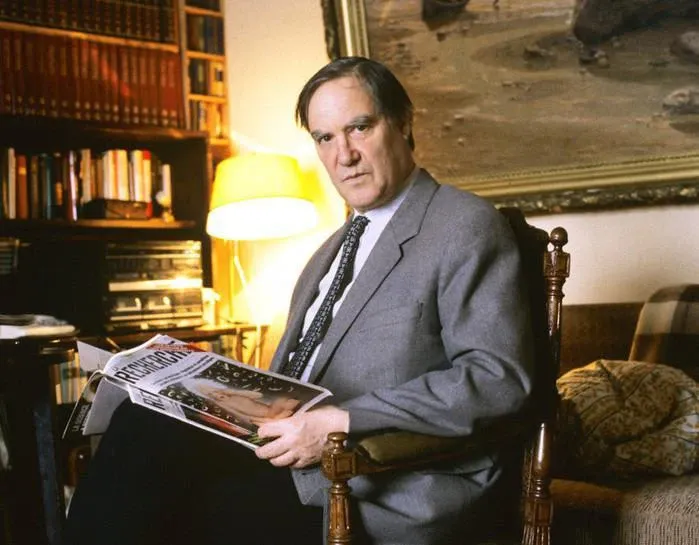
Sergey Petrovich Kapitsa was a Soviet and Russian physicist, television presenter, editor-in-chief of the magazine In the World of Science , and vice-president of the Russian Academy of Natural Sciences. From 1973 he was the permanent host of the popular-science television program The Obvious but Incredible . He was the son of the Nobel Prize laureate Pyotr Leonidovich Kapitsa.
References:snob.ru