What do you know about medieval bathhouses, or do you really know when Europe went unwashed?
What do you know about medieval bathhouses, or do you really know when Europe went unwashed?
Today we have all become slaves to a stereotype, a myth, according to which West European travellers of the 17th century, having visited Muscovy, marvelled wildly that bathhouses were everywhere in Muscovy, while Western Europe itself had always gone about dirty and had never washed in its life, and was even proud of it.
Supposedly their princes and princesses strutted about like peacocks before one another, boasting about which of them had met soap least in his life, and it was wildly prestigious to be washed just once, and even then only under compulsion, at the moment of baptism.
This is, of course, a lie, a fairy tale, an invention.
In Europe a high bathing culture had existed for a long time, for many centuries, long before it appeared in Muscovy.
Only czar Peter the First , in the 17th century, taught the Muscovites not only alcoholism , but also European cleanliness, forcing them everywhere to both wash and shave. They even say that those who were not especially keen to shave were shaved by the czar himself, cutting off the beard together with the head.
In general, of course, the historical myths of Russia, which is Muscovy, are always wildly amusing and astonishing, and all because the Muscovites love to pull the history of Rus over their unwashed Muscovite bodies and then prove, foaming at the mouth, that they are the Russians, the heirs to the culture, history and traditions of Kyivan Rus.
This, naturally, is yet another lie, part of Muscovite mythology.
Let us begin with the fact that the plague, better known as the Black Death, came to Europe in 1348 not because a considerable part of European society held a peculiar opinion about hygiene, or, to put it plainly, neglected it. It was because European life, compared with Muscovite life, was seething.
The plague did not touch Muscovy, again, not because Muscovy was clean, but because it stood off in a backwater, on the outskirts of the civilised world, or rather even beyond its edge.
They were all dirty and washed only by accidentally falling into a river, but in Rus... , - this is how the great Muscovite connoisseurs of history usually begin their texts.
A lie, of course. There was no such tradition in Muscovy, and the average Muscovite prince was no cleaner than a tramp from a back alley, and he stank.
Whereas a European feudal lord smelled, perhaps, not of lilies of the valley, but quite decently.
And all because at that time the bathing trade was very well developed in Europe, and Europe had reached no small mastery in it.
For example: are you aware that in Europe, since ancient times, there existed various resort zones? For example, here is the coat of arms of the town of Baden, Baden bei Wien, granted to the town by Holy Roman Emperor Frederick III in 1480.
Note what is depicted on the coat of arms. What was the town proud of?
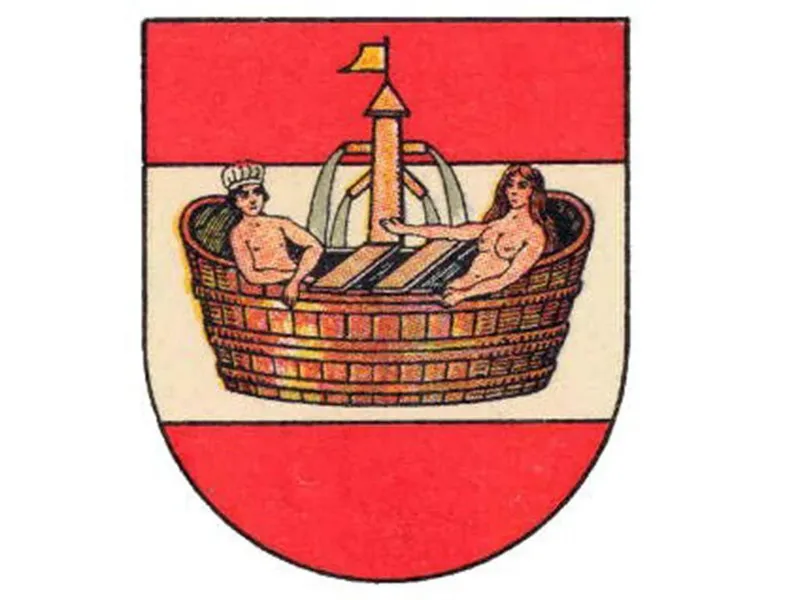
On the coat of arms of the Austrian town of Baden, practically the centre of Europe, there is a man and a woman in a bathing tub!
So, in the middle of dirty and unwashed Europe, near the Swiss Alps, the dirty Europeans put a woman and a man in a bath and... were proud of it, but did not wash?
Where, then, does the town's coat of arms come from?
It turns out that, as Poggio Bracciolini described in 1417, accompanying the deposed Pope John XXIII on a trip to Baden, the town already had some 30 luxurious bathhouses !
And for ordinary commoners there were two open pools.
Shall we go on?
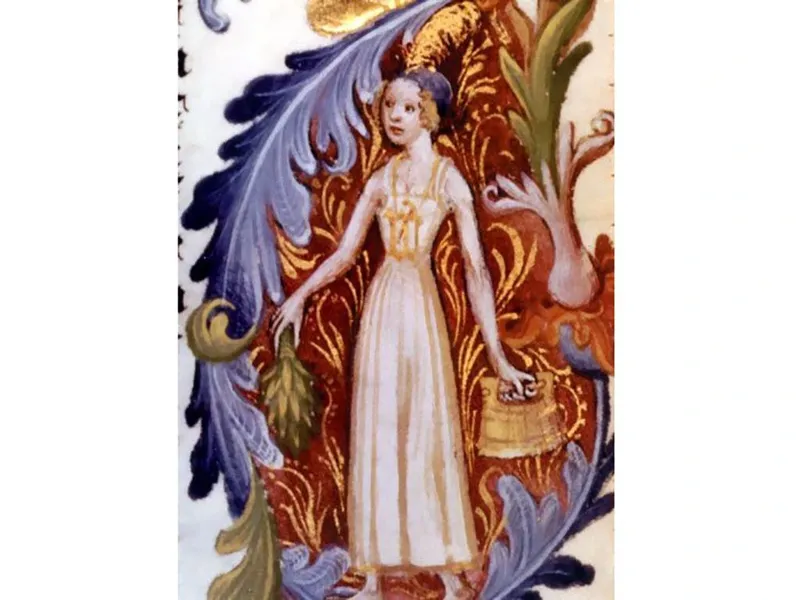
The year 1400, the Wenzelsbibel , where, as you can see, the bath attendant holds in her hand a thoroughly Muscovite birch whisk.
Let us listen to the historian Fernand Braudel, who writes in his book The Structures of Everyday Life: The Limits of the Possible :
Bathhouses, an old legacy of Rome, were the rule throughout medieval Europe, both private ones and very numerous public ones, with their baths, steam rooms and couches for rest, or else with large pools, with their crush of naked bodies, men and women intermingled .
People met here as naturally as in church, and these bathing establishments were intended for all classes, so that they were subject to seigneurial dues like mills, smithies and drinking houses .
As for well-off houses, they all had washrooms in the semi-basements, where there was a steam room and tubs, usually wooden, with hoops driven on as on barrels. Charles the Bold had a rare luxury item: a silver bath, which was carried after him onto the battlefields. After the defeat at Grandson in 1476 it was found in the ducal camp .
So a monarch who disliked hygienic procedures carried around an object of enormous weight in order to... what? Pickle cucumbers?
Let us go on:
In the era of Philip IV the Fair, that is, the early 1300s, the report of the Paris provost mentions 29 public bathhouses in Paris, subject to the city tax.
They worked every day except Sunday.
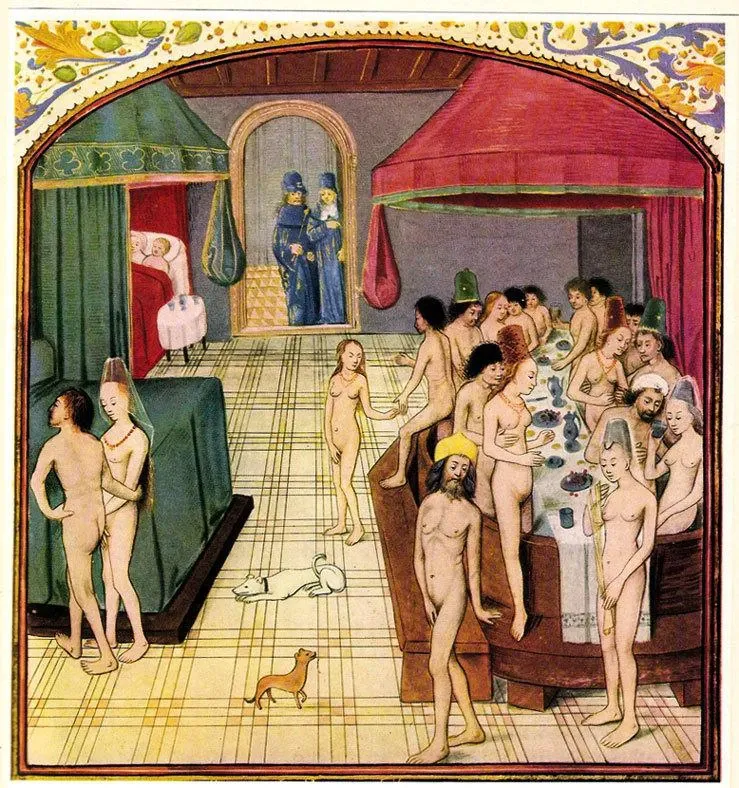
The year 1470, P ublic bathhouse , France.
There was, admittedly, some problem with them, for the church looked rather askance at these establishments, and one can understand it, since these baths and the taverns adjoining them were often used by local residents for various carnal pleasures, in between which they found bathing quite useful and by no means superfluous.
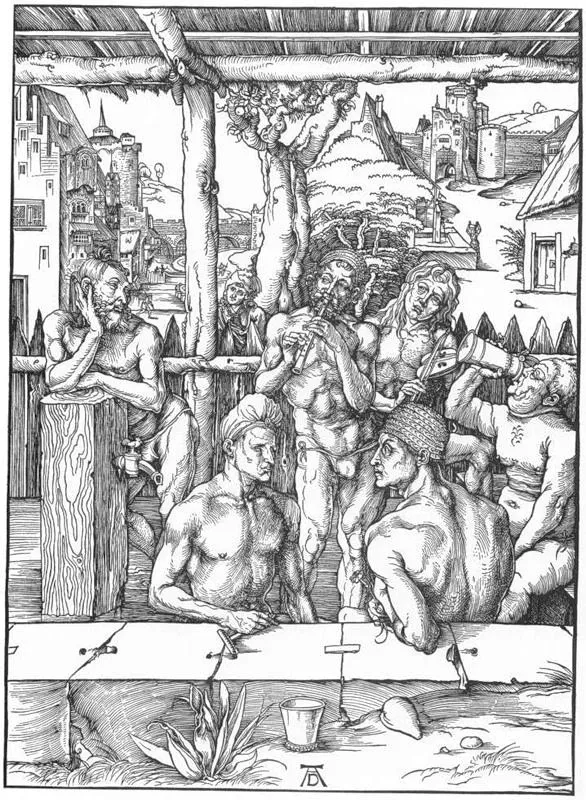
The year 1497, Albrecht Dürer, Men's Bathhouse , beer, conversation, music, caps for the steam room.
Giovanni Boccaccio describes such a pastime of the inhabitants of Naples of that time as follows:
In Naples, when the ninth hour came, Catella, taking her maid with her and not changing in anything her intention, went to those baths... The room was very dark, with which each of them was pleased
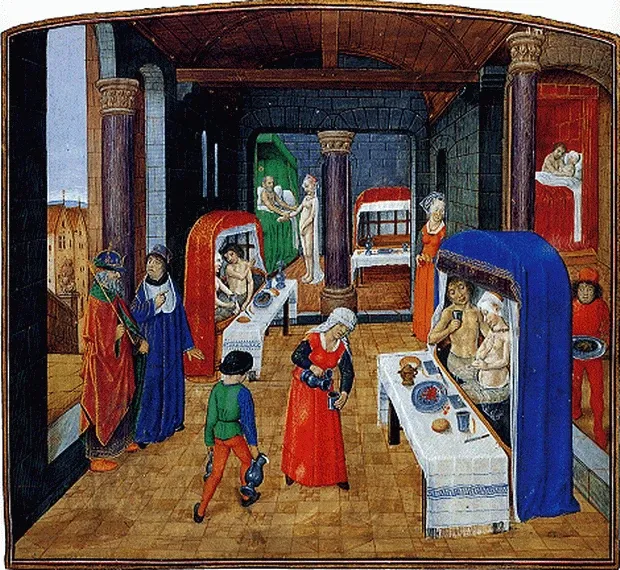
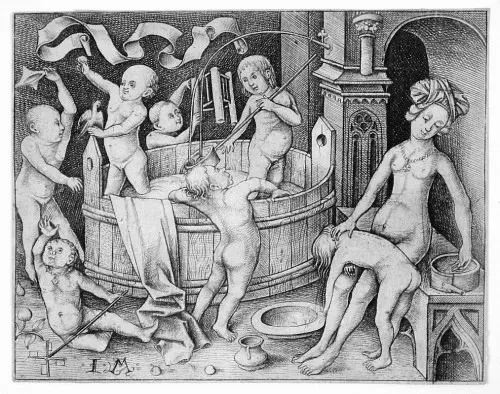
The 14th century, a picture typical of it, in which we see a rather luxurious establishment for the noble .
There were bathhouses not only in Paris, Baden and Naples
In Poland, in Kraków alone, by the 14th century there were counted 12 public bathhouses, which, according to some data, were visited by the king himself.
Thus, as of 1340, it is known that there were bathhouses also in such cities as:
- Nuremberg, which counted 9 bathhouses
- Erfurt was famous for its 10 bathhouses
- Vienna could boast 29 bathhouses
- Breslau/Wrocław, 12 bathhouses
Reinmar von Bielau from Sapkowski's Tower of Fools could quite well have visited one of them.
Note, moreover, that bathhouses were built mainly for the lower strata of the population, while the rich citizens of Europe preferred to wash at home.
Even though there was no running water in Paris, water was delivered to them by street water-carriers.
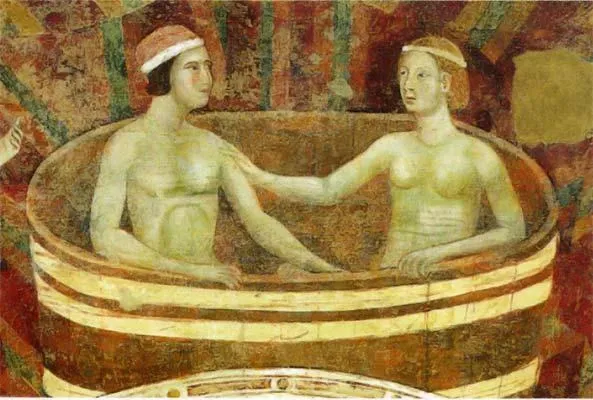
The year 1320, the artist Memmo di Filippuccio, The Conjugal Bath , fresco, civic museum of San Gimignano:
These are the so-called Middle Ages, but what was there earlier?
A tragic but telling fact: in 1045 several important persons, among them the bishop of Würzburg, died in the bathing tub of Persenbeug castle after the ceiling of the bathhouse collapsed.
And here is how, for example, Einhard describes water procedures in his work Life of Charlemagne :
He also loved to bathe in hot springs and attained great perfection in swimming. It was out of love for hot baths that he built a palace at Aachen and spent all the last years of his life there. To the bathing, to the springs, he invited not only his sons but also the nobles, friends, and sometimes his bodyguards and the whole retinue; it happened that a hundred or more people bathed together .
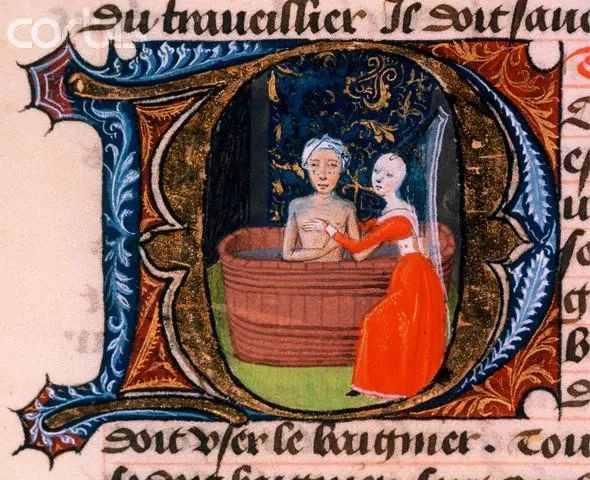
The year 1356, an ordinary private bath.:
Let us digress a little from the main topic.
What did Europeans wash with?
With soap! Europeans washed with soap, which they boiled themselves.
There are two versions of the appearance of soap in medieval Europe:
- according to the first version, soap was produced from the 8th century in Naples
- soap began to be made in Spain and the Middle East from olive oil, lye and aromatic oils by Arab chemists, and the Crusaders introduced Europe to it
There is even a treatise by Al-Razi from 981 describing a method of obtaining soap.
It is definitely known that around 1100 soap works were in full swing in Spain, England and France, where soap was boiled from animal fat.
In the Encyclopaedia Britannica one can also find data on soap-making works, though that concerns the beginning of the 13th century.
In 1371 a certain Crescans Davin ( Sabonerius), set up the production of soap from olive oil in Marseille; it is his soap works that is very often mentioned as the first to begin producing specifically European soap. It is also known that he attained great renown and commercial success.
In the 16th century soap was already being traded in Europe in full swing, with the products of Venetian and Castilian masters especially prized. Following their example, many began to set up their own production.
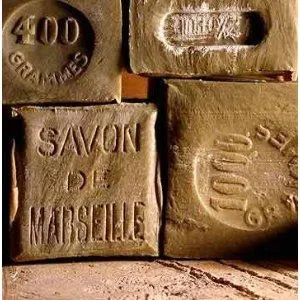
The soap looked roughly like this:
A detailed description of a monastery bathhouse can be found in Umberto Eco's The Name of the Rose: these are separate baths divided by curtains, and in one of them, in particular, Berengar drowned.
And here is a quotation from the rule of the Order of Augustinians:
When you must go to the bathhouse or to any other place, let there be no fewer than two or three of you. And whoever has need to leave the monastery must go with the one whom the superior appoints .
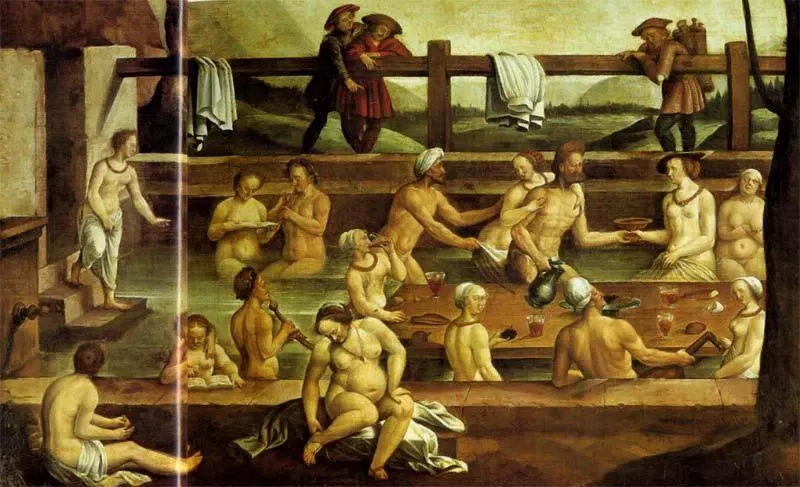
The year 1587, Hans Bock, Public Baths , Switzerland, Kunstmuseum Basel.
And this quotation is from the 13th-century Valencian code:
Let the men go to the bathhouse together on Tuesday, Thursday and Saturday. The women go on Monday and Wednesday. The Jews go on Friday and Sunday. Neither man nor woman gives more than one meaja on entering the bathhouse, and the servants of both men and women give nothing. And if men enter the bathhouse or any building of the bathhouse on women's days, let each pay ten maravedis. Likewise, whoever peeps in the bathhouse on a women's day pays ten maravedis. Likewise, if any woman enters the bathhouse on a men's day or is encountered there at night, and someone insults her or takes her by force, he pays no fine and does not become an outlaw, but the man who on other days takes a woman by force or dishonours her must be thrown into a chasm .
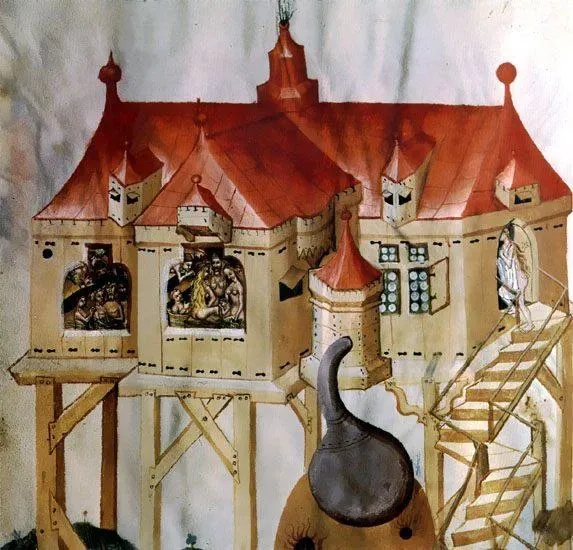
The 14th century, a steam bath.
Such is the marvellous story of unwashed and backward Europe.
It turns out that at its basis, as usual, lay the unrestrained imagination of the architects of the Russian world , and there are no facts confirming the presence of total filth in Europe, whereas bathhouses in Muscovy became known only under Peter, and even then only because it was he who built them!
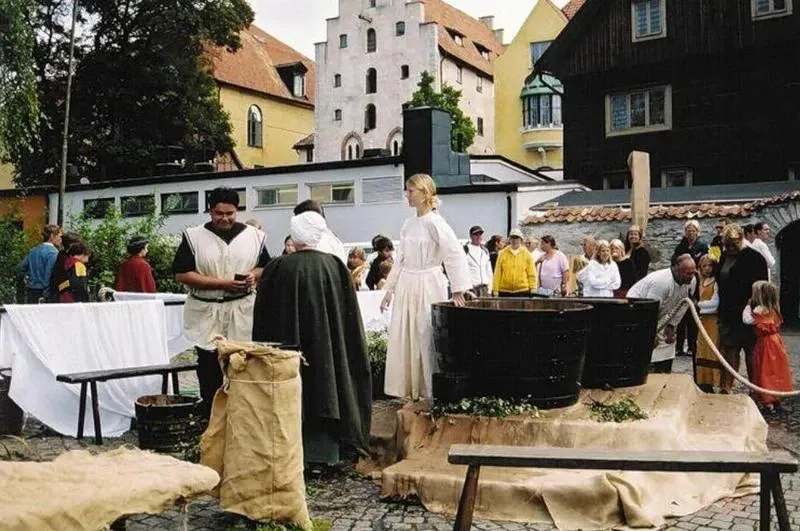
A modern reconstruction of a standard public bathhouse of the 14th-15th centuries, economy class, the version for the poor, budget: wooden tubs right in the streets, water boiled in cauldrons.
Before him, silence about the bathhouses of Moscow!
It must of course be noted that, thanks to the role of the church, bathing in Europe went into some decline in the 16th–18th centuries, but then again, the Catholic clergy mostly only forbade men and women from bathing together.
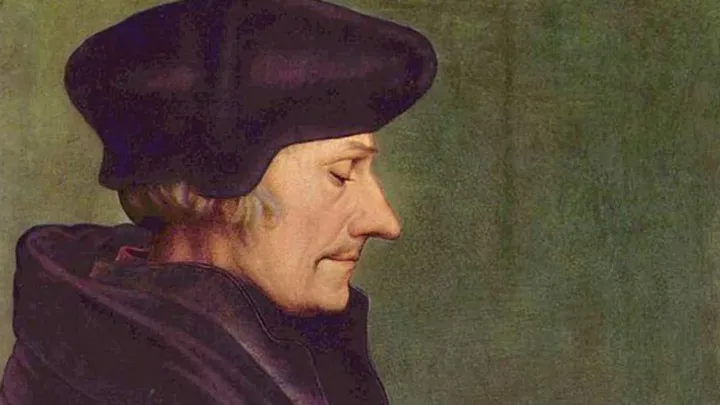
In 1526 Erasmus of Rotterdam wrote: Twenty-five years ago nothing was so popular in Brabant as public baths: today they are gone, the plague has taught us to do without them.
The plague was not the result of ignoring hygiene; it was the reason hygiene was removed from people's lives, because, as is known, most viral diseases, surprising as it may seem, spread especially well in bathhouses.