As early as 1947, Hugo Schmeisser, the German firearms designer, wrote a letter to the makers of the Kalashnikov assault rifle accusing them of fraud
As early as 1947, Hugo Schmeisser, the German firearms designer, wrote a letter to the makers of the Kalashnikov assault rifle accusing them of fraud.
The version holding that the AK, or Kalashnikov assault rifle, the calling card of Russian (Soviet) small arms, is a stolen idea derived from one of the models of the German designer Hugo Schmeisser appeared almost 60 years ago, when the AK was presented to the world public during the suppression of the anti-communist uprising in Budapest in 1956. In essence, the USSR was being accused of fraud.
Many a lance has been broken over this question. I am from Izhevsk and am passionately fond of the history of my native city, the birthplace of the AK, which in 2007 President Putin proclaimed the "Arms Capital of Russia". When I found myself in Germany, I could not fail to visit the city of Suhl in Thuringia, where Hugo Schmeisser lived and worked, and from which he was taken, "voluntarily-compulsorily", to work in Izhevsk. There he worked for the glory of the Russian arms capital from 1946 to 1952.
In German Suhl I came across a document that had never before been published in Russia, although, being interested in the question, I knew all the documents on it that had ever been published.
It turns out that as early as 1947 H. Schmeisser wrote a letter to the director of the numbered Izhevsk plant, accusing the Soviet side of dishonest dealing and of failing to fulfil the obligations it had taken on when it recruited H. Schmeisser to work in Izhevsk.
Before moving on to the document itself, I will say in advance that I will write not only about it. I will also draw some parallels (all the more so as there are very many) between the fates of the city of German gunsmiths and the city of Russian gunsmiths, and I will draw some conclusions about worldview that go beyond the analysis of an archival document and the actual subject of firearms design.
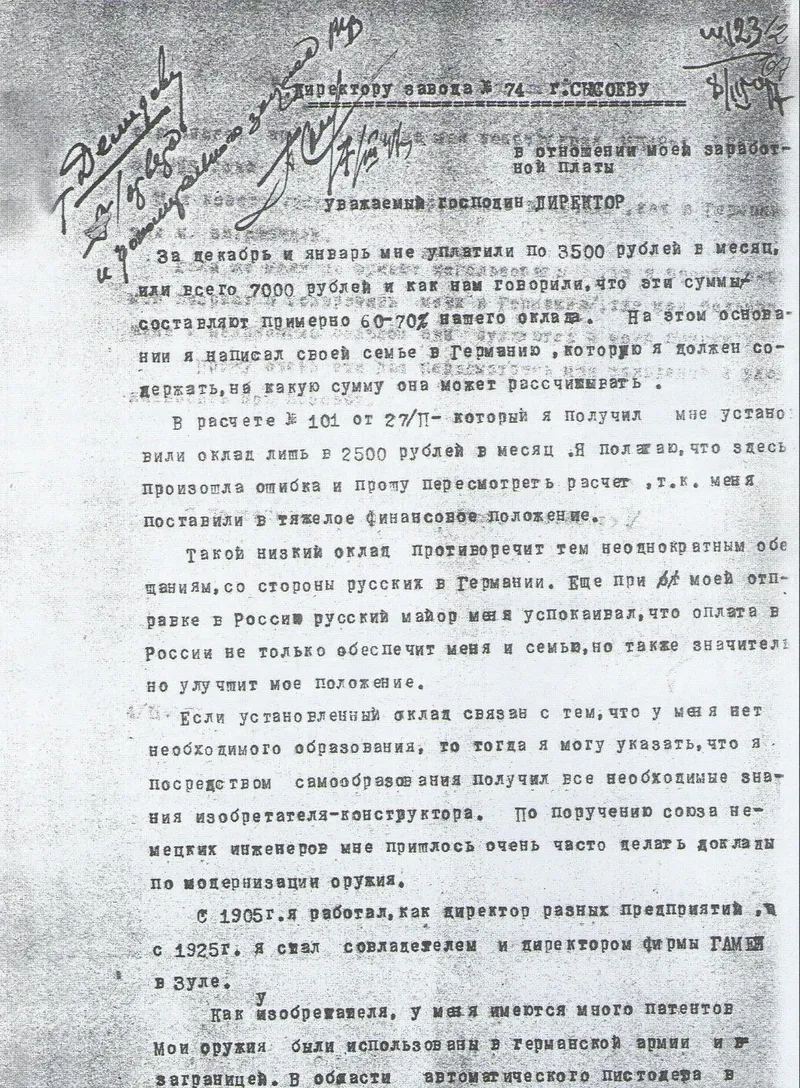
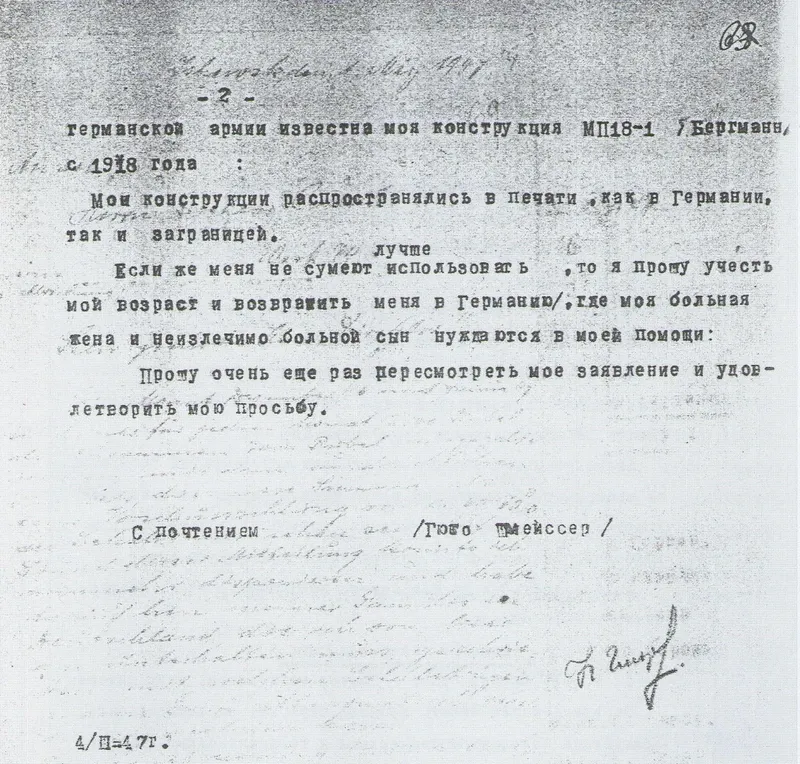
Now to the letter itself, in substance. Hugo Schmeisser writes to the management of the Izhevsk enterprise that when he was recruited to work in the USSR he was promised a salary of 5,000 rubles. However, the Soviet side did not fulfil the terms of the agreement: for the first two months of his work in Izhevsk he was paid only 3,500 a month, and later this salary was cut to 2,500 (that is, by half compared with what had originally been agreed). On this basis H. Schmeisser asks to be returned to Germany, where he has an incurably ill son and a sick wife. The wish to help them was the only thing that made him go to the USSR.
There was no reaction to H. Schmeisser's appeal. The trust he placed in a certain Soviet state security major, who had recruited H. Schmeisser to work in Izhevsk, cost him dearly. Moreover, the Izhevsk archives have preserved nasty character references on H. Schmeisser written after this, which accuse him of a capitalist mentality and of having no engineering diploma, and therefore being unable to be used effectively. And this despite the fact that for several decades he had been the author of weapon designs used in the strongest army in Europe.
After this H. Schmeisser treated his work in Izhevsk with pointed coolness, and in essence his stay in Izhevsk from 1947 to 1952 became the first Italian strike in Izhevsk. Yet for all this disdainful treatment of the designer on paper, nothing stopped the Soviet military-industrial complex in Izhevsk from using the 10,000 sheets of technical documentation and the equipment taken from his enterprise to Izhevsk.
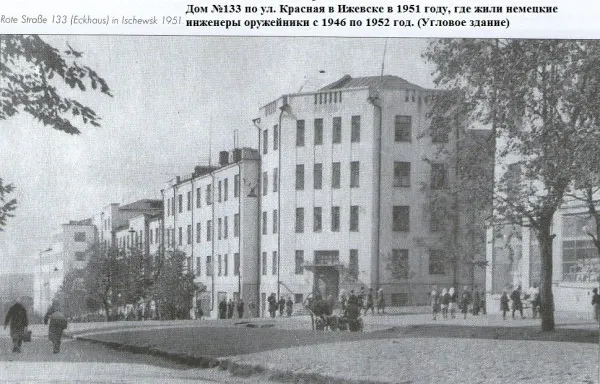
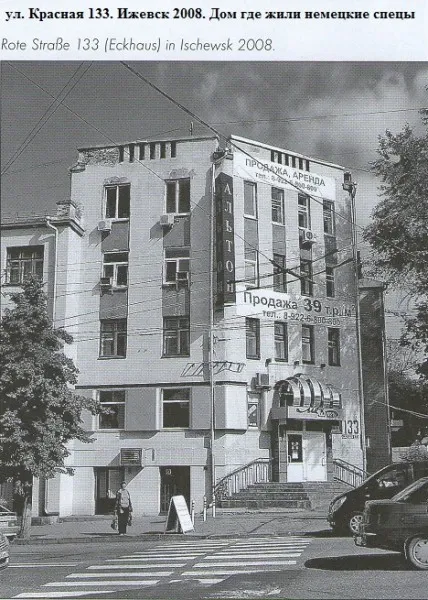
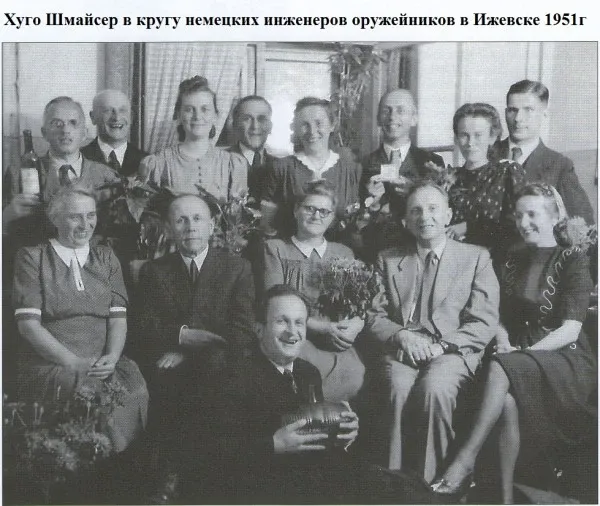
Besides H. Schmeisser himself, another fifteen or so of his colleagues from Suhl and other cities of East Germany worked in Izhevsk, some of them men with a name in the arms world. Several photographs from that time bear fairly good witness to how these people lived. They were highly paid specialists who lived in the very center of Izhevsk in quite comfortable conditions. An entire building at 133 Krasnaya Street, next to the Alexander Nevsky Cathedral, which at the time had been turned into the "Kolossus" cinema, was cleared of residents to accommodate them. The eviction of Soviet nomenklatura families from this building in order to house former fascists caused a real shock and cognitive dissonance in Izhevsk's postwar society of victors. In fairness, it should be noted that at that time whole city districts in Izhevsk were built by German prisoners of war, in particular "Sotsgorod", "Settlement of Machine Builders" and "Town of Metallurgists".
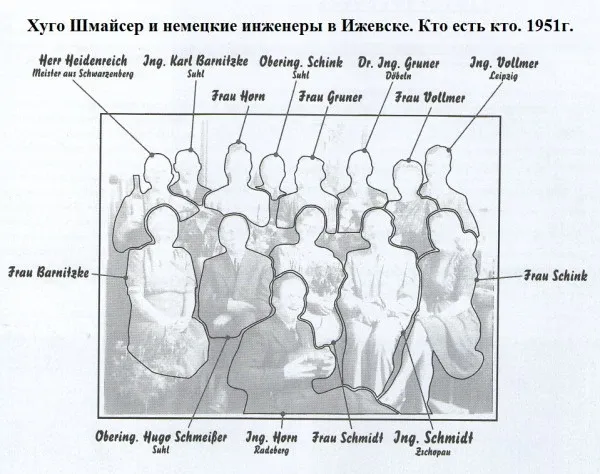
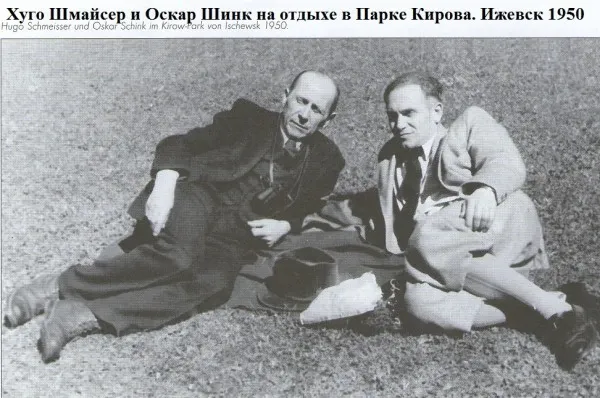
Opposite the house of the German specialists stood the glass-fronted Grocery Store No. 1, Izhevsk's central food shop. This later gave rise to a whole city joke about how young Sergeant Kalashnikov ran across the road to fetch "Zhigulyovskoye" beer for the eminent German engineer Hugo Schmeisser.
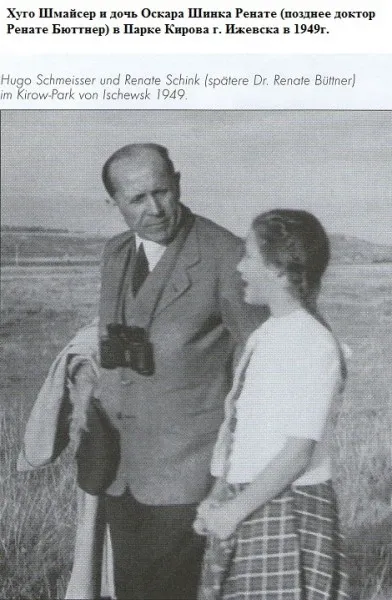
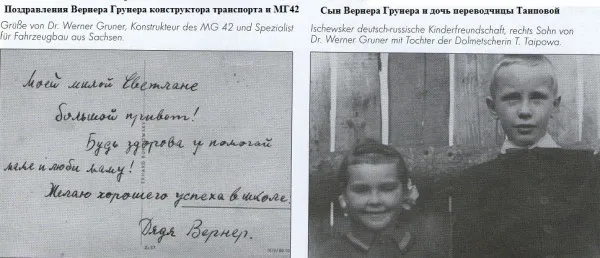
The subject of Hugo Schmeisser's work in Izhevsk long remained banned and marked "secret". It was opened up only in the early 1990s. But even then its commentators, already after the fall of the communist regime in the USSR, reproduced all the nonsense from the Soviet character references on H. Schmeisser. They relished the absence of an engineering diploma, and for his membership in the NSDAP they called him a time-server and almost a war criminal.
It is unpleasant to read this primitive stuff. And there are plainly double standards here. Those who emphasize these flaws in Schmeisser's profile do not understand that they are thereby describing exactly the same flaws in the profile of the Soviet favorite M.T. Kalashnikov. As is well known, when the AK-47 went into production M.T. Kalashnikov likewise had not just no engineering education, but no higher education at all. Before he was drafted to the front he had seen a steam locomotive only once, at the moment his dekulakized family was deported from the Altai Territory to the Tyumen region.
As for time-serving party membership, had H. Schmeisser been a time-server, he could quite easily have joined the Communist Party of Germany, re-established on the order of the Soviet occupation organization. After all, M.T. Kalashnikov, a member of the CPSU, managed to join United Russia.
It is foolish to confuse engineering thought with party affiliation. And the point here is not even that the CPSU and United Russia, each taken separately, inflicted a greater irreparable damage on the Russian people than the NSDAP. As M.T. Kalashnikov himself rightly observed, "A weapons designer creates a weapon to protect the soldier, not to solve ideological tasks".
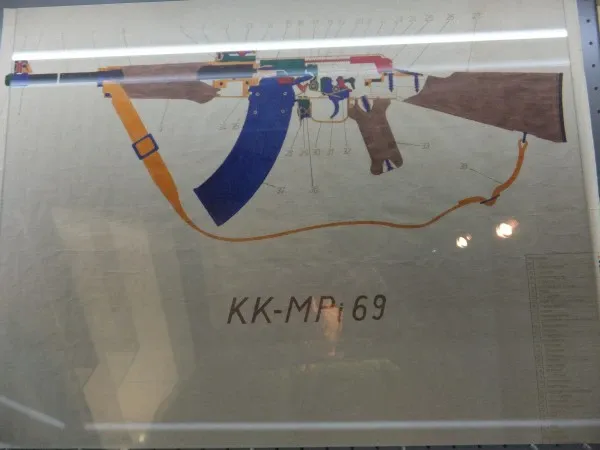
By an irony of fate, in the 1970s and 80s the AK-47 was also produced in the GDR at Hugo Schmeisser's plant under a Soviet license, with just this German designation of the model (photo from the museum in Suhl).
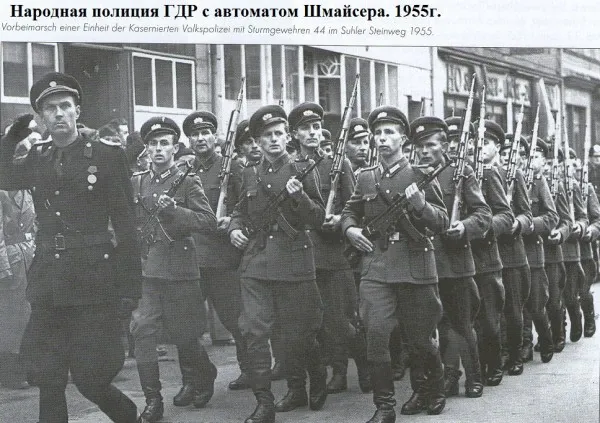
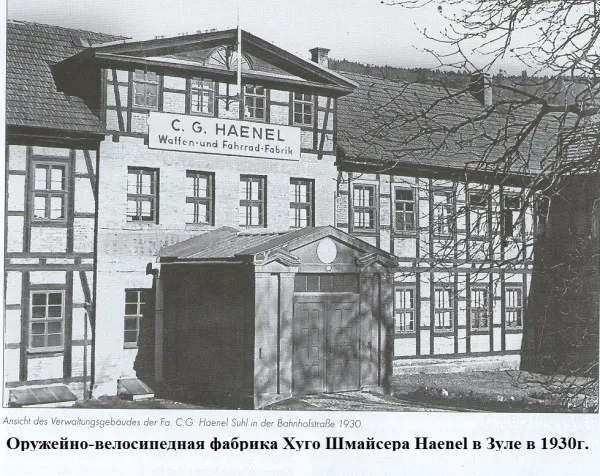
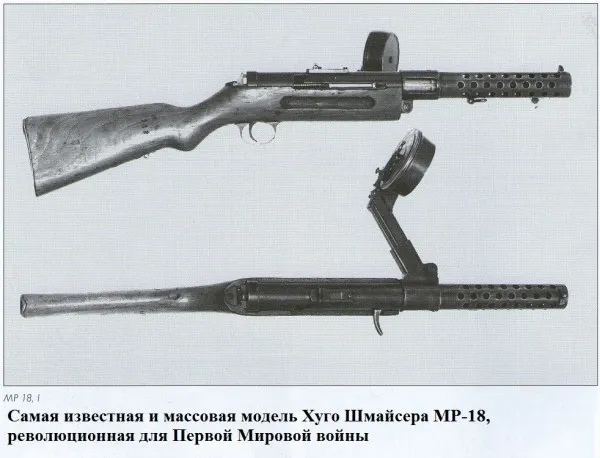
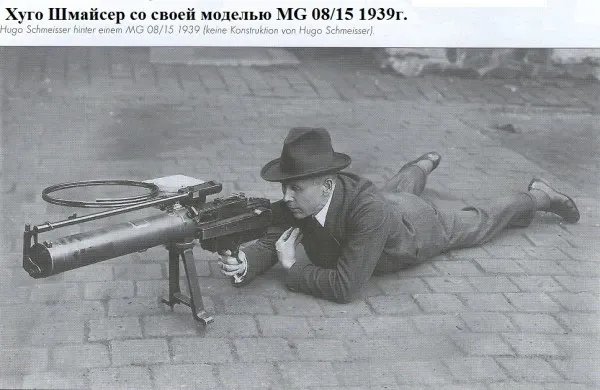
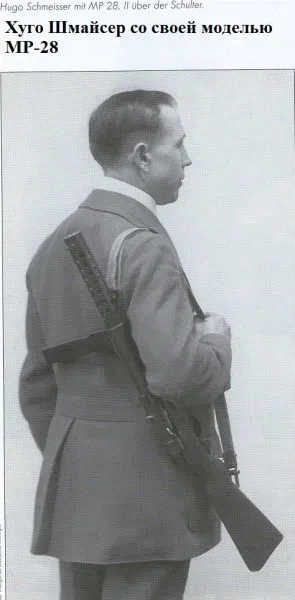
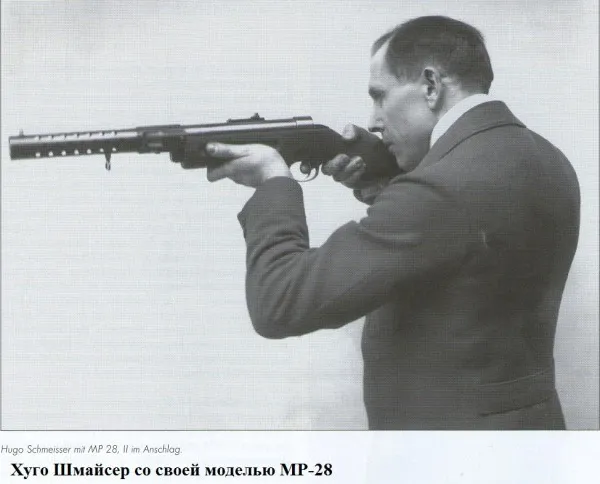
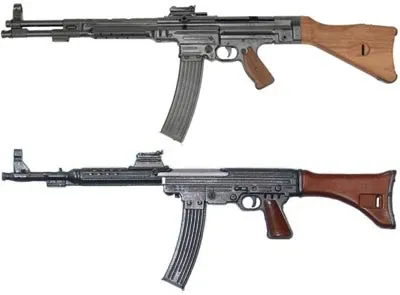
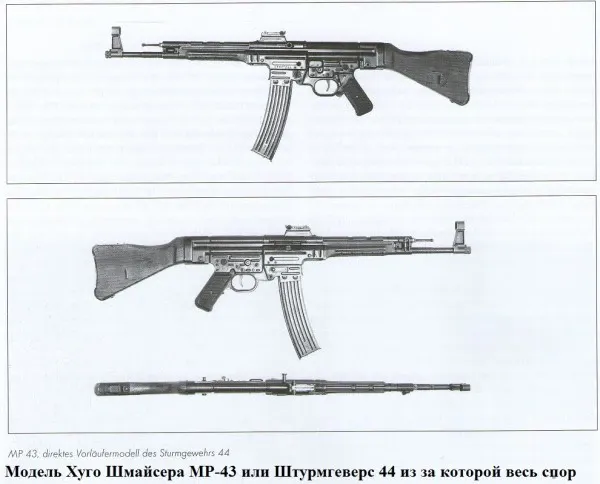
As for the dispute over the authorship of the AK-47 itself, I think the name "Kalashnikov assault rifle" is quite beautiful and has already entered history. Some myths need not be destroyed, although a whole new weapon system, purely technologically, cannot have a single author, and if not hundreds, then at least dozens of engineers worked on it. I share the opinion that has now become almost universal: M.T. Kalashnikov was most likely the author of the main revolutionary idea of the rifle, the gas-operated mechanism (and even there the work of many specialists was needed to realize it technically). But the use of cold stamping in the production of the receiver obviously came to Izhevsk from Suhl together with H. Schmeisser and the technical documentation of his plant, where this technology was already being used in the production of the MP-43, which looks similar to the AK-47.
Back when I was a deputy of the Izhevsk City Duma, I repeatedly stated that the work of the German specialists in Izhevsk in 1946-52 was quite worthy of a memorial plaque on the building at 133 Krasnaya Street. It would only underline that Izhevsk is not just the "capital of Russian arms" but a world arms center, one that knows how to use all the advantages of international engineering and intellectual cooperation.
But this is not done solely out of considerations of falsely understood "prestige". In the same way, nothing in Izhevsk commemorates the first founders of Izhevsk arms production: the eighty-eight German master craftsmen brought to Izhevsk as early as 1807 by the founder of the Izhevsk Arms Plant, A.F. Deryabin. Even then several masters from Suhl arrived in Izhevsk among masters from other German cities. Even the chief master, Karl Pope, set off for the Russian Empire from Suhl. We should be proud of the mutually enriching influence of cultures and engineering schools, not ashamed of it. Russia has often found itself in the role of the one catching up, but that speaks not of any inferiority of its people; rather, by remaining open, it has always coped with this task.
Instead of a civilized approach, what reigns here is sovok mentality, and even Tilsit, where the Peace of Tilsit was concluded, which gave the impetus to the founding of the Izhevsk arms plant, now bears the name Sovetsk. A "Soviet peace" between Napoleon and Alexander, indeed.
And if Izhevsk only recently celebrated the 200th anniversary of its arms production, then its history in Suhl is at least three times older. That is why the arms museum in Suhl, itself located in an old crooked half-timbered building, is not inferior in the richness of its exhibits to the Izhevsk museums, and also has displays from earlier arms-making eras. At the same time, the technical equipment of German museums gives them a big head start over Russian ones.
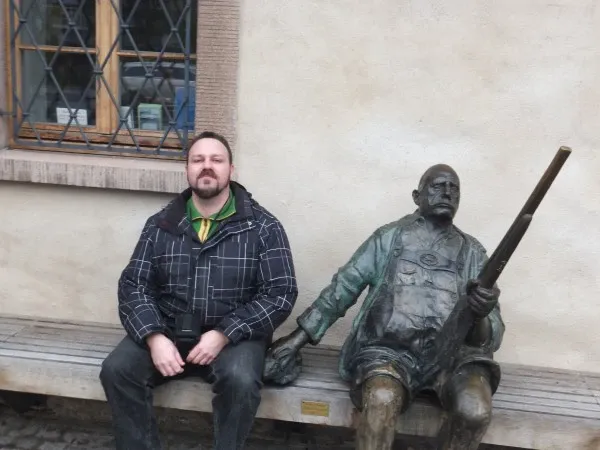
The author at the arms museum in Suhl
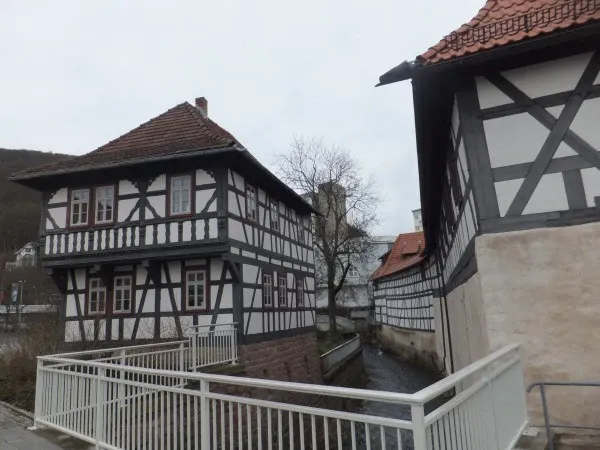
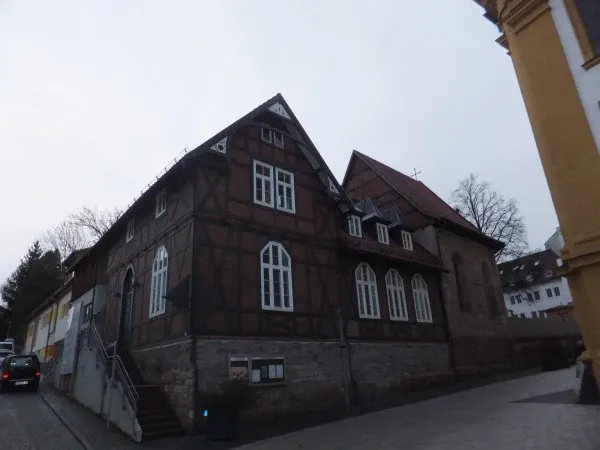
The arms museum is housed in these half-timbered buildings
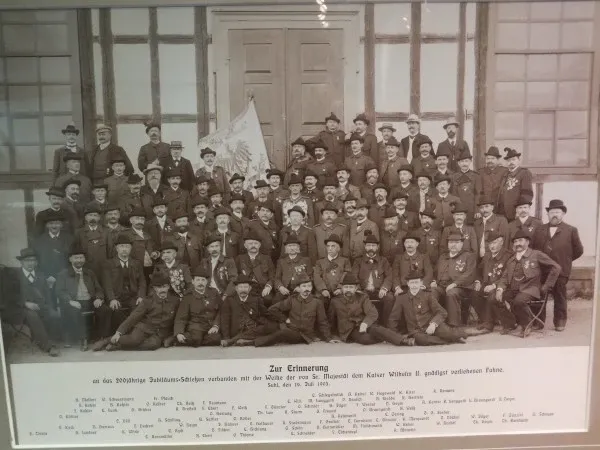
The Suhl gunsmiths' guild celebrates its 200th anniversary. 1905
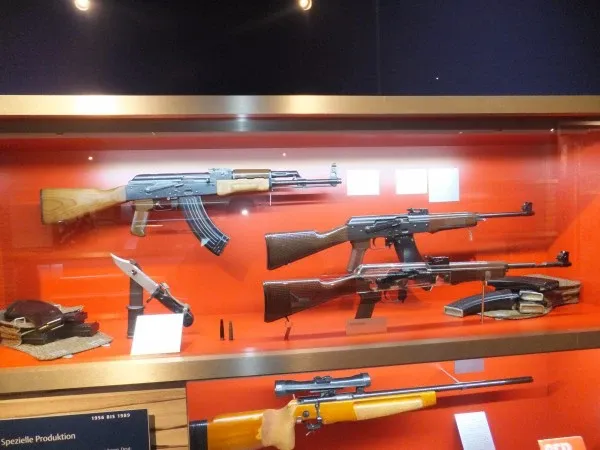
The Kalashnikov assault rifle in the Suhl museum
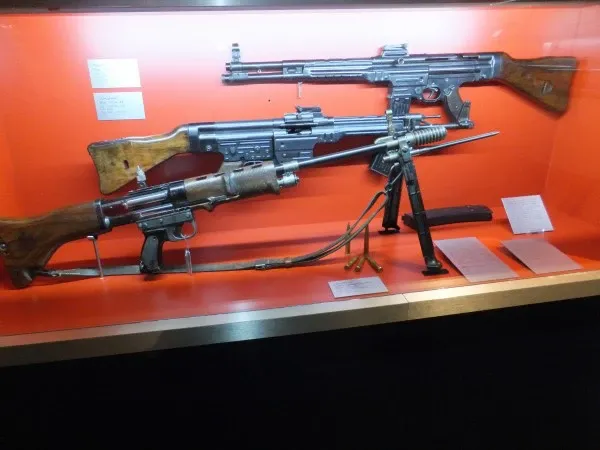
The MP-43 in the Suhl museum
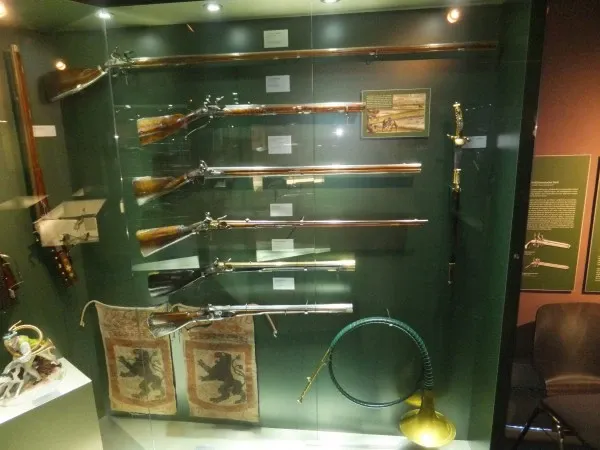
18th century
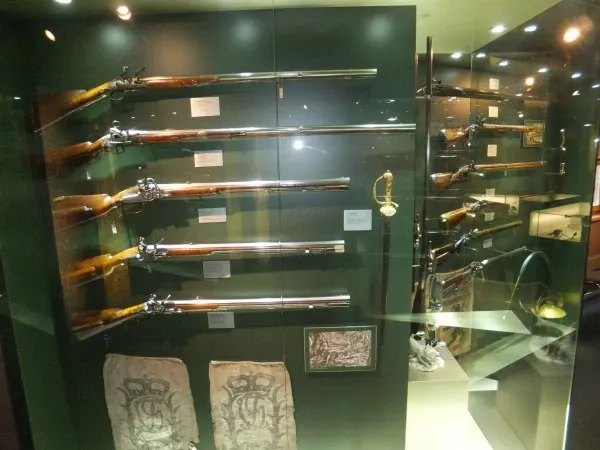
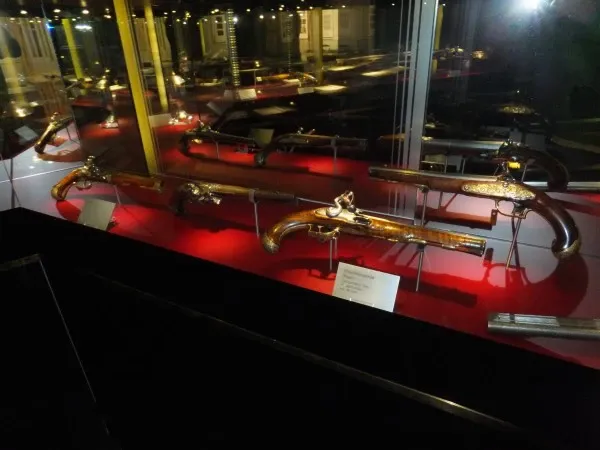
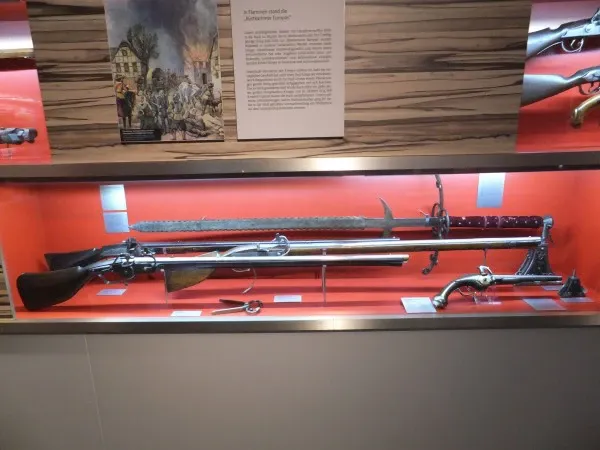
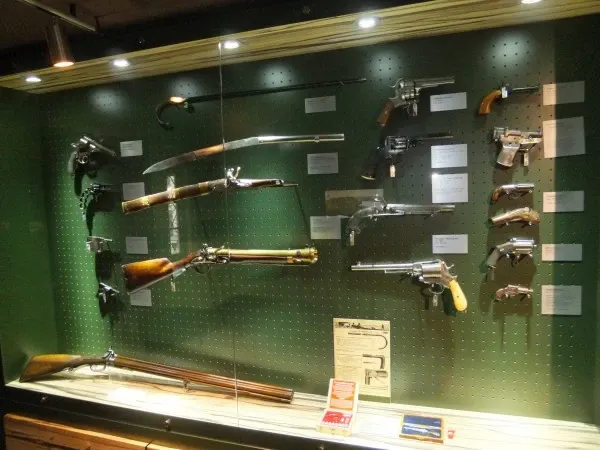
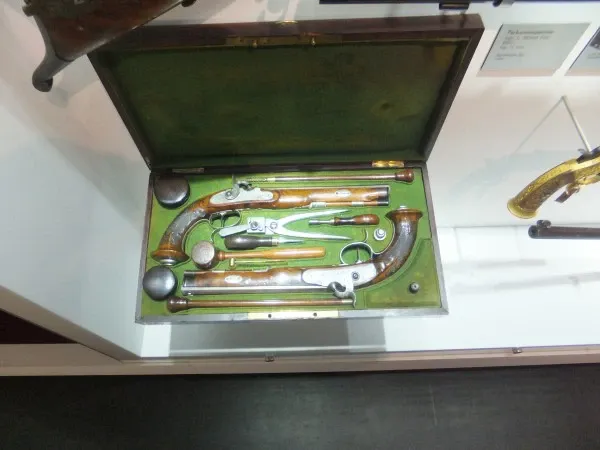
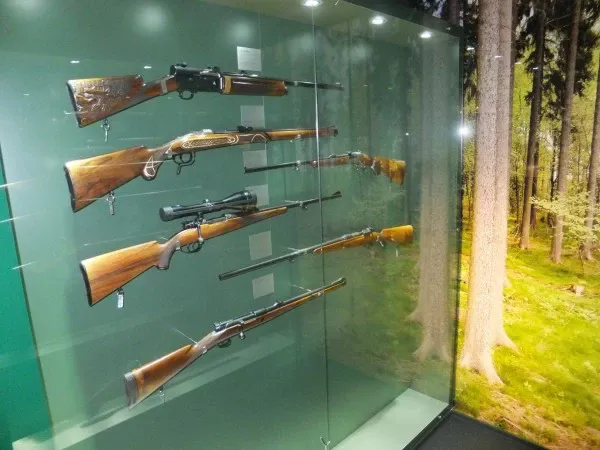
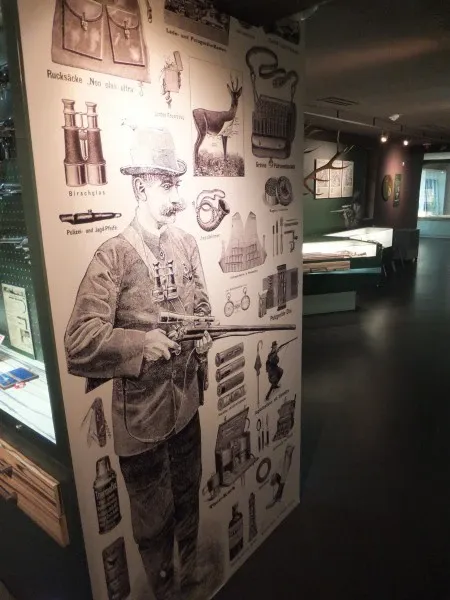
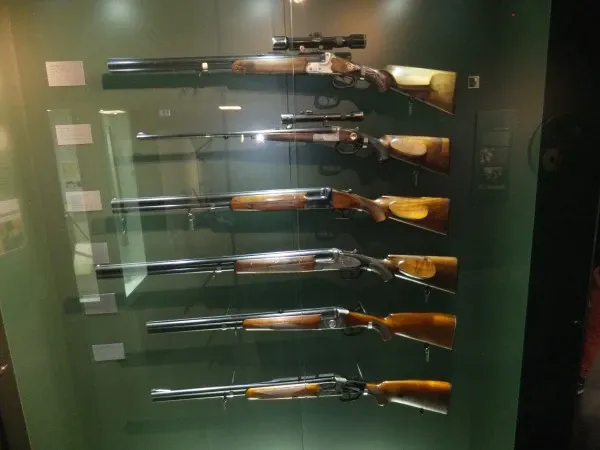
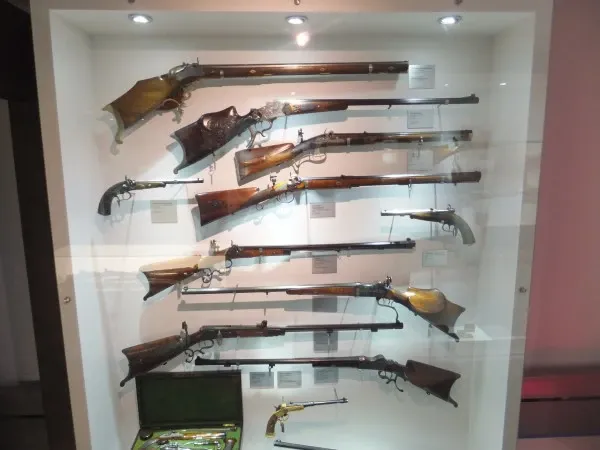
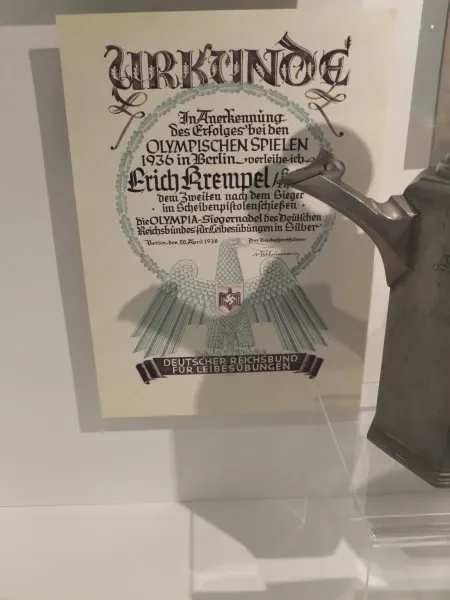
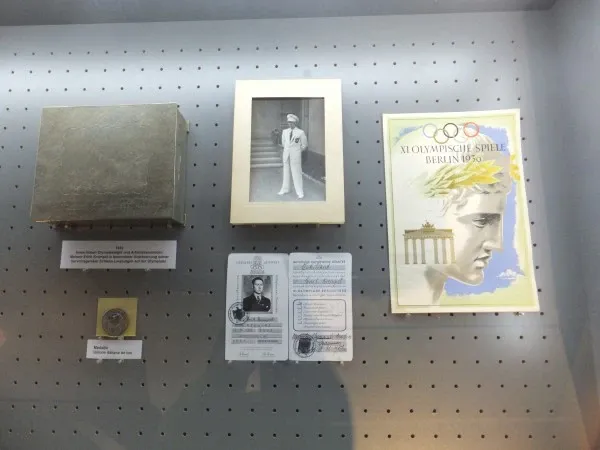
Germany had its own Olympics too...
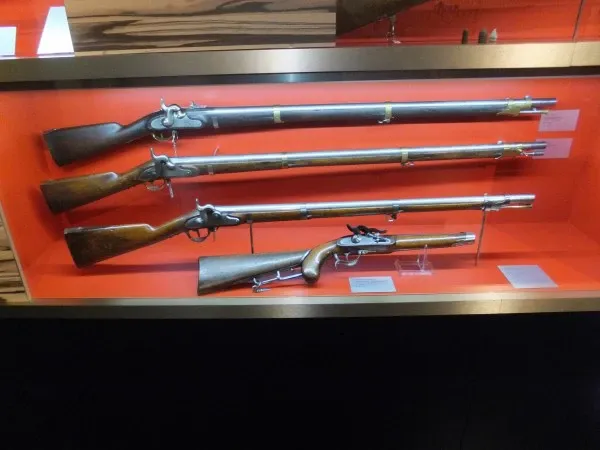
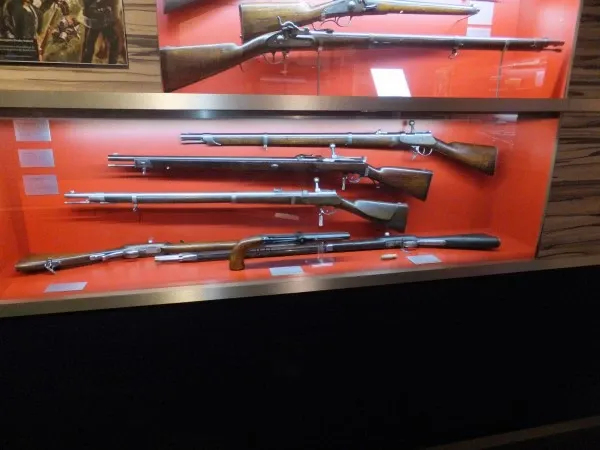
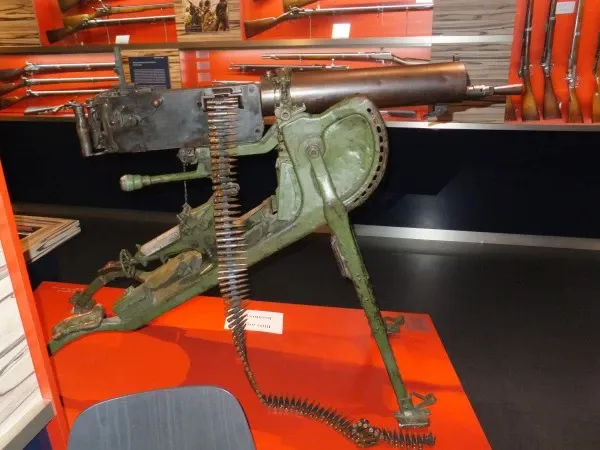
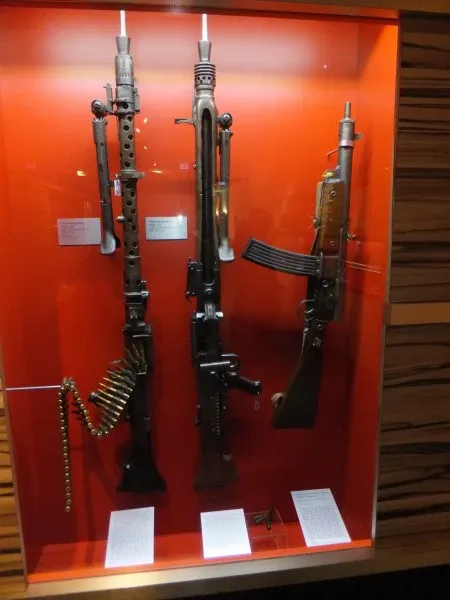
A machine gun from the time of the First World War
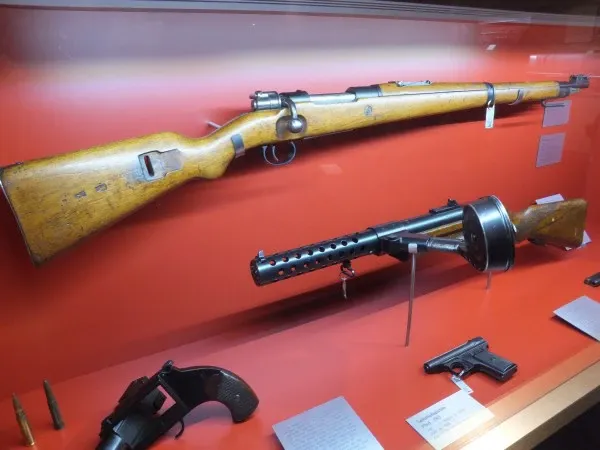
An MP-18 submachine gun from the First World War. The most mass-produced model by H. Schmeisser
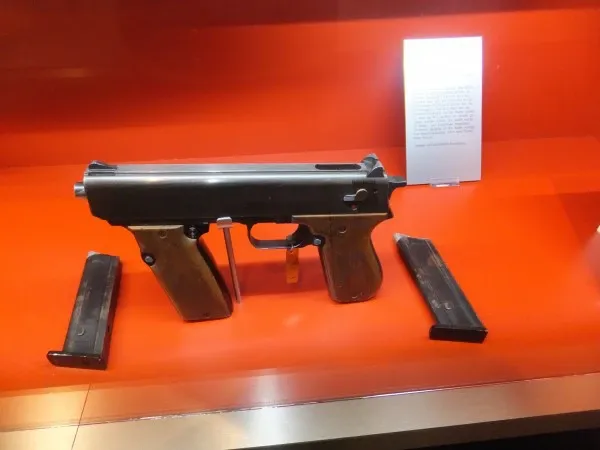
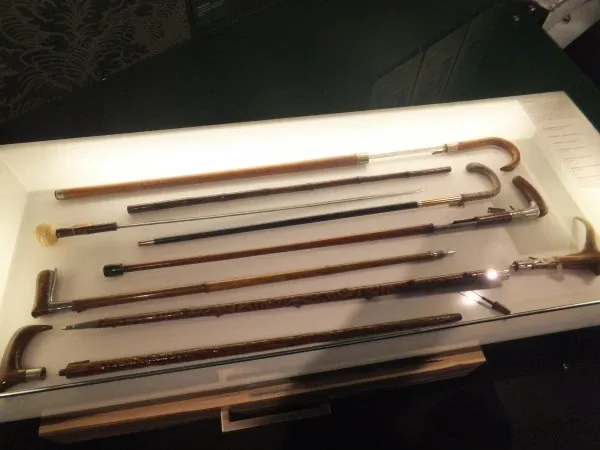
Quite a peculiar kind of weapon...
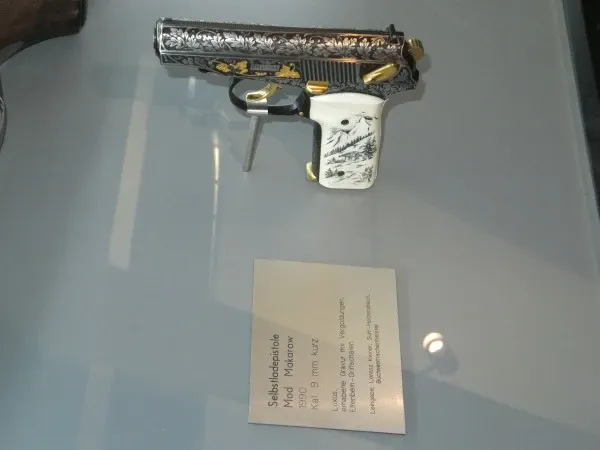
A Makarov pistol from Suhl
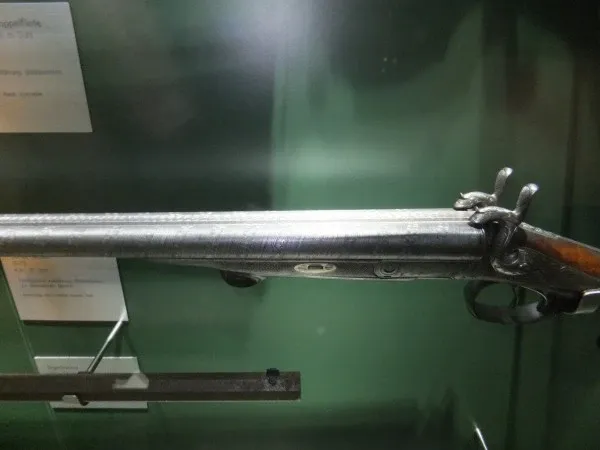
I never knew that firearms were made of Damascus steel. Unfortunately, the photo does not convey the full beauty of these barrels.
And as it turned out, it is not only H. Schmeisser who links Russian Izhevsk and German Suhl. Both have biathlon, arms manufacturing, motorcycle manufacturing, car manufacturing, an imperial history, a Soviet past, and a post-Soviet decline with very similar processes of socio-economic decay. Almost everything that Izhevsk has, Suhl has too, and this in a town of only 50,000 people. Almost the same as Izhevsk had before the revolution. Somebody called Izhevsk the torn-off navel of the empire, having in mind the events of the anti-Bolshevik Izhevsk-Votkinsk uprising. Looking at Suhl, we see what Izhevsk might have been without the communist experiment.
Suhl is a town in the state of Thuringia. It lies in the south of the Thuringian Forest and is surrounded by mountains 600 to 980 m high. The mountains hold deposits of iron and copper ores, malachite, spar and so on.
In 1952 Suhl became a district centre of the GDR. From 1994 to 2004, in the post-Soviet period, the population of Suhl, as in Izhevsk, steadily shrank. Suhl's twin town in Russia is not Izhevsk (with its unthinkable Venezuelan and Hungarian twins) but Kaluga.
I ended up here at Russian Christmas 2014, just before the Olympics in Sochi, while attending a stage of the Biathlon World Cup in Oberhof. Global warming was making itself felt: if there was snow in Russian Sochi in February, then on the traditionally snowy mountains of Thuringia there was none, and it was only artificial, on the biathlon track.
Oberhof is a village 6 km from Suhl, where the GDR national team's Olympic training centre was located. The famous biathlon competition Izhevsk Rifle has lost all significance, and Russia's biathlon centre has moved from where the weapons are to where the gas is, from Izhevsk to Khanty-Mansiysk. Oberhof and Suhl, by contrast, have become the place where World Championships and World Cup stages in biathlon are held. Bavarian Ruhpolding and Garmisch-Partenkirchen did not crush Oberhof; all of them together rose to a new level.
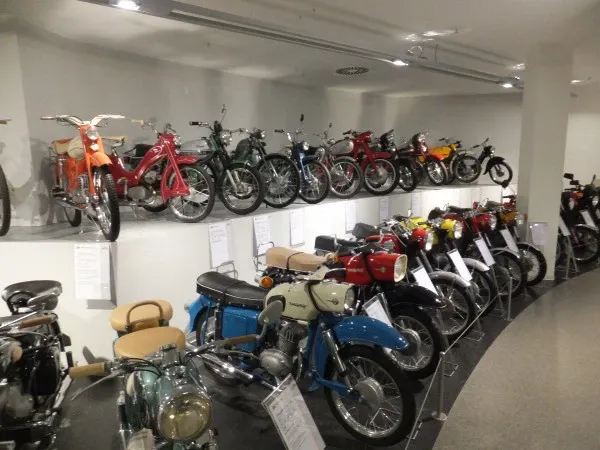
Next to Suhl's weapons museum stands a motorcycle museum. One more parallel with Izhevsk. I do not know whether anything was taken from Suhl to Izhevsk for motorcycle production during the Soviet occupation, but at least one engine was produced in Izhevsk under licence from Suhl, though already in the era of post-Soviet decline of motorcycle production in both places.
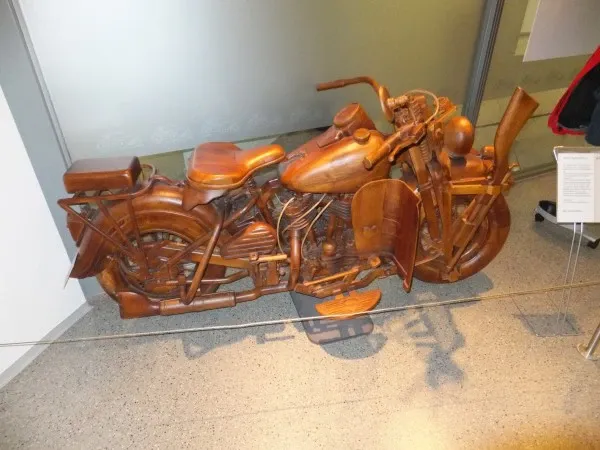
A wooden motorcycle
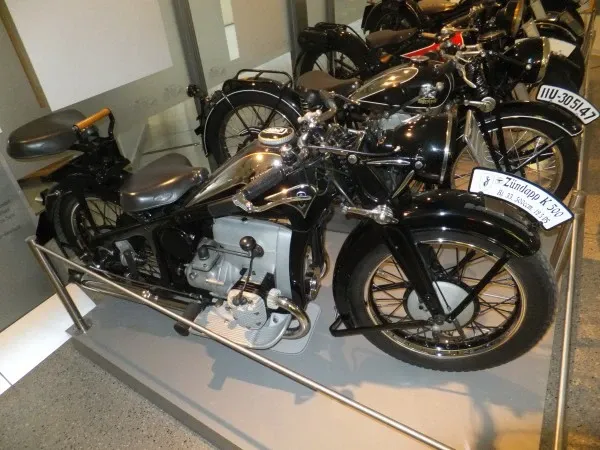
Motorcycles of the 1930s
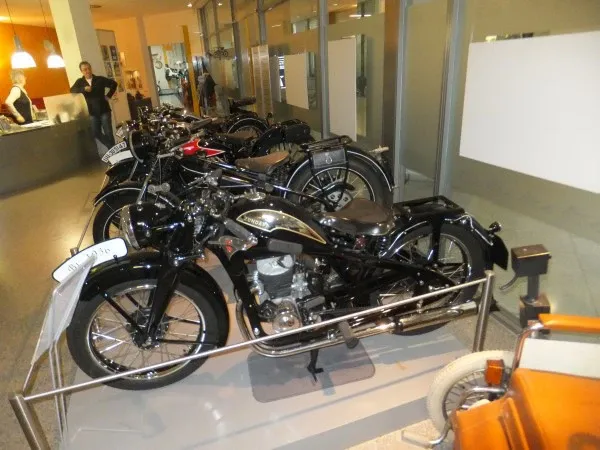
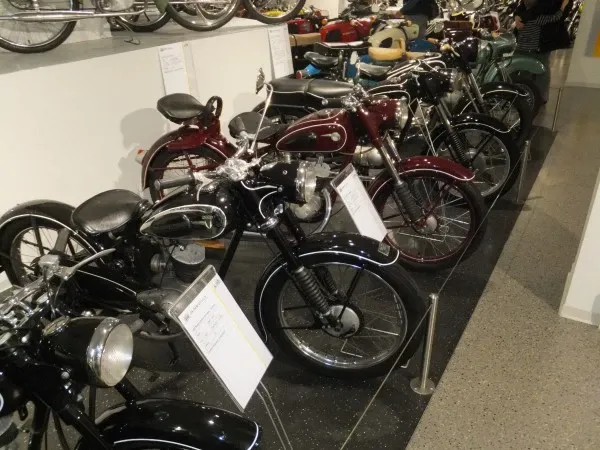
Motorcycles of the 1940s
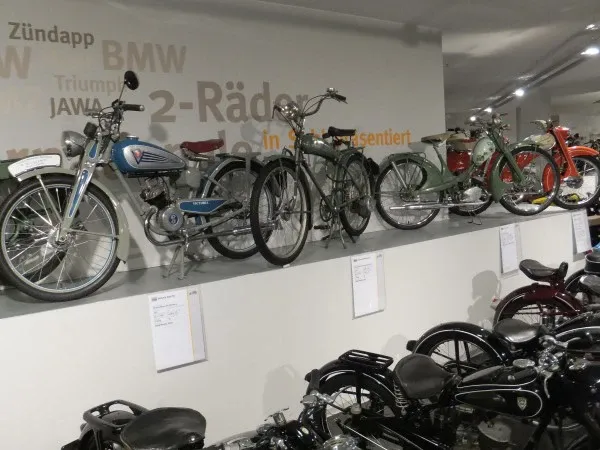
Mopeds
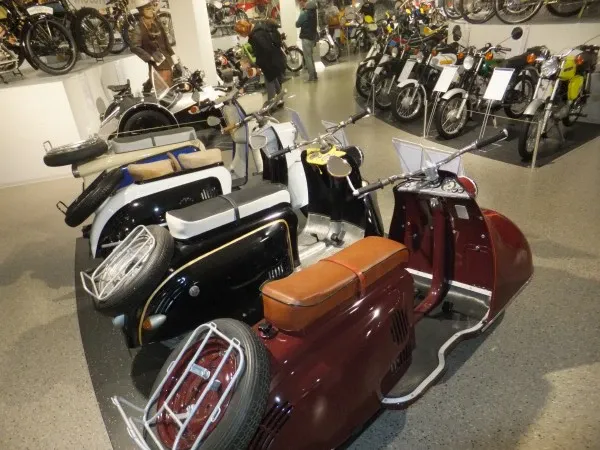
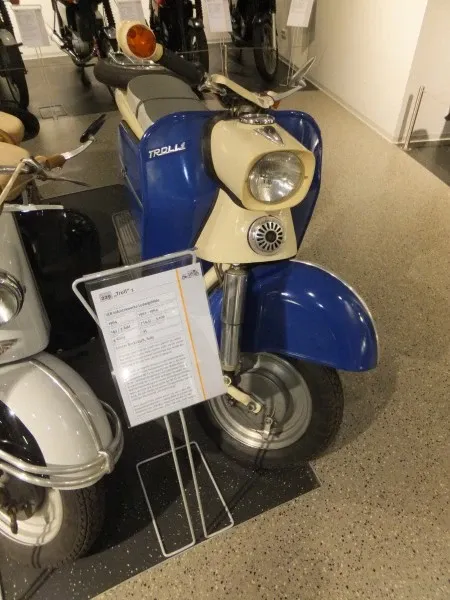
A real Troll
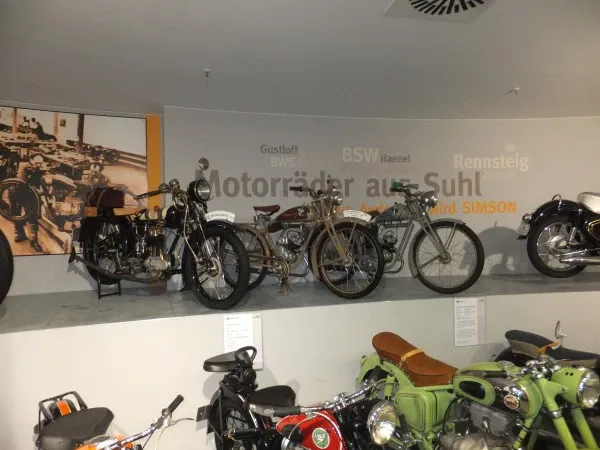
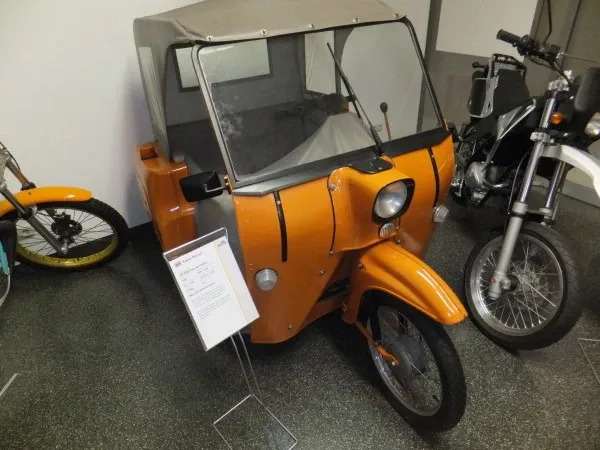
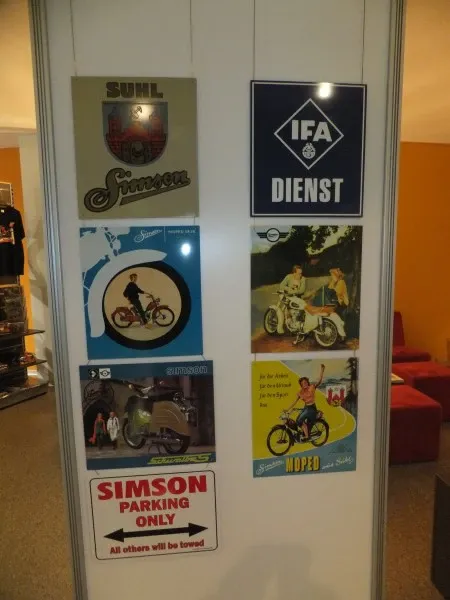
Simson is a former German company that made weapons, cars, motorcycles and mopeds. In the time of the Third Reich the factory was taken away from the Jewish Simson family and renamed several times under the Nazis and the communists. The name Simson was reintroduced as a trademark in the GDR.
In 1983 the company sold the licence for the Simson M531/541 KG-40 engines to Riga and Lviv. After production was shut down, the licence was also sold to the Molot plant in Vyatskiye Polyany, and to Izhevsk, where this engine was installed on the Izh Kornet.
Originally the factory produced ramrods and bayonets for rifles. From 1871 Hirsch Simson began making bicycles. From 1880 they started making hunting rifles, which won worldwide fame. From 1907 to 1934 the firm also produced cars, including racing ones.
In 1934 the owner of the firm, Arthur Simson, was arrested by the Nazis and put in prison. He managed to get out by signing his factory over to them, and himself moved to America. (In essence, the same technique of squeezing out a business was later applied in the Russian Federation to NTV's owner Gusinsky and to Yukos's owner Khodorkovsky.) From that moment Jews no longer had any direct connection to the firm. After the Second World War the Simson brand name was kept. From 1953 the Simson AWO-425 motorcycles began to be produced under it. The AWO-425 (АВО-425, Simson-425) is a motorcycle that was produced at the former Simson arms factory in the German town of Suhl. From 1950 to 1952 the motorcycle was delivered to the Soviet Union as war reparations. The designation AWO is an abbreviation of Auto-Velo. The Schwalbe KR51/1 moped model, for its performance and unique design, is still considered cult in Germany, rivalling even the Italian Vespa in popularity.
The last Simson mopeds were made at the end of 2002, and on 1 February 2003 the Simson firm was declared bankrupt and ceased to exist. At about the same time Izhevsk's motorcycle production was sold to the Chinese.
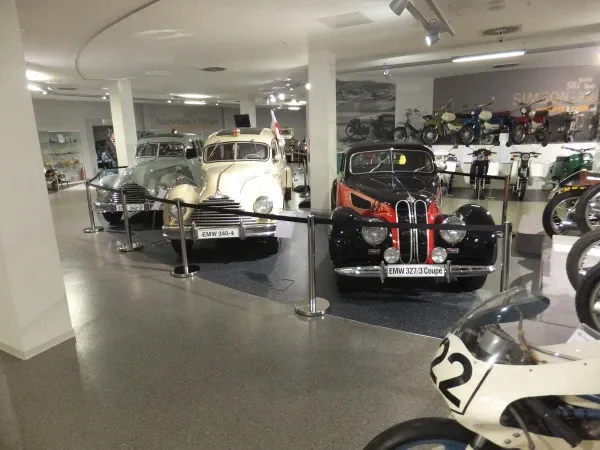
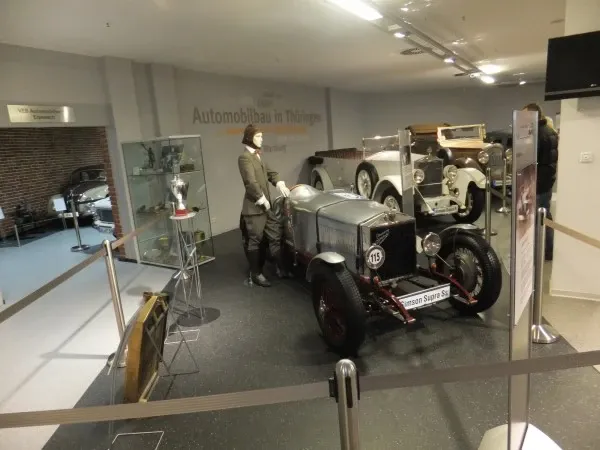
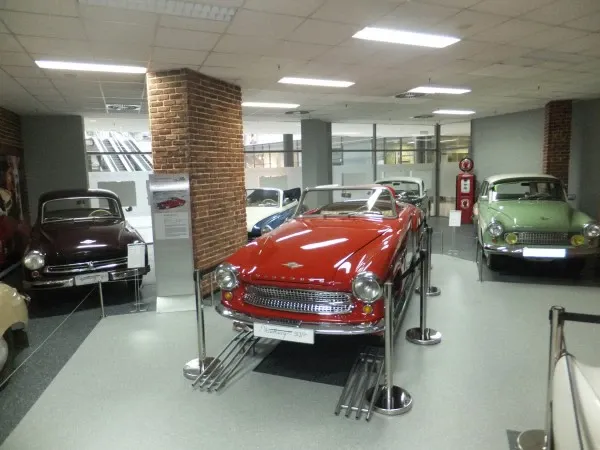
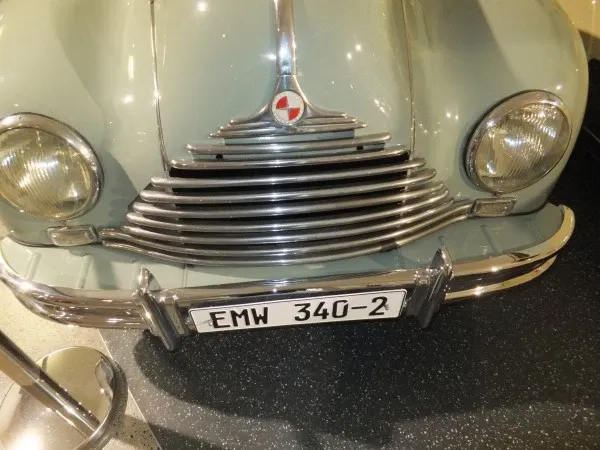
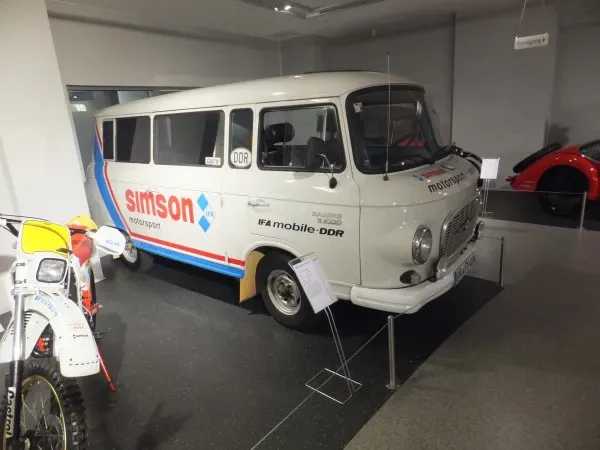
Like Izhevsk, Suhl also produced cars. After the division of Germany into the FRG and the GDR, two BMW factories remained in East Germany; soon the firm changed its name to EMW, and the blue sectors on the emblem became red.
One can only marvel at how a town of 50,000 has such a variety of different industries, comparable to Izhevsk with its 600,000. The answer is simple: the rapid development of private industrial initiative at the turn of the 19th and 20th centuries. In this respect it also closely resembles the Izhevsk of that period, when the state-owned Izhevsk Arms Plant was leased out, and private initiative instantly gave rise to many more enterprises.
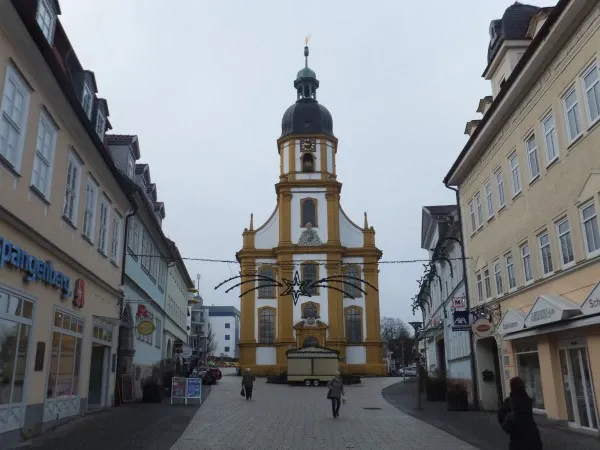
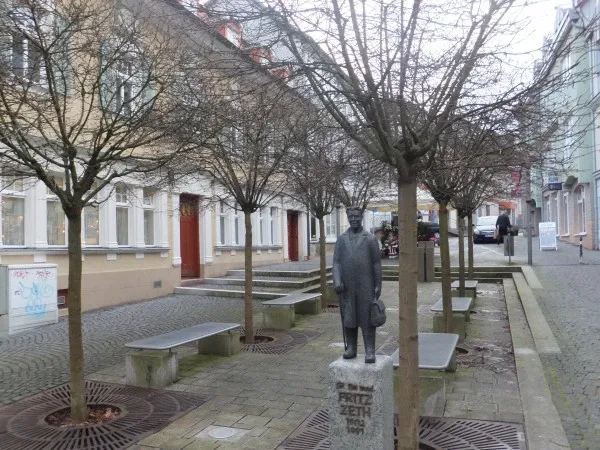
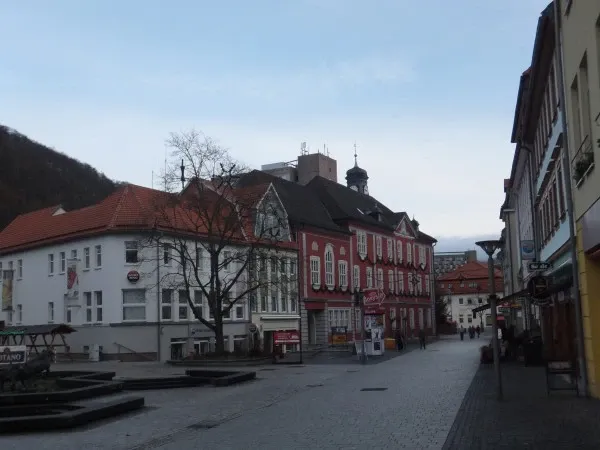
A pedestrian street in the centre of Suhl
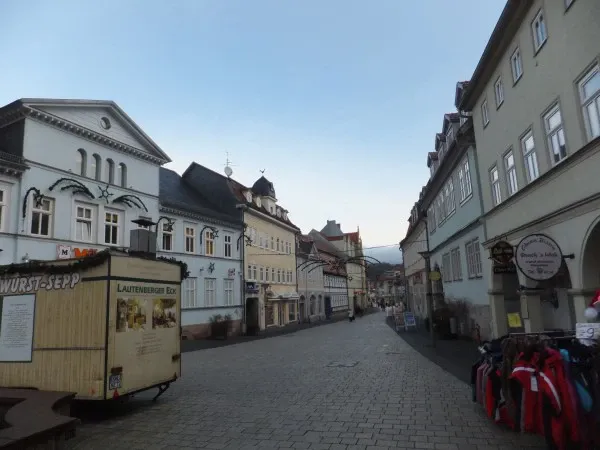
This is how Bazarnaya Street in Izhevsk (now M. Gorky Street) could have looked, if not for the sovok
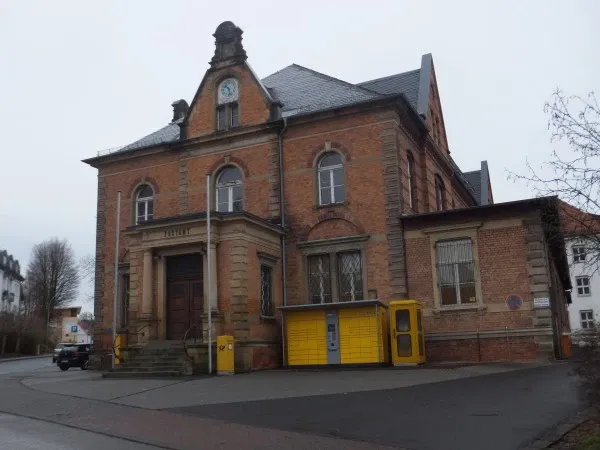
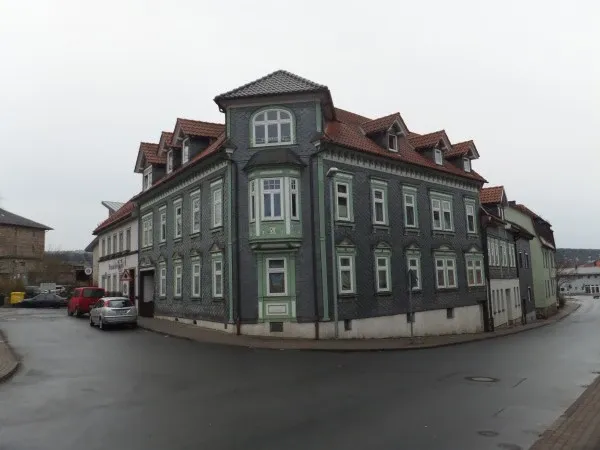
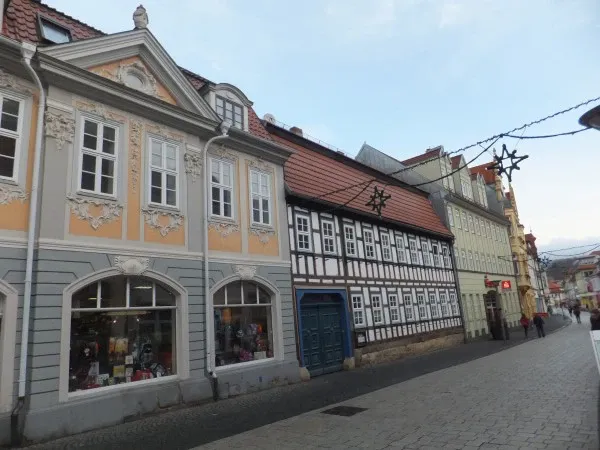
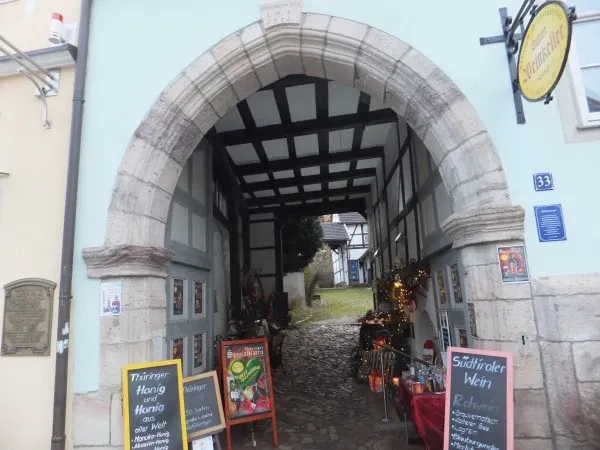
A shop in a 17th-century house sells honey and South Tyrolean wine
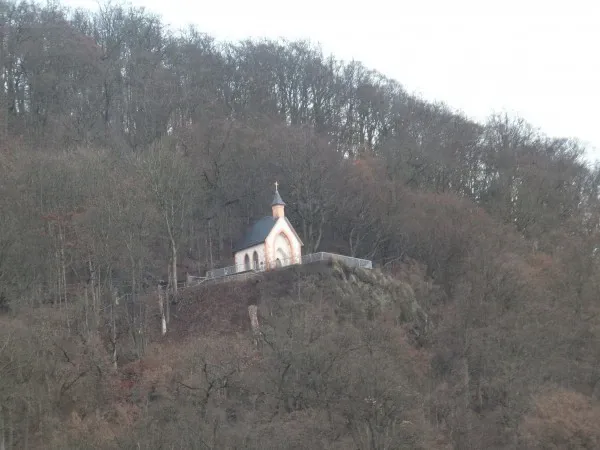
A chapel on the slope of the mountains surrounding Suhl.
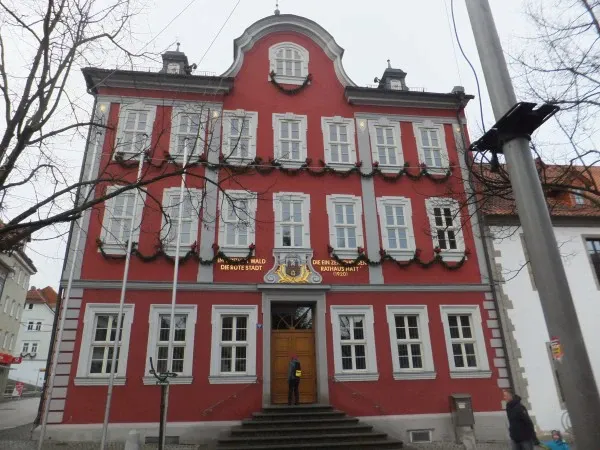
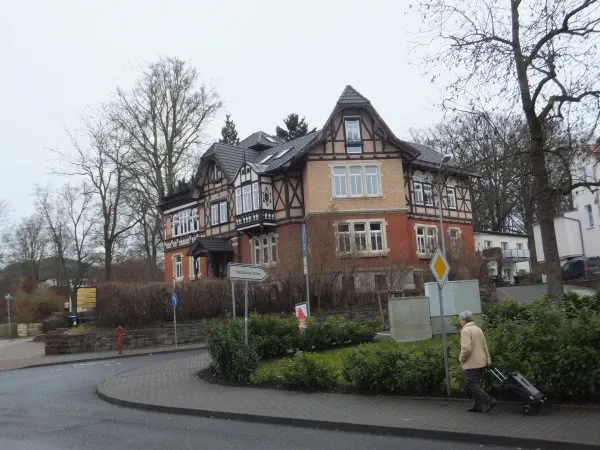
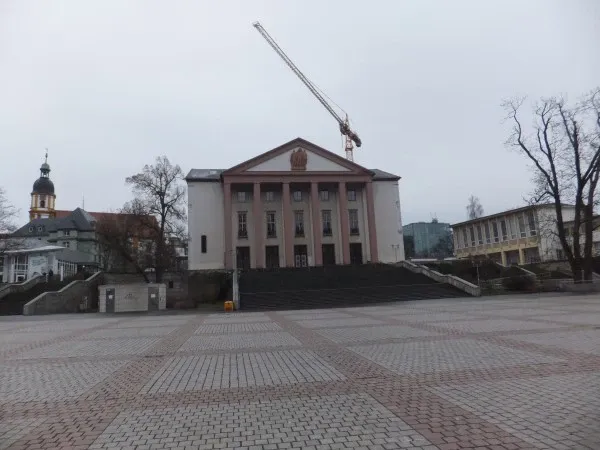
The House of Culture in the centre of Suhl somehow resembles the House of Culture in Votkinsk. It has long been out of operation. Only a poster from the 90s still hangs in the window, advertising a dance "For those over 30"
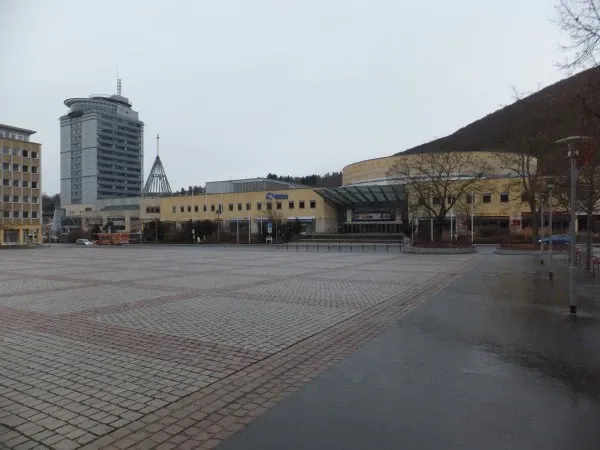
This is where the shopping centre and the motorcycle museum are
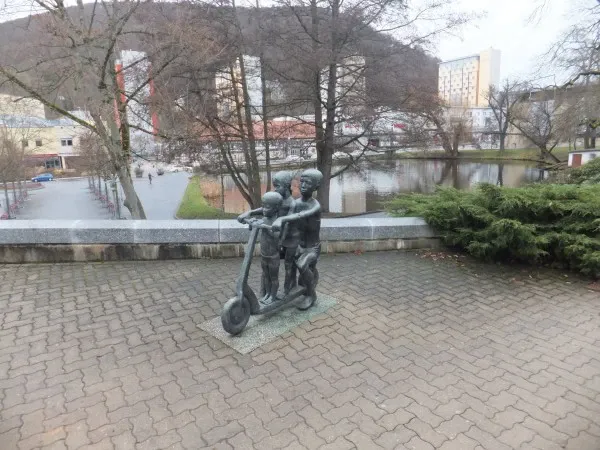
Bronze German children on a scooter.
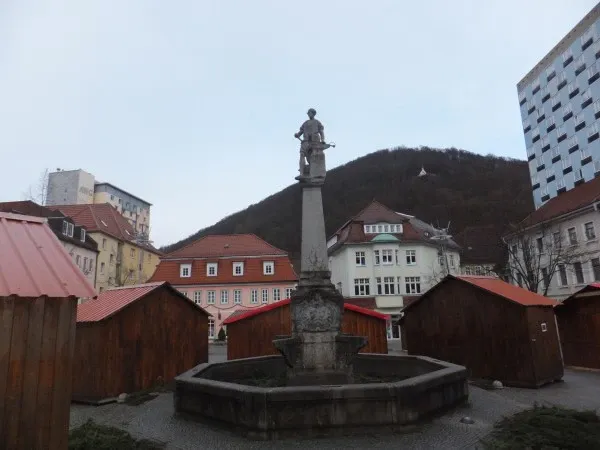
A monument on the fairground square.
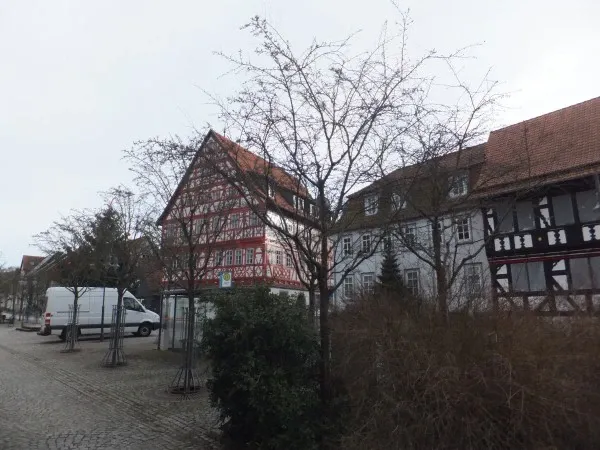
Fachwerk
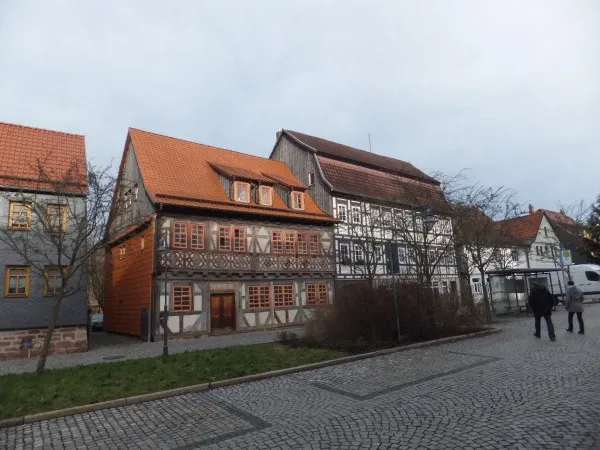
Another fachwerk
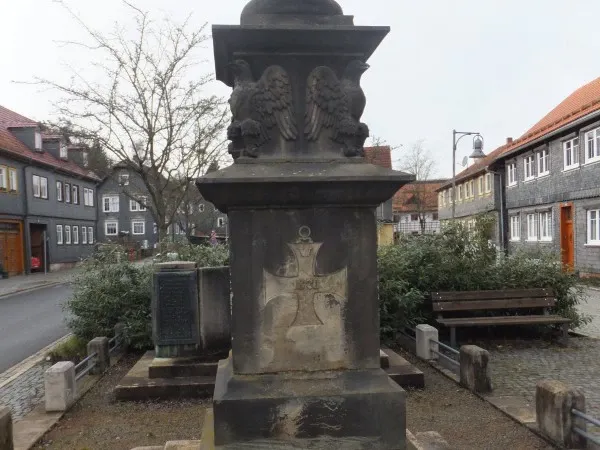
A monument to the heroes of the war of 1870 (while in Izhevsk they have forgotten all the heroes of all Russia's wars)
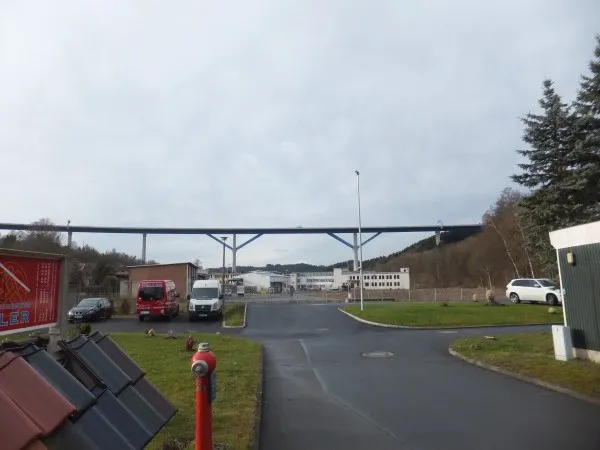
The bridge at the entrance to Suhl. Built after reunification with West Germany. (What a pity that the Russian Federation, after its liberation from the sovok, had no West Russia.) Height: somewhere around 150 metres. The houses in the foreground do not convey the scale. The scale is conveyed by the truck driving across the bridge (if you can make it out).
In Suhl, unlike in Izhevsk, people treat their history with care, because they did not live through the Bolshevik times in their most cannibalistic form. In the old part of the town, historic buildings from the 16th to the early 20th century are preserved. There are only a few high-rise blocks in the town, and that is the advantage of a town that was not inflated tenfold in half a century. In essence, as many people live in Suhl today as 100 years ago. Without Soviet gigantomania we would now have just such a town, with a face of its own, and with that face turned toward its residents.
In Izhevsk, whose historic part was demolished entirely by the Bolsheviks for the sake of destroying its Russian history, the destruction of what remains continues today. The previous president of Udmurtia demolished the historic Plant Administration Building, and the current president of the UR silently watches the destruction of the Main Building of the Izhevsk Arms Plant. The city and republic authorities, acting jointly, are destroying the burial places of Izhevsk residents, siphoning off budgets for construction on top of them. In Izhevsk the graves of all the Izhevsk kaftan-wearers (the elite of the Izhevsk Plant's master craftsmen) were dug up and thrown onto the rubbish heap. The Izhevsk authorities gave the territory of the Uspensky cemetery over to an Azerbaijani café, where Russians are now boozing.
In short, Izhevsk is ruled even now by the same petty crooks as in the days when Sergeant Kalashnikov ran errands to Zhigulevsky for Hugo Schmeisser. Thanks to their leadership, Russia, with a war or without one, may have to live through a catastrophe on the same scale as Germany in 1945, only a society decayed by their efforts will have no chance of repeating the miracle of German revival.