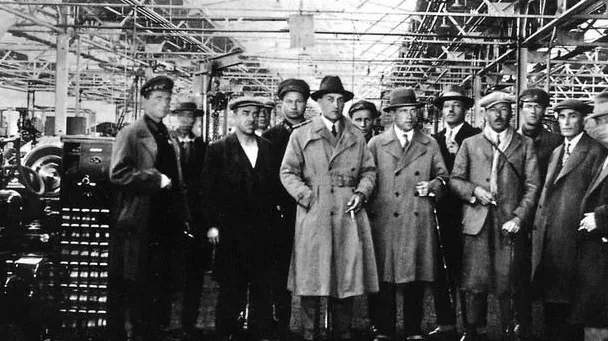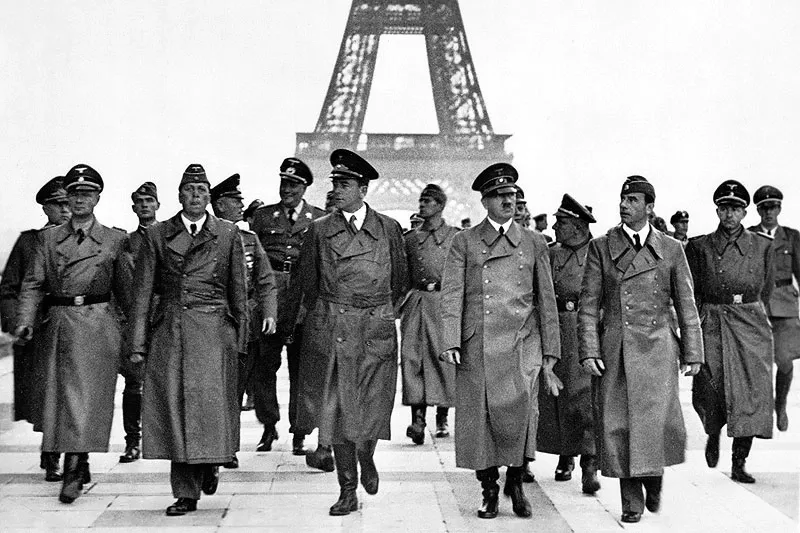
The warm, friendly relations between Hitler and Stalin were always emphasised in the letters and congratulations they exchanged
One of the loveliest pages of history for today's Russia, clinging to its roots, once again testifies that the friendship and cooperation between Nazi Germany and communist Russia were genuinely sincere.
On 17 June 1940 the Kremlin congratulated its close Nazi allies on their delightful victory, as Ambassador Schulenburg reported to his superiors in a telegram.
The document containing congratulations on the capture of Paris on 14 June 1940 was urgent telegram No. 1167 of 17 June 1940, published in volume 2 of the book "USSR — GERMANY 1939-1941. Documents and Materials on Soviet-German Relations from September 1939 to July 1941" (VILNIUS, "MOKSLAS", 1989). It is listed there as No. 35, a telegram from the German ambassador in the USSR, Schulenburg, to the German Foreign Ministry. And here is the document itself:
"Telegram
Moscow, 18 June 1940 — 1.40
Received 18 June 1940 — 4.00
No. 1167 of 17 June
Very urgent!
Molotov invited me to his office this evening and expressed to me the warmest congratulations of the Soviet government on the brilliant success of the German armed forces. Molotov then informed me of the Soviet actions with regard to the Baltic states. He referred to the arguments published in the newspapers and added that it had become necessary to put an end to all the intrigues of England and France, which were trying to sow mistrust and discord between Germany and the Soviet Union in the Baltic countries.
To negotiate the formation of new governments there, the Soviet government, in addition to the plenipotentiary representatives accredited there, has sent the following specially authorised persons: to Lithuania, Deputy People's Commissar for Foreign Affairs Dekanozov; to Latvia, Vyshinsky, representative of the Council of Ministers; to Estonia, the Leningrad party leader Zhdanov.
In connection with Smetona's flight and the possible crossing of the border by units of the [former] Lithuanian army, Molotov stated that the Lithuanian border was evidently guarded insufficiently. The Soviet government, therefore, if necessary, will assist the Lithuanian government in guarding the borders.
Schulenburg"
Of course, most Russia fanatics will say there is nothing seditious here. That it was not Stalin but Molotov, and not to Hitler but to Schulenburg; that no congratulatory telegram was sent, but congratulations were expressed orally in his office. But excuse me. Do you believe that such warm congratulations from the USSR's foreign minister Molotov were offered without Stalin's approval? Of course not!
What is more, note with what wise diplomatic cunning and subtlety the document is composed.
Stalin's foreign minister did not merely congratulate the representative of an allied country, but also shared a report on his successes in occupying the Baltic countries!
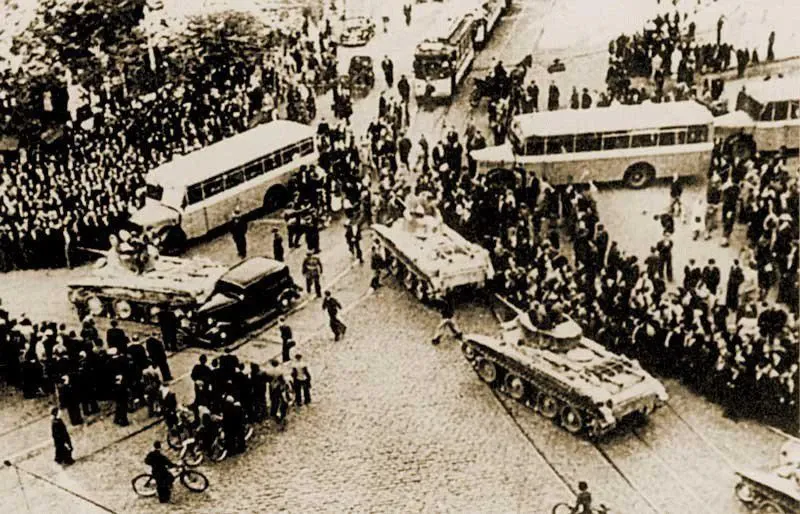 On 14 June 1940, in accordance with the provisions of the Molotov-Ribbentrop Pact, Stalin occupied the territory of Latvia and Estonia.
Note also that, as the text of the telegram shows, the USSR was simply forced to move up to the Lithuanian borders, "which are guarded insufficiently".