Stalinists and Soviet patriots undeservedly keep silent about another type of "Stakhanovite": the NKVD executioners.
Stalinists and Soviet patriots undeservedly keep silent about another type of Stakhanovite: the NKVD executioners.
Among them are genuine record-holders:
- General Vasily Blokhin personally shot 20,000 people
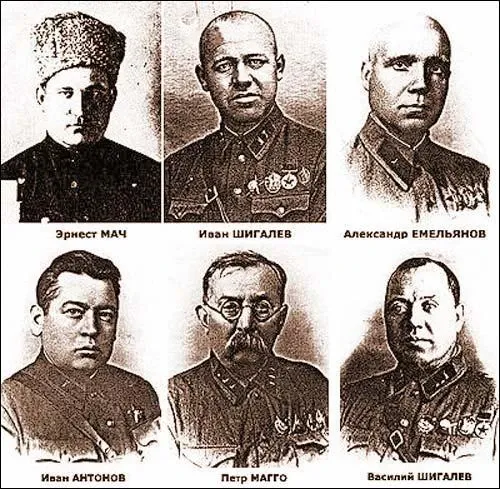
- Pyotr Maggo, slightly fewer than 10,000
Most of the executioners died of natural causes, were buried with honors and are still revered by the siloviki.
When people talk about Stalin's repressions, they most often mention only the GULAG. Yet it was only part of the repressive machine. Hundreds of thousands of people never lived to see the GULAG, ending their journey in execution rooms or at firing grounds. The NKVD (later the MGB) perfected a system of executions that worked like a machine.
The scale of this system is staggering.
At the peak of the repressions:
- in 1937, 353,074 people were shot, almost 1,000 people a day
- in 1938, 328,618 people
After that the number of executions fell sharply: 2,552 in 1939, 1,649 in 1940, 1,609 in 1950.
Roughly at that level was the annual number of people sentenced to the supreme penalty until Stalin's death.
Nevertheless, the masters of the execution trade had plenty of work in those years too: now tens of thousands of Polish officers had to be executed, for example Katyn, Kalinin; now deserters during the Great Patriotic War.
The overwhelming majority of executions, up to 60%, were carried out in Moscow, after brief interrogations, a stay in Lubyanka and a swift extrajudicial sentence by a troika.
That is why the NKVD Stakhanovites also operated mostly in the capital. Their circle was limited to just 10-15 people for the whole of Moscow.
Such a small number of executioners was explained not by the difficulty of finding people to perform these duties, but by the fact that a real executioner had to be a master of his craft: to have a stable psyche (below it will be described how the psyche broke even in experienced Stakhanovites), professional skills, secrecy (even the executioners' closest relatives did not know what their work in the NKVD consisted of), and devotion to the cause.
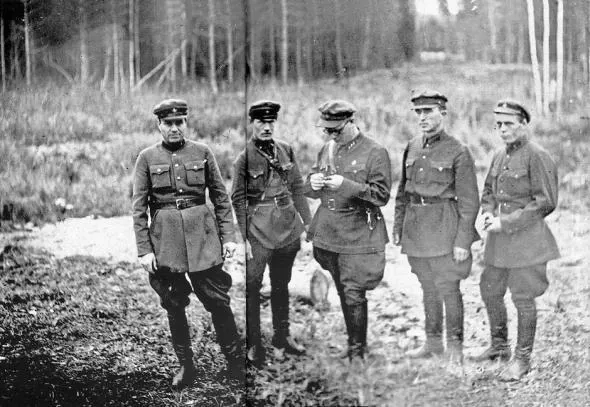
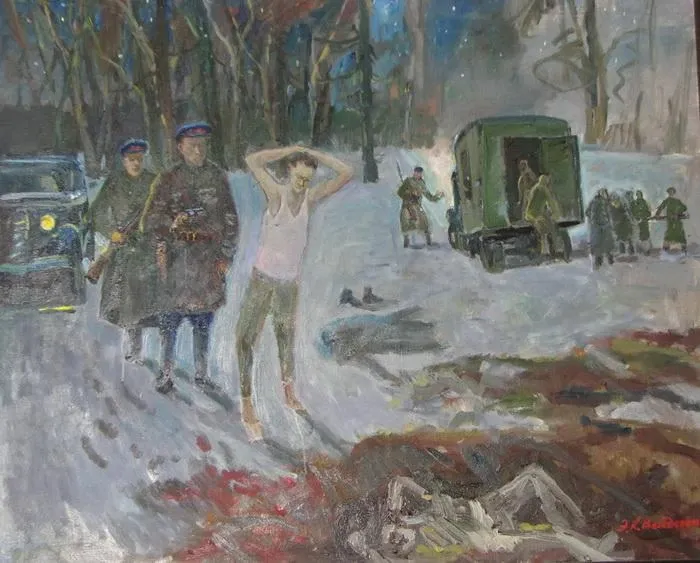
An NKVD execution squad
One of these masters, a genuine record-holder, was Vasily Mikhailovich Blokhin.
Over his long working career, Major General Blokhin personally shot about 20,000 people.
The two other medalists, Pyotr Ivanovich Maggo and S. N. Nadaraya, lagged far behind: about 10,000 shot by each.
Vasily Ivanovich was born in 1895 into a family of a poor peasant in the Vladimir region.
At 15 he began working as a bricklayer in Moscow; in the First World War he rose to non-commissioned officer.
He was in the Cheka from 1921. He held the rank of commandant of the OGPU-NKVD-MGB from 1926 and was the permanent commander of executions until his retirement in 1953.
Without leaving his job, in 1933 he graduated from the Moscow Institute of Architecture and Construction, becoming an executioner-intellectual.
Blokhin's work was hard: in fact he was the only one of an execution team of about 15 executioners who lived to retirement in good health.
Perhaps because he always observed workplace safety rules and did not drink on the job.
One of the executioners, Yemelyanov, recalled:
Vodka, of course, we drank until we lost consciousness. Say what you like, but the work was not easy. We got so tired that we could barely stand on our feet at times. And we washed with cologne. Up to the waist. Otherwise you couldn't get rid of the smell of blood and gunpowder. Even the dogs shied away from us, and if they barked, they did it from a distance.
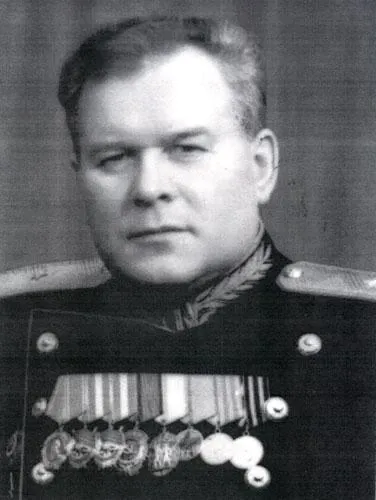
Vasily Blokhin
No wonder the executioners died early or went mad.
Thus, Yusis died of natural causes in 1931, Maggo in 1941, Vasily Shigalyov in 1942, and his brother Ivan Shigalyov in 1944.
Many retired on disability due to schizophrenia, like Yemelyanov, or a nervous-psychiatric illness, like Maggo.
The order dismissing Yemelyanov said so outright:
Comrade Yemelyanov is transferred to pension on account of illness (schizophrenia) connected exclusively with many years of operational work in the organs.
And Pyotr Ivanovich Maggo once, after shooting about 20 people, got so carried away that he shouted at the head of the special department, Popov, who was standing next to him, mistaking him for yet another victim:
And what are you standing here for? Undress! Immediately! Or I'll shoot you on the spot!
The frightened special officer barely fought off the fanatic of his cause.
Once Maggo got a dressing-down from his direct superior, I. D. Berg.
Citing Maggo, Berg stated in a written report that many of the condemned die with the words:
Long live Stalin!
The leadership's resolution was as follows:
Educational work must be carried out among those sentenced to be shot, so that at such an inappropriate moment they do not besmirch the name of the leader!
Pyotr Ivanovich even had to give lectures to some people before their execution.
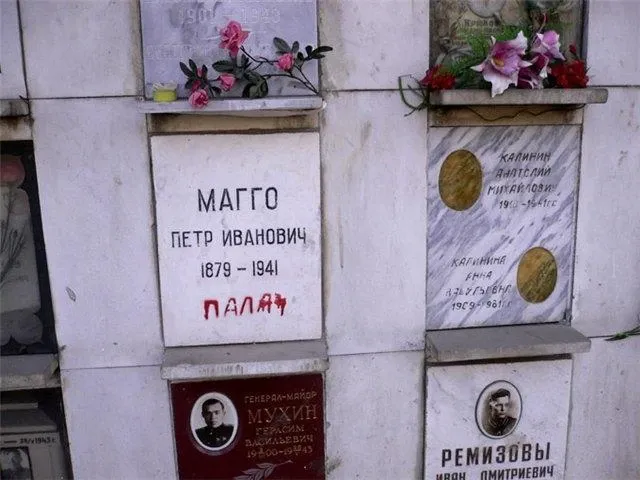
Maggo is buried at the Novodevichy Cemetery; from time to time someone writes the word "executioner" on his tomb.
How could one not fall ill from such work?
But Vasily Ivanovich Blokhin would first put on the appropriate leather uniform before an execution: an apron below the knee, gauntlets and a peaked cap.
He liked to drink tea unhurriedly before the execution and after it.
He had also loved horses since childhood (as a ten-year-old child he worked part-time as a shepherd), and in the breaks between work he looked through illustrated books about them.
After his death a library of about 700 books on horse breeding remained. The man knew how to relax.
Incidentally, it was Blokhin who led the shooting at Katyn, and he personally shot about 700 Poles there.
In 1991, during an interrogation at the Main Military Prosecutor's Office of the USSR, one of the members of this execution team, the former head of the NKVD Directorate for the Kalinin Region, Tokarev, said:
Yablokov (investigator):
If I understood correctly, the Polish prisoners of war were shot with Walthers. Right?
Tokarev:
With Walthers. I know that well, because they brought a whole suitcase of them. Blokhin himself was in charge of it. He handed out the pistols, and when the work was finished the pistols were taken back. Blokhin himself collected them.
Vasily Ivanovich Blokhin was buried in 1955 at the Novodevichy Cemetery.
Other Stalinist executioners, including the medalist Maggo, are buried there too, in places of honor.
True, after Beria's arrest Blokhin was stripped of the rank of major general and of 8 orders, as well as of his pension of 3,150 rubles, when the average salary in the country was 700 rubles.
Blokhin could not endure such repressions and died of a heart attack.
In the late 1960s his ranks and orders were returned to him posthumously, in effect rehabilitating him.
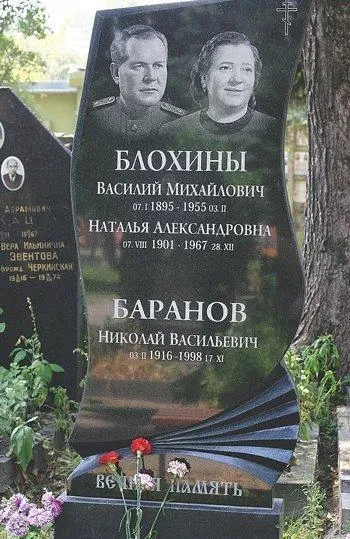
The grave of the USSR veteran, hero and perpetrator of numerous executions, Vasily Blokhin
Execution really did turn out to be a kind of art.
Pyotr Maggo instructed inexperienced executioners like this:
The hands of the one you are leading to be shot must absolutely be tied behind with wire. You order him to go forward, and you follow him, revolver in hand. Where necessary, you command "right," "left," until you bring him to the place where sawdust or sand has been prepared. There you put the muzzle to the back of his head and bang! And at the same time you give him a firm kick in the backside. So that the blood doesn't splatter your tunic and your wife doesn't have to wash it again.
And here is the description, by the aforementioned Tokarev, of the shooting of Polish officers near Kalinin on April 5, 1940:
Blokhin gave the signal, saying: "Well, let's go, let's begin." Blokhin put on his special clothing: a brown leather hat, a long leather coat, brown leather gloves with sleeves above the elbow. For me it made a great impression: I saw an executioner.
Blokhin and Rubanov brought the people in one at a time, through a corridor, turning left, where the red room was located. Various propaganda posters hung there, and there was a plaster statue of Lenin. The red room, or Lenin room, was a room measuring 5 by 5 meters. Here the prisoner's identity was checked one last time, asking his name and date of birth. Then it was marked on the list so that there would be no mistake.
Finally, the Polish officer or policeman was handcuffed and led to the "execution cell." Here the prisoner's life ended with a shot to the back of the head. Experienced executioners shot into the neck, holding the barrel slanted upward. Then there was a chance that the bullet would exit through the eye or mouth. Then there would be only a little blood, whereas a bullet fired into the back of the head leads to profuse bleeding (more than a liter of blood flows out). And at least 250 people were killed a day.
The corpses of the murdered were thrown out of the cell where the killings took place, through a spare door into the yard, where a truck was waiting. The truck beds were washed every day of fragments of brain and blood. The corpses, 25-30 to each truck, were covered with tarpaulin, which Blokhin ordered burned at the end of the operation. The bodies thrown into the trucks were taken to common trenches in the forest near Mednoye.
These trenches were filled in by the NKVD man Antonov, an excavator operator, with his assistant.
When all the prisoners from Ostashkov had already been destroyed, Blokhin arranged a farewell libation for the people who had killed more than 6,300 persons. Blokhin received a bonus equal to a month's salary. Some were given a commemorative Nagant revolver, a bicycle or a gramophone as a bonus.
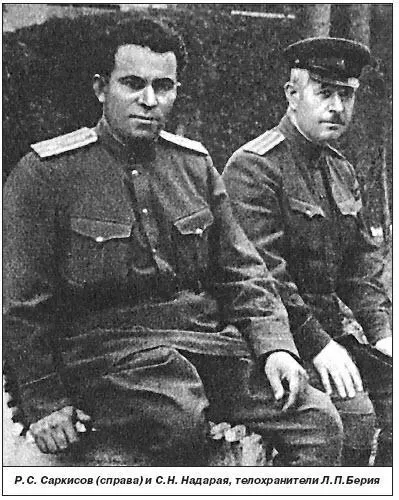
As already mentioned, after Stalin's death the repressions hardly touched the executioners. Nadaraya is considered the one who suffered most. He rose to head of Lavrentiy Beria's personal guard.
A universal specialist, he personally conducted the investigation and personally shot. He was distinguished by high labor productivity: up to 500 executed in a night. In 1955 he received 10 years in camps. He was released in 1965, after which he lived out his days peacefully as a pensioner in Georgia.
But executioners of lower rank, with just a few hundred personally shot, sometimes ended up shot themselves as well. Telling here is the fate of the NKVD men who took part in the mass shooting of the so-called Solovki transport in the Karelian town of Sandarmokh, where about 2,000 people died, in October 1937.
The shootings began on October 27, then there was a four-day break because the chief executioner Matveyev went on a binge, upset over the escape of one prisoner, who was soon caught and shot.
On November 1 the shootings resumed and continued until November 4. At the end of the operation some executioners were rewarded, others arrested.
For example, by order of the Leningrad Oblast NKVD Directorate of December 20, 1937, "for selfless work in the fight against counter-revolution," the chief killer of the Solovki transport, Matveyev, was given a valuable gift, namely a radiogram with records; the other members of the operations squad that worked with Matveyev were rewarded with Korovin pistols and watches.
Most of the employees who took part in or had any connection with the shootings of the Solovki transport, however, were arrested and sent under escort to Moscow.
They were: the head of the 10th prison department of the GUGB of the USSR NKVD, Muscovite Nikolai (Luka) Antonov-Grisyuk, and another Muscovite, Senior Major of State Security and Deputy People's Commissar of Water Transport Yakov Markovich Veinshtok.
Vsevolod Mikhailovich Krukovsky, head of the 2nd department of the Karaganda corrective labor camp, who had been specially summoned to the operation from Karlag, was arrested; the Leningrad Oblast prosecutor and troika member B. P. Pozern was also arrested and taken to Moscow. All of them were convicted in Moscow, shot and delivered for cremation to the Donskoy Crematorium as spies and saboteurs.
Interestingly, the man who shot them, once his colleagues, was none other than Vasily Mikhailovich Blokhin.
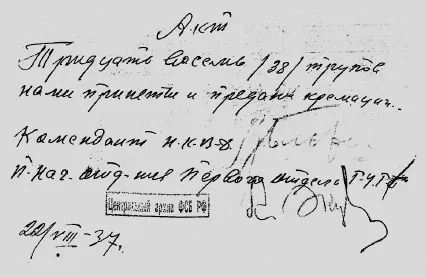
A certificate for the corpses, signed by Blokhin
All these shot NKVD men, themselves executioners, were rehabilitated in various years.
Matveev, the chief executor of the Solovki convoy shootings at Sandormokh, was nevertheless arrested a year and a half later, in March 1939, with the sanction of L.P. Beria, in the so-called Beria purge of the ranks .
Matveev's fate, unlike that of many other Solovki executioners, turned out well. The military tribunal of the NKVD troops of the Leningrad Military District sentenced him under Article 193-17 a of the RSFSR Criminal Code to 10 years in a corrective labor camp. But when the case was reviewed by the Military Collegium of the USSR Supreme Court, his sentence was reduced to 3 years.
His awards were not taken away. He served his sentence in Volgolag, and he was even released early.
During the war he already held the post of head of the internal prison of the regional NKGB directorate; the Order of Lenin was added to his earlier awards. Sometimes he returned to his trade and shot convicts.
He died a natural death, already under Brezhnev.
Another Solovki executioner, Garin, with about 400 people shot personally, was transferred in the spring of 1938 to Karelia as a camp head, died of a heart attack in 1940, and was buried with honors in Moscow at the Novodevichy Cemetery.
The executioner Raevsky, who shot about 300 people, was arrested with the sanction of L.P. Beria as one of the leaders of a counter-revolutionary insurgent organization that existed among the camp inmates on the island of Solovki , and served his sentence in Unzhlag, where he ran the isolation unit at the punishment camp site. After Khrushchev's rehabilitation he was reinstated in the rank of lieutenant colonel.
The executioner Kollegov, who was also tried in this case and was also shot in the end, was rehabilitated in 1959.
All these executioners are today also considered victims of Stalin's repressions !
Some have been entered into the FSB halls of fame!
Such are the glorious heroes you have, Russia, something to be proud of.
And now I understand why there was no place for Boris Nemtsov at the Novodevichy Cemetery: there will soon be nowhere left to bury the executioners!
References:ttolk.ru