The history of Russia, like that of its successor the USSR, is one continuous impenetrable myth, a vast heap of centuries-old lies.
The history of Russia, like that of its successor the USSR, is one continuous impenetrable myth, a vast heap of centuries-old lies.
But, as they say, there is nothing hidden that will not become known, and the time has come for the Soviet myths to collapse:
Myth 1: The Great Patriotic War
The greatest Battle of Good against Evil in History is called the Great Patriotic War of the Soviet People against the German-Fascist Invaders, and it lasted 4 years, from 22 June 1941 to 9 May 1945.
Reality:
The Second World War, which is the name under which the rest of the world knows this great battle, began on 1 September 1939 with the attack of the Third Reich's army on Poland and the attack of the USSR on Poland that followed it on 17 September.
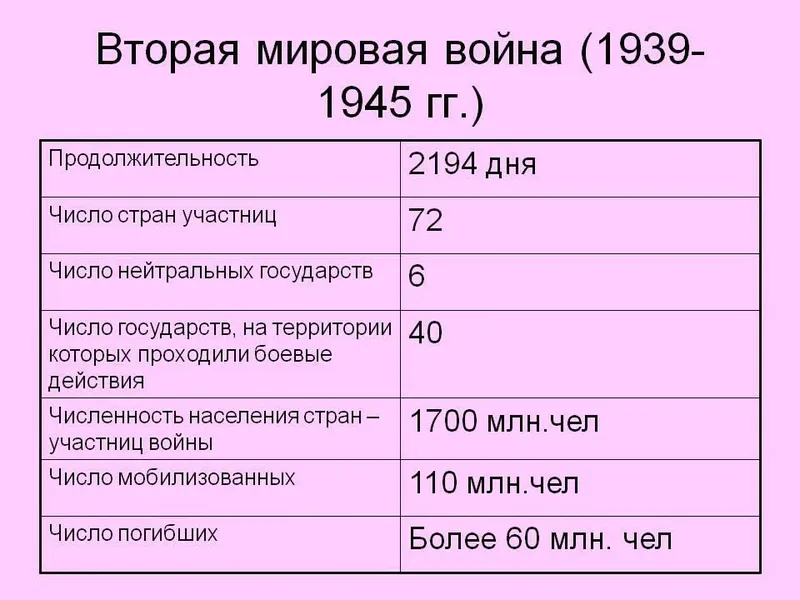
And the Second World War ended on 2 September 1945 with the capitulation of the Japanese Empire.
In many countries the local military conflicts within the Second World War have their own names, but nowhere except the Soviet Union did the name of a PART of the war replace the name of the WHOLE war.
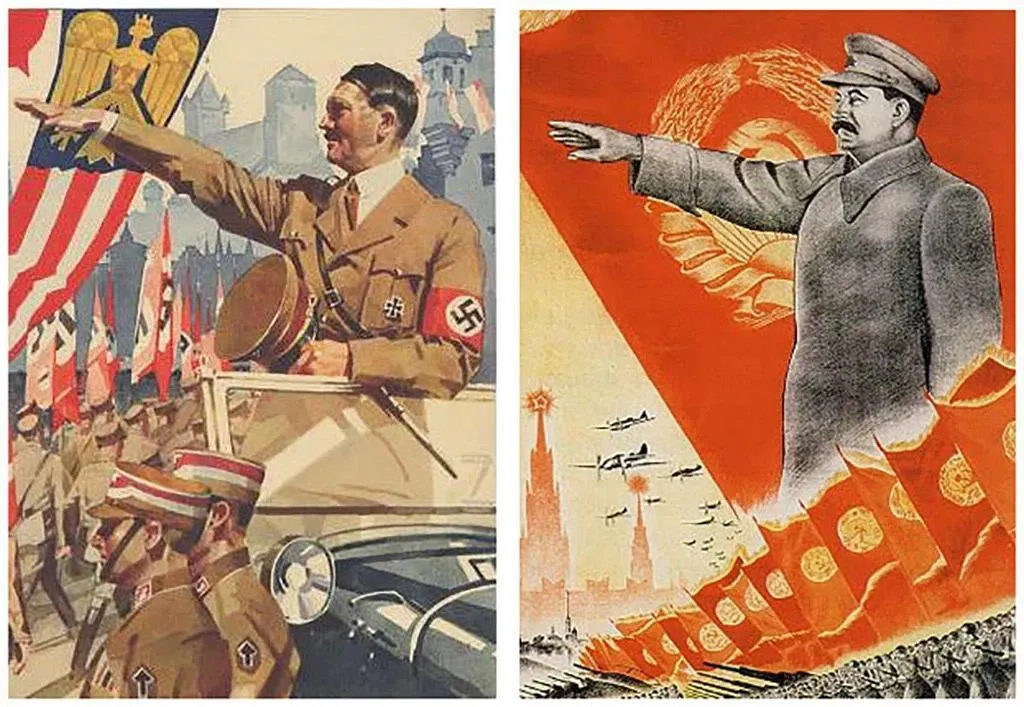
The reason that made the Soviet leadership create its own historiography on this matter was the fact that the Soviet Union de facto took part in the Second World War from 17 September 1939 on the side of the Third Reich, because it was on 17 September 1939 that the USSR, by prior collusion with Germany, attacked Poland.
The red-browns celebrated their joint victory in Brest.
That is precisely why counting the war from 22 June 1941, the moment when the Soviet Union was forced to start fighting AGAINST the Third Reich, was fundamental for Soviet historiography.
The land war between the Soviet Union and the Third Reich on the territory of Eastern Europe is the largest, but still an episode, that is, one of a series of episodes of the global conflict between the Allies, later the Anti-Hitler Coalition, on one side, and the Axis Powers on the other.
Moreover, there is only one country on the planet that took part in the Second World War from its very beginning to its very end, that is, drummed through the whole war from bell to bell.
That country is the British Empire, although, if you think about it, one could say it is the USSR, which began fighting even earlier, at Khalkhin Gol and in Spain.
Myth 2: Communists were always against the fascists
Soviet Ideology was a fundamental opponent of Fascism, and the Soviet Union a fundamental enemy of Fascist Germany. All accomplices of the fascists are our enemies, all collaborators are traitors.
Reality:
Soviet ideology became a fundamental opponent of Fascism mostly from 1938, and fully only from 1941.
The propaganda of that period, 1933-1939, depicts the German regime and life in Germany in general roughly the same way as the social order and life in the USA, France or the British Empire.
That is, in that country bourgeois forces rule, which are fundamentally opposed to truly people's power, the power of workers and peasants.
Now this fact seems astonishing, but at first fascism (if we are talking about German fascism, the more correct term is Nazism, because in the narrow sense the concept of fascism applies only to the Italian fascist party) seemed evil to no one.
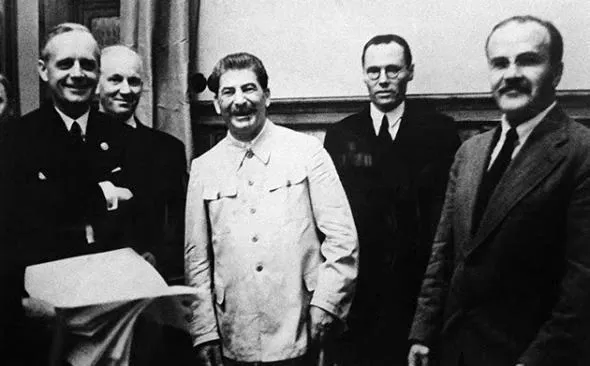
The whole history of the global struggle against fascism is a history of gradual enlightenment, and of the gradual transition to antifascism of countries, peoples and separate groups.
Even the British Empire, which can boast the most principled and consistent antifascist position, professed a policy of appeasement for a long time.
On 30 September 1938 in Munich, the Prime Minister of the British Empire Neville Chamberlain and the Prime Minister of France Édouard Daladier signed an agreement with the Reich Chancellor of the Third Reich Adolf Hitler and the Prime Minister of Italy Benito Mussolini, under which Germany's right to occupy part of Czechoslovakia was de facto recognised.
This fact, which came to be called the Munich Betrayal, is considered a shameful stain on the reputation of Britain and France, who at that moment tried to reach an agreement with Hitler and not to let things reach conflict.
As for the Soviet Union, its cooperation with Germany from 1922 to 1939 was extremely large-scale.
Before the Nazi party came to power, the USSR regarded Germany as the nearest candidate for carrying out a socialist revolution, and afterwards as a strategic ally in the struggle against Western capitalism.
The USSR and Germany traded a great deal and abundantly, exchanged technologies, and cooperated actively in the military sphere and not only in the military one.
In the 1920s-30s alone there were in the USSR at least three major centres for training German military personnel and developing military technologies, which undoubtedly violated the terms of the Treaty of Versailles.
To a large extent, the foundations of the iron machine of the Wehrmacht, which seized most of Europe and fell upon the USSR itself on 22 June 1941, were laid in the USSR.
Brothers in arms
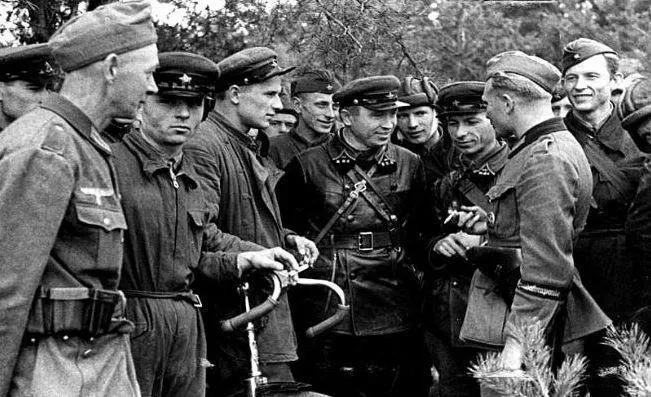
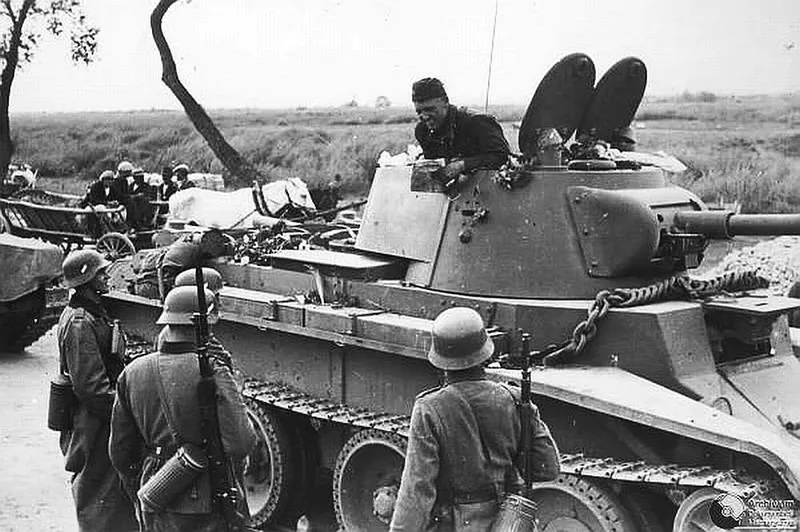
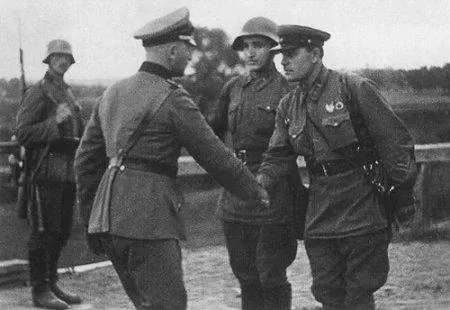
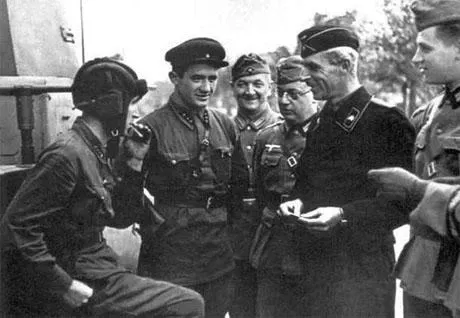
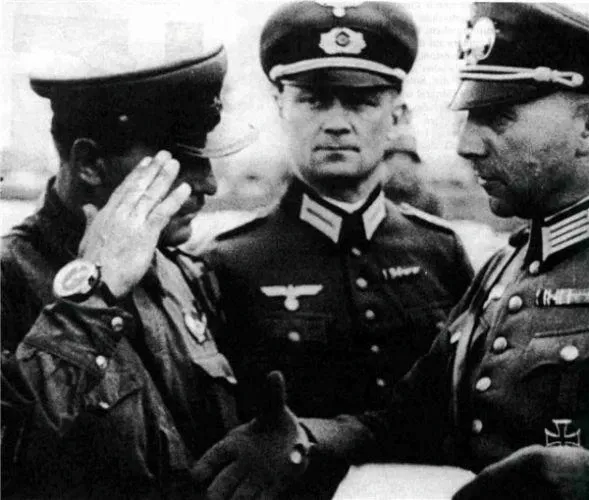
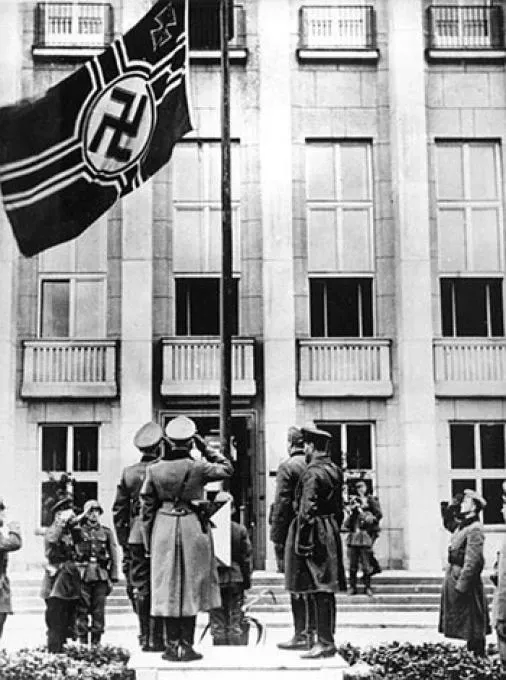
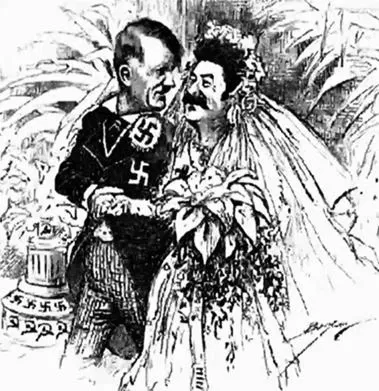
In accordance with the secret protocol to the non-aggression pact between the Third Reich and the USSR, better known as the Molotov-Ribbentrop Pact, after the start of the Second World War the USSR de facto entered the war on the side of the Third Reich, invading Poland on 17 September 1939.
On 22 September 1939 in Brest a joint parade of the Wehrmacht and the Red Army was held, dedicated to the signing of the agreement on the demarcation line.
In the USSR everyone knew that Brest was a hero fortress, but far from everyone knew why all the other settlements that distinguished themselves in the first days of the war were called Hero Cities, and only Brest a Hero Fortress.
The answer is rather banal: the residents of Brest did not show themselves in any way when the Third Reich attacked the USSR.
They did not consider themselves citizens of the country that had just been attacked at all, because only two years earlier they had been citizens of Poland, which the USSR had divided with the Third Reich, jointly celebrating the event with a solemn parade.
Resistance to the German attack was offered by the military garrison based near Brest in the old fortress.
Naturally, a garrison consisting entirely of Soviet troops who had arrived there quite recently.
That is precisely why only the fortress, and not the city, is a hero.
Incidentally, before that, in 1939, the Brest Fortress had been defended against Hitler's troops by Poles, and one must give them their due, they defended it with dignity!
Also few people know about the heroic defence of certain cities, for example Lviv, against the German-fascist invaders in September 1939.
The defence of Lviv was not particularly bloody, but it was extremely dramatic: the Germans entered the outskirts of the city (as they later did on the outskirts of Moscow) as early as 12 September, and for the next ten days Polish troops drove them out of there, until the Red Army approached from the other side and offered the garrison to surrender the city.
Only on 22 June 1941, with the attack of the Third Reich on the USSR, does the Eternal Principled Enmity of Workers and Peasants with the Fascists begin, which we know so well from Soviet textbooks.
As Orwell wrote on this subject, Oceania has always been at war with Eastasia.
Myth 3: The Soviet People in a single surge defended the Fatherland
The Soviet people fought in a single surge against the German-Fascist Invaders, some in the ranks of the Red Army, some in the ranks of the partisans, and some simply did petty sabotage.
Only traitors and other collaborators did not fight.
Reality:
Let us begin with the fact that a significant part of the people who later formed part of the Soviet people at that time did not, at the very least, identify themselves with it.
I have already written above about the Brest fortress, but most people have no idea of the scale of the phenomenon.
As a result of the Red Army's Polish campaign of 1939, the Soviet Union occupied a territory of almost 200 thousand square kilometres, including Western Ukraine, Western Belarus, Eastern Poland and South-Western Lithuania.
In total, 13 million people lived on this territory.
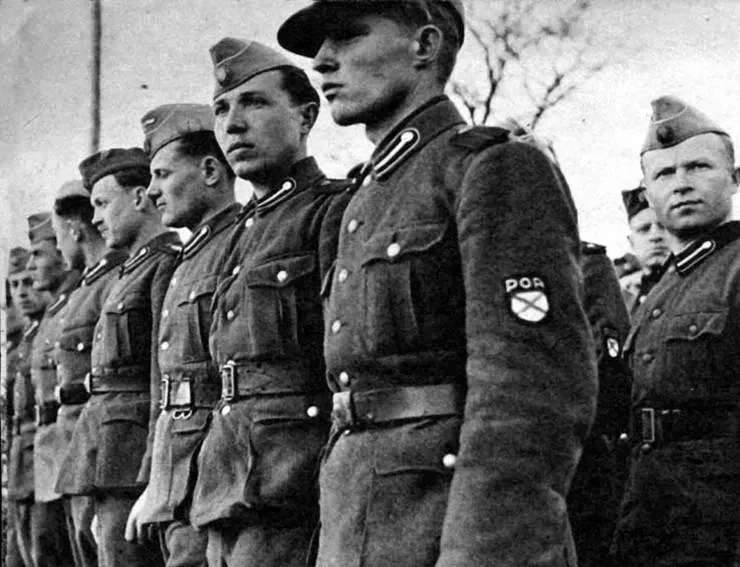
Within a matter of months the Soviet authorities organised an expression of the people's will on this territory and annexed it to the corresponding Soviet republics.
In June-July 1940 the Red Army occupied Bessarabia and Western Bukovina virtually without a fight: a territory of 50 thousand square kilometres, with a population of 3 million 776 thousand people, which from 2 August 1940 became the Moldavian SSR.
In June 1940 the USSR occupied Estonia, Latvia and part of Lithuania, which after the elections held there turned on 21-22 July into the corresponding Soviet republics.
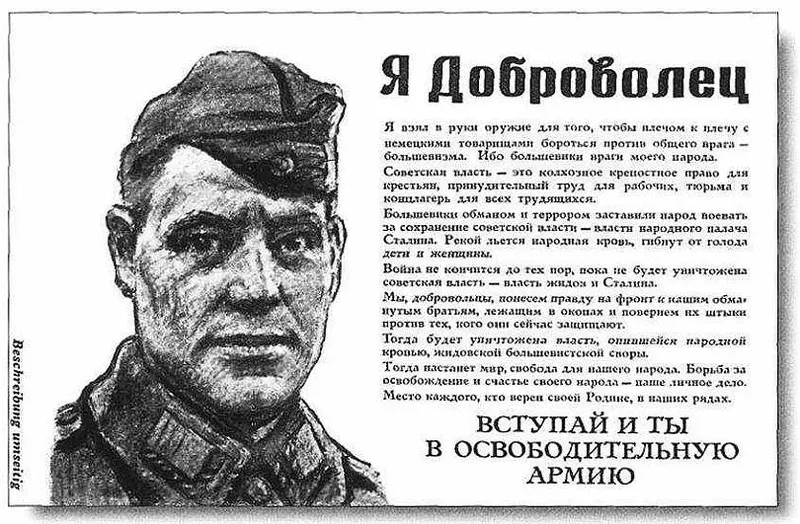
In total, the territories occupied by the USSR by that point were approximately equal in area and population to a country such as, for example, Italy.
Meanwhile, in the occupied territories the Soviet authorities carried out mass repressions, cleansing them of unreliable elements and elements alien to workers and peasants by class.
These elements were arrested without trial, thrown into prisons, exiled to Siberia, and in extreme cases shot.
The best known are the operations to deport residents of the Baltic states, namely the operation of 1940, in the course of which up to 50,000 people were expelled.
And also Operation Surf in 1949, in the course of which more than 100,000 were expelled.
One should not forget the mass shootings of Polish officers in the Katyn forest, in the Starobelsk camp, in the Ostashkov camp and other places, 22,000 people in total.
It is not hard to imagine that the population of all these territories was not eager to defend the USSR from anyone at all, not even from the bald devil himself.
But even in the part of the Soviet Union that had been Soviet before 1939, to put it mildly, far from everyone supported Soviet power.
In Belarus and in Ukraine nationalist sentiments were strong, because within the Soviet Union, just as earlier within the Russian Empire, both nations were in effect offered to forget their culture, replacing it entirely with the Russian one.
In addition, in Ukraine the memory of the famine of 1933 was still far too fresh.
1941 was separated from the Holodomor by a mere 8 years, which is as much as separates us from the Orange Revolution, and 5 years more than separates us from Yeltsin's departure, that is, in 1941 ALL the adult population of Ukraine remembered well, not from stories but from their own experience, the greatest tragedy that had befallen this country in its entire history.
Therefore the words "let it be the Germans, as long as it's not the Soviets, it WON'T BE ANY WORSE ANYWAY" not only sounded psychologically convincing to Ukrainians, but are, as we see now, an objective truth.
A defective government gives rise not only to a defective life, but also to mass hatred of such a country.
The beginning of the Great Patriotic War was a surreal spectacle in the course of which the Red Army mostly... does not even retreat, but rather runs, bolts, crumbles into dust.
Later the Germans would recall June and July 1941 with the words "no enemy ahead, no rear behind", because the supply train could not keep up with the German units advancing rapidly deep into Soviet territory and meeting no resistance.
The soldiers do not want to fight, do not understand what they are fighting for, and desert en masse.
The rare cases of heroism in those days look quite unreal and surreal, while the mass flight of Red Army soldiers became universal.
Konstantin Simonov's book 100 Days of War, devoted to the chaos of the first days of the Great Patriotic War, was never published in the USSR. It came out only in 1982, heavily reworked, under the title Different Days of the War. It reports that discipline in the troops was established only with the appearance of blocking detachments and penal battalions, and that a single impulse was finally achieved, in the course of which the Soviet people... well, and so on.
Myth 4: German = Fascist
All Germans during the war were fascists, and every German soldier was an SS man.
Reality:
This is not the biggest problem connected with the war, but my sense of justice demands that I put in a word for the Germans.
They have not deserved the place in history that they occupy today.
Out of all that great history and a grandiose thousand-year culture, which gave us the modern structure of cities and the principles of trade, many crafts and the religious Reformation, a considerable part of classical music and philosophy, and much, much more, today we remember Hände hoch and Hitler kaputt.
After the collapse of the Second Reich, Germany was the ruins of a huge state with the richest cultural and, importantly, military traditions.
The Wehrmacht was originally created as an organisation devoid of any political colouring. That colouring belonged to the Wehrmacht's opponents, the assault detachments, who were also called stormtroopers or brownshirts.
After the Night of the Long Knives the stormtroopers, like other German paramilitary organisations, were incorporated into the Wehrmacht, but they did not play leading roles there.
Almost the entire Wehrmacht leadership stayed out of politics until 1939, and a considerable part of the leadership remained non-party right up to 20 July 1944.
That was when, after the famous attempt on Hitler's life organised by high-ranking military men opposed to Nazism, Hitler in effect forced all the generals to join the party under threat of reprisals.
By court sentence for the 20 July plot, one field marshal, 19 generals, 26 colonels, 2 ambassadors, 7 diplomats of other ranks, 1 minister, 3 state secretaries and the head of the Reich criminal police were shot: 200 people in all by sentence and about 5,000 without trial, and some 7,000 more were arrested and sent to concentration camps.
Among others who perished were Admiral Canaris, hanged in a steel collar, and Rommel, who was left in a study with a loaded pistol and killed himself.
Among rank-and-file Wehrmacht servicemen there were almost no NSDAP members until the very end of the war: they were found more often among officers, and their number did not exceed 5% of the Wehrmacht's total strength.
Party conscripts and volunteers tried to get into the SS troops, which on the one hand were considered more privileged and on the other were far more politicised, and which carried out almost all the tasks of "cleansing" the civilian population, shooting commissars, Jews, and so on.
But even the SS troops often resisted especially cannibalistic party orders.
For ordinary Germans, the Nazis' rise to power was an elemental phenomenon, just like the rise to power in Russia of the small and unpopular Bolshevik party.
The Germans' drive to purge themselves of the Nazi past after defeat in the war, through denazification, a ban on nationalist political forces, and so on, certainly deserves respect and serves as an example for other nations that have gone through similar stages in their history.
Myth 5: The Soviet Union defeated Fascist Germany
It was thanks to the efforts of the Soviet Union alone that the war against fascism was won.
Reality:
Speaking of the victory of a COUNTRY over a COUNTRY in a global military war between large coalitions of states is, generally speaking, incorrect.
It is incorrect not only terminologically but also simply in human terms.
To divide an orange like Victory between those who made a bigger contribution and those who, from our point of view, made a smaller one is simply ugly.
All the soldiers of the coalition were comrades-in-arms, and the contribution of each was priceless.
Soldiers died the same way, on land, at sea and in the air, and their victory was, as the well-known song goes, one for all.
As I already wrote in the analysis of Myth No. 1, the only country that worked through the whole war from bell to bell is the British Empire.
Today most people, at the word "Britain", picture the island of that name. But in 1939 Britain was the largest state that had ever existed in the history of humankind. It occupied a quarter of the Earth's land and was home to 480 million people, practically a quarter of the entire population of the planet.
The British Empire included Britain proper, as well as Ireland, Australia, New Zealand, New Guinea, Canada, India (which then comprised present-day India, Pakistan, Bangladesh, Burma and Sri Lanka), Guyana or British Guiana, about a quarter of the African continent, namely a vertical strip from Egypt to South Africa plus territories on the central Atlantic coast, and a considerable part of the Middle East: present-day Israel, Jordan, Iraq, Kuwait, Oman, Yemen and the UAE.
The sun truly never set over the British Empire.
The economic and military might of this state considerably exceeded the forces of the Third Reich. However, the fact that it was scattered across the whole world while the main fighting went on in Europe significantly worsened the British ability to fight Germany, which lay entirely in Europe.
After the German blitzkrieg in Poland, and then in the Benelux countries and France, a long positional war began between the Germans and the English, fought mainly at sea and called the Battle of the Atlantic.
This battle lasted almost all 6 years of the war and cost the lives of approximately 100,000 people, turning the Atlantic Ocean into one of the main theatres of military operations.
Other significant theatres of military operations were North Africa, where German forces fought British forces on land.
China and Southeast Asia, where the Japanese Empire fought a long list of countries.
Most of which it seized. Then the Pacific, where the Japanese Empire and the USA waged a naval war in 1941-1945, and, of course, the Eastern Front, a land theatre of military operations on the territory of Eastern Europe, where the Third Reich and the USSR fought.
The last theatre was the most significant in the scale of military effort and the number of losses, and the most important for all the allies without exception.
That is why, starting on 22 June 1941, the USA included the USSR in the Lend-Lease programme, the transfer of weapons, materials and supplies to a belligerent "on loan", under which they were already supplying weapons to Britain.
In total, goods worth 11 billion dollars, or 140 billion in today's prices, about 17.5 million tonnes of various cargo, were delivered to the USSR under Lend-Lease.
This was weaponry: small arms, tanks, explosives, ammunition, and also aircraft, steam locomotives, motor vehicles, ships, machinery and equipment, foodstuffs, non-ferrous and ferrous metals, clothing, materials, chemical reagents and so on.
In a number of categories Lend-Lease made up a considerable share of the total goods used in the USSR during the war. For example, about a third of all explosives used in the USSR in 1941-1945 were delivered under Lend-Lease, as were about 40% of copper and more than 50% of aluminium, cobalt, tin, wool, railway rails, and so on.
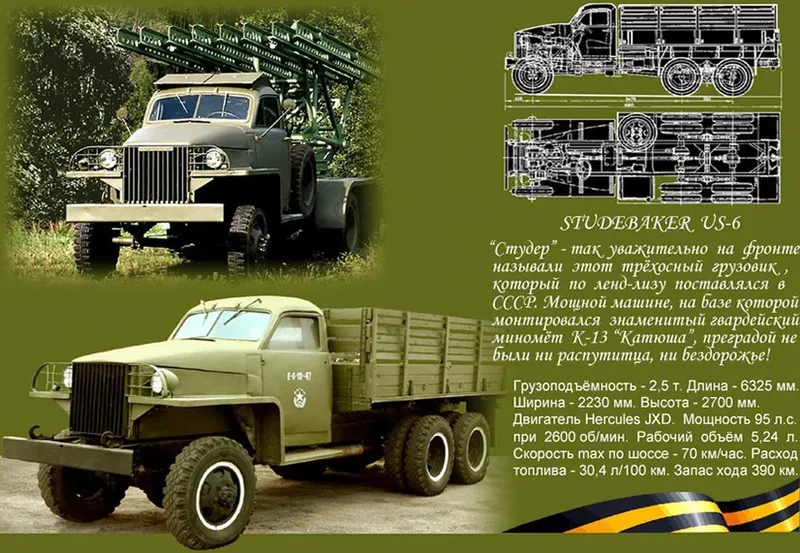
Lend-Lease delivered to the USSR two and a half times more locomotives than Soviet industry produced during the war years. Most Katyushas stood on Studebaker chassis, and almost all the canned meat that reached the front was of American manufacture.
Incidentally, the USSR's Lend-Lease debt has still not been repaid, unlike that of all the other participating countries!
As for official Soviet propaganda, it preferred to belittle the importance of American aid in every way, or even to pass it over in silence altogether.
In March 1943 the American ambassador in Moscow, not hiding his resentment, allowed himself an undiplomatic statement:
The Russian authorities apparently want to conceal that they are receiving help from outside. Obviously they want to assure their people that the Red Army is fighting this war alone.
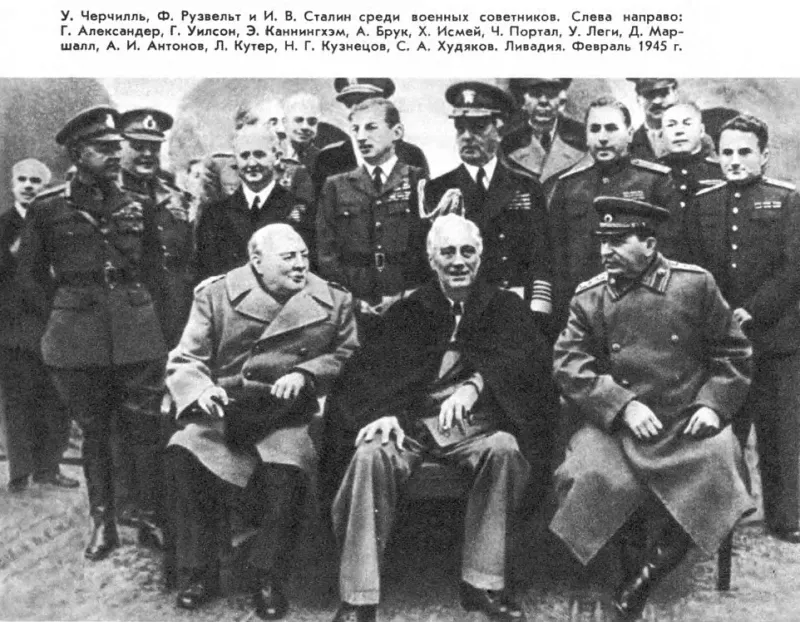
And at the 1945 Yalta Conference Stalin was forced to admit that Lend-Lease was Roosevelt's remarkable and most fruitful contribution to the creation of the anti-Hitler coalition.
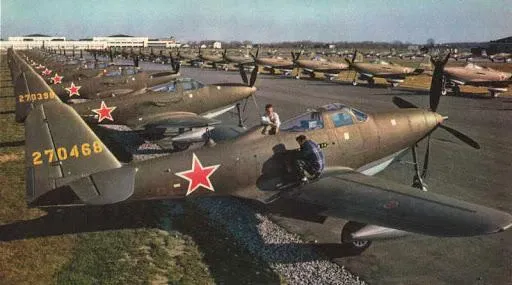
P-63 ready for dispatch to the USSR
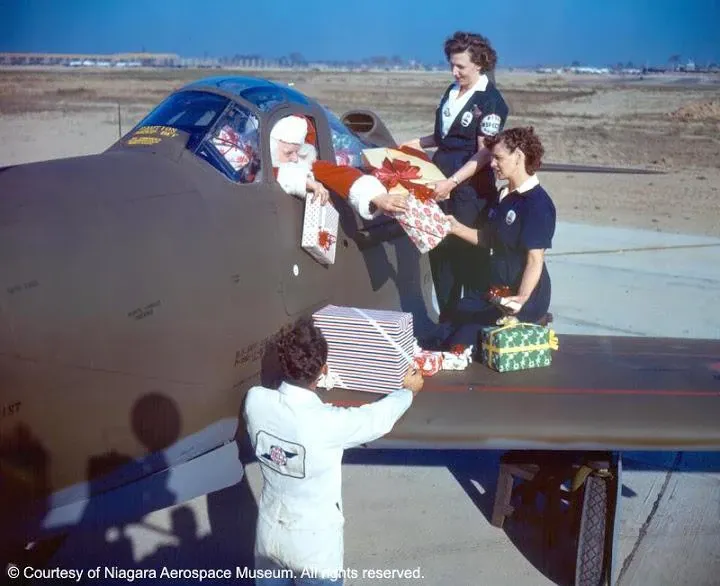
Bell P-39 Airacobra before being sent from Edmonton to the USSR.
Citizens of Western countries tried with all their hearts to use the shipments to the USSR to support Soviet soldiers with some pleasant trifle, a gift from the heart.
Soviet propaganda, by contrast, boorishly mocked this. It tried not to allow friendship and mutual understanding between people on a private basis, only through the state and only as the state decided.
As in prison, only in the presence of a warder.
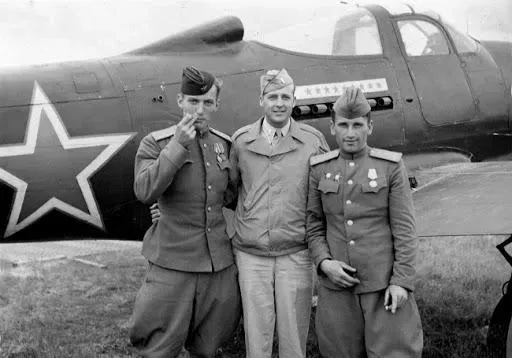
American and Soviet pilots beside a P-39 Airacobra fighter supplied to the USSR under Lend-Lease.
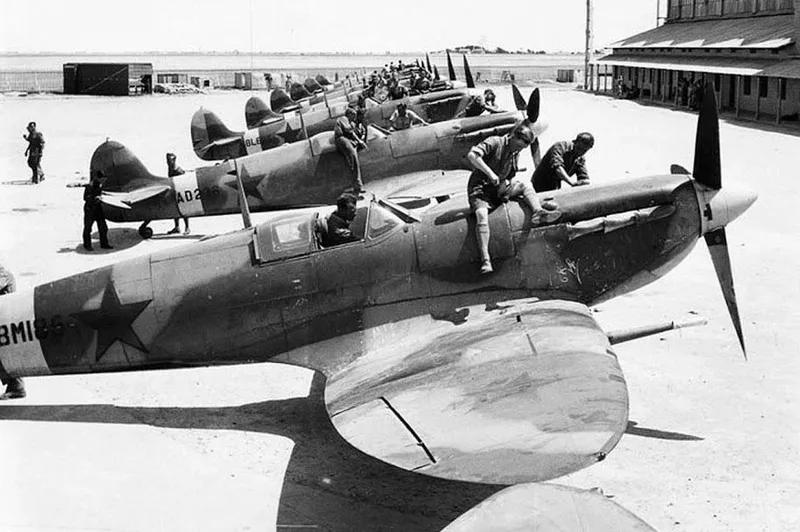
Preparing British Spitfire fighters, supplied under Lend-Lease, for handover to the Soviet side.
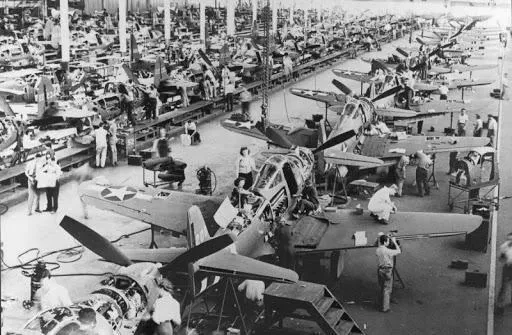
A Bell P-39 Airacobra aircraft assembly shop in the USA for the USSR
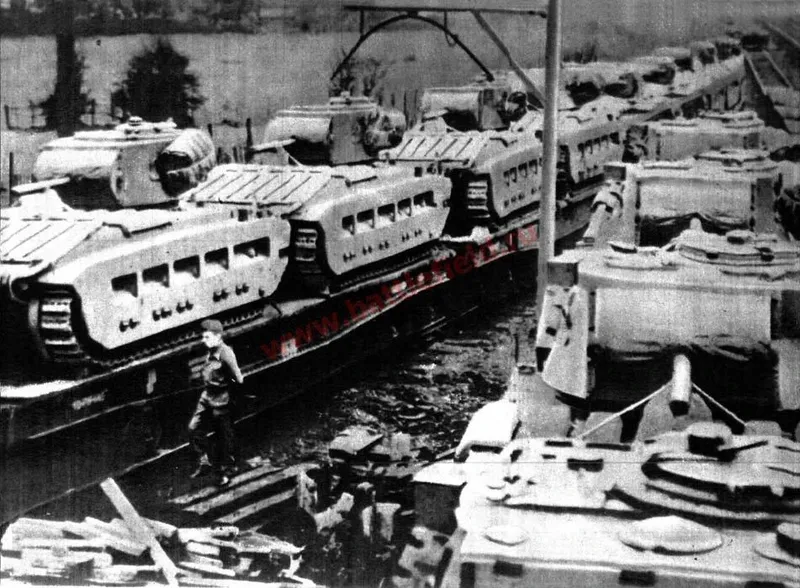
Mk II Matilda II, Mk III Valentine and Mk IV Valentine
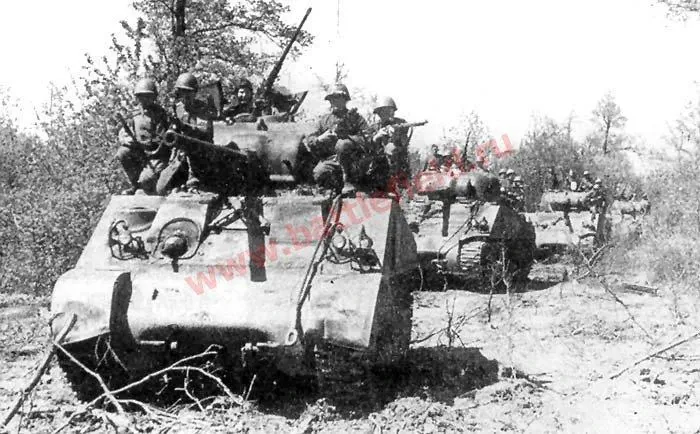
M4 General Sherman in the ranks of the Red Army
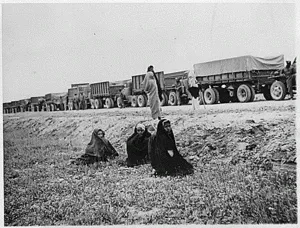
Studebakers in Iran on the way to the USSR.
If not for the countries of the West, the Red Army would have ridden into Berlin on horses, if it had got there at all.
Before the Lend-Lease deliveries the entire Red Army was horse-drawn.
However, the official Soviet view of Lend-Lease was expressed in such lines:
The Soviet Union was left to itself, receiving no help from the West, in particular from the USA, precisely at the time that was most desperate for it, when the question was being decided whether the Soviet state would be or not be!
Political and civic swinishness has always been our hallmark.
It is no surprise that when the American film The Unknown War played in the country's cinemas in the 1980s, many experienced shock: A. S. Pokryshkin told how he had flown the whole war in an American Airacobra fighter.
About the northern convoys with cargoes of aid.
About much else that turned everything upside down and was therefore not accepted: "this cannot be, we know the truth from school".
Is it the truth?
Phrases like "we would have won without this" or "they would have lost if not for us" suffer from fantastic amateurism.
But since the conversation is often and deliberately steered in this direction, I must state my own private opinion:
From my point of view, without the six years of heroic effort by the British in the Battle of the Atlantic, without the four years of colossal American money poured into Lend-Lease, which saved hundreds of thousands of Soviet lives, and without the many other small and medium sacrifices and pockets of resistance of other countries and peoples, the Soviet Union had far too slim a chance of winning the war against the Third Reich. In all likelihood, the Soviet Union would have lost it.
Since without the assistance of England and the USA the USSR could not have waged war against Germany, the claims of Soviet propaganda about the economic victory of socialism in the Great Patriotic War and about the USSR's ability to defeat Germany on its own are nothing more than a myth.
Unlike Germany, the USSR never achieved the goal, outlined as early as the beginning of the 1930s, of creating an autarkic economy capable of supplying the army in wartime with everything necessary to wage a modern war.
Hitler and his advisers miscalculated not so much in assessing the military and economic might of the USSR as in judging the ability of the Soviet economic and political system to function in the face of a heavy military defeat, as well as the ability of the Soviet economy to use Western supplies quickly and effectively enough, and the ability of Britain and the USA to deliver such supplies in the necessary quantity and on time.
Now it is easy to say that Lend-Lease meant nothing. It stopped being of great importance much later. But in the autumn of 1941 we had lost everything, and if it were not for Lend-Lease, for the weapons, the food, the warm clothing for the army and the other supplies, it is still an open question how things would have turned out.
Berezhkov V.M. How I Became Stalin's Interpreter. Moscow, 1993. P. 337
And, by the way, it is highly likely that even after the defeat of the Soviet Union the war would have been won by the Allies anyway: the might of the British Empire and the wealth of the United States would have done their job all the same.
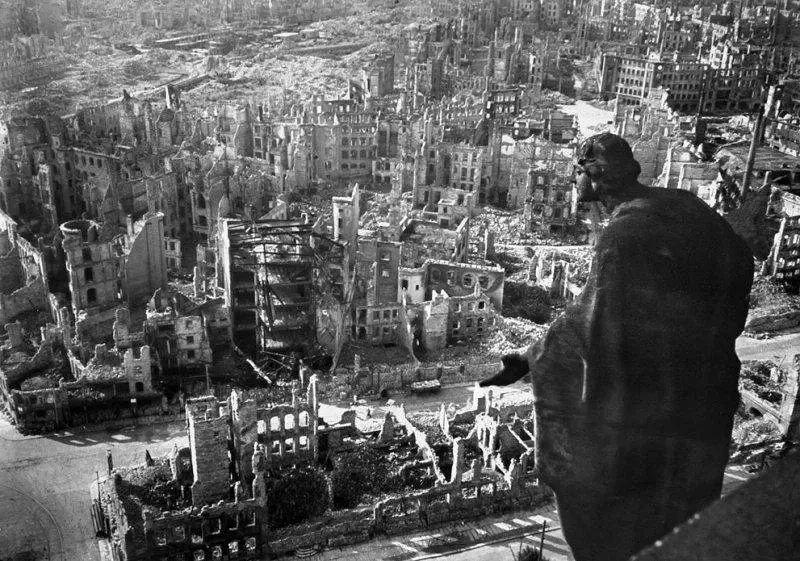
The view from the roof of the Dresden town hall after the bombing of the city by Allied aircraft from 13 to 15 February 1945.
About 3,600 aircraft dropped 3,900 tons of high-explosive and incendiary bombs on the city.
The fire destroyed about 25 square kilometers in the city center, and more than 22,000 people were killed.
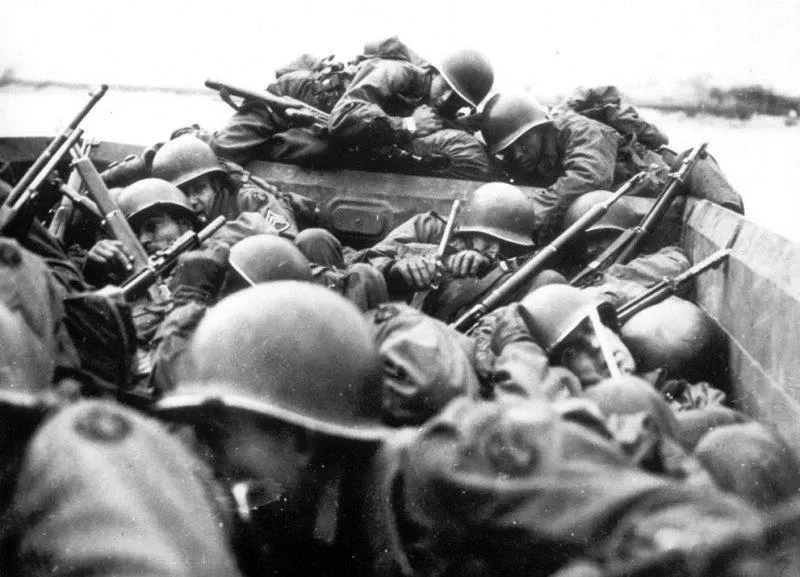
American soldiers in a landing boat cross the Rhine under fire from German troops
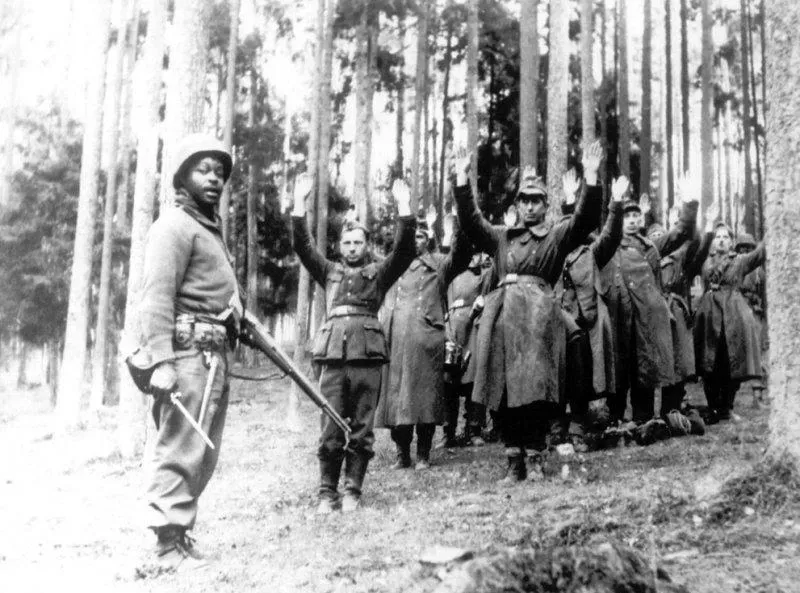
An American soldier of the 12th Armored Division next to a group of captured Germans somewhere in a forest in Germany
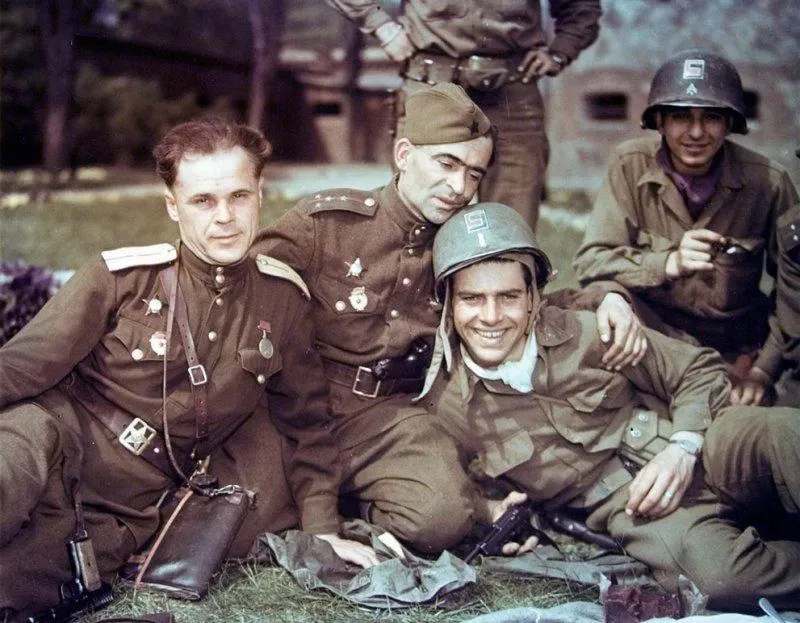
Soviet officers and American soldiers during their meeting on the Elbe in April 1945.
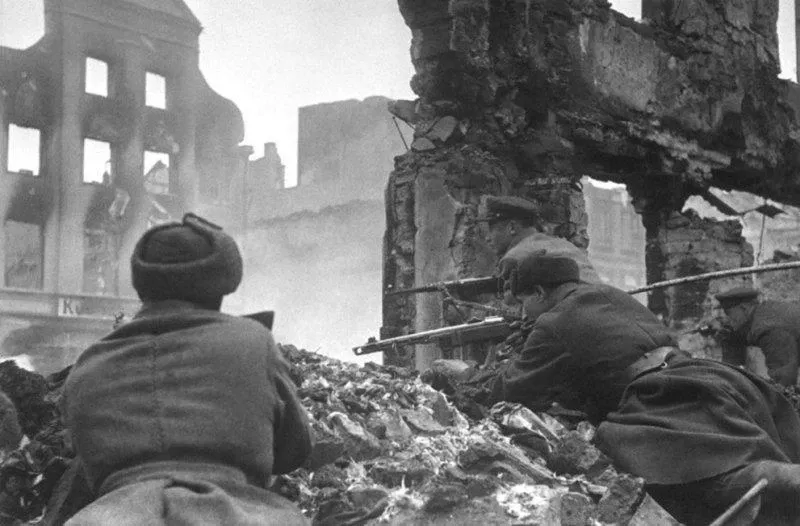
Soviet soldiers fighting in a suburb of Königsberg, East Prussia, April 1945.
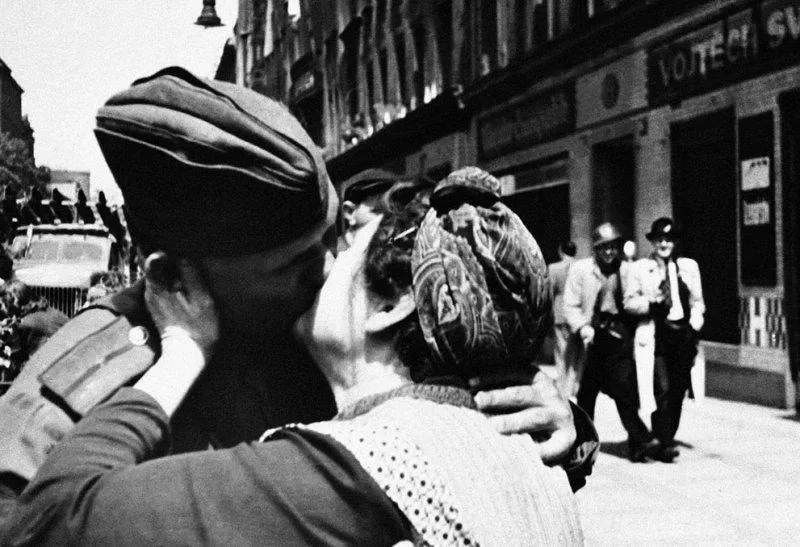
A Czech woman kisses a Soviet soldier-liberator, Prague, 5 May 1945.
This woman does not yet know about 1968.
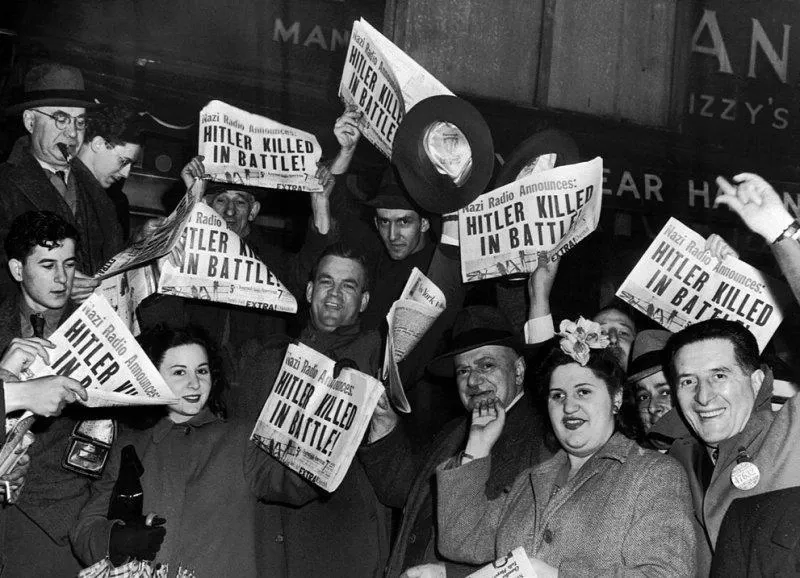
The New York subway at rush hour on 1 May 1945 stood frozen: news of Hitler's death had been received.
The leader of Nazi Germany shot himself in a bunker in Berlin on 30 April 1945.
His successor, Karl Dönitz, announced on the radio that Hitler had died a hero's death and that the war against the Allies must continue.
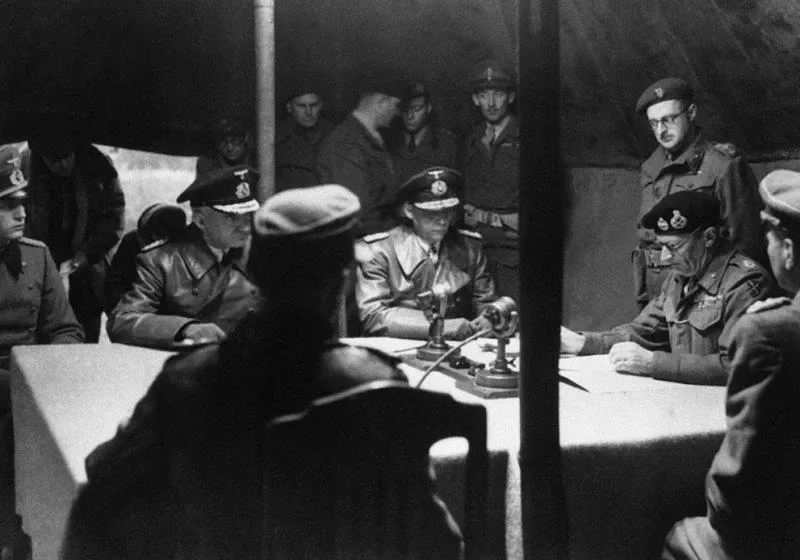
British Field Marshal Bernard Montgomery (right) reads the capitulation pact in the presence of German officers (left to right): Major Friedel, Admiral Wagner and Admiral Hans-Georg von Friedeburg in the headquarters tent of the 21st Army Group, Lüneburg Heath, 4 May 1945.
The pact provided for a cessation of hostilities on the fronts in northern Germany, Denmark and Holland from 8 a.m. on 5 May.
The German forces in Italy had surrendered earlier, on 29 April, while the remnants of the army in Western Europe did so on 7 May, and on the Eastern Front on the 8th.
The five-year war across the expanses of Europe was over.
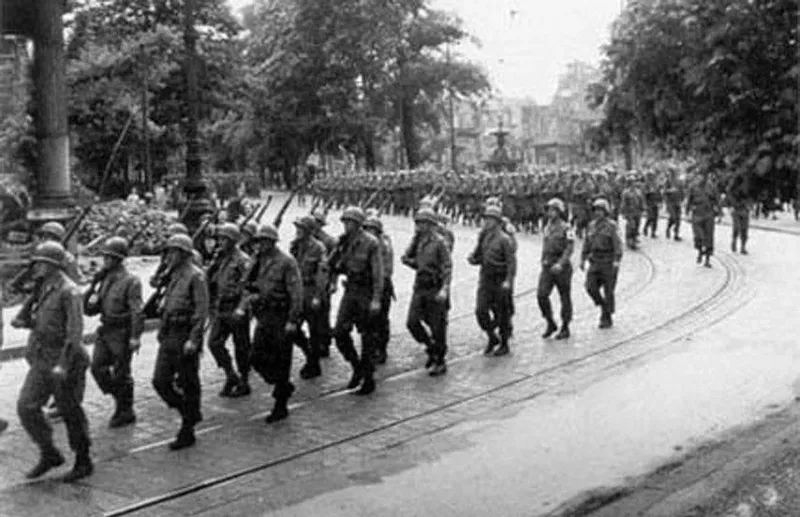
In the German city of Düsseldorf on 8 May, American troops held a Victory Parade.
The locals preferred to watch it from a distance.
Not so much from the bitterness of defeat as from a complete lack of understanding of how to go on living in a ruined country, mutilated by bombing and seized by the Allies
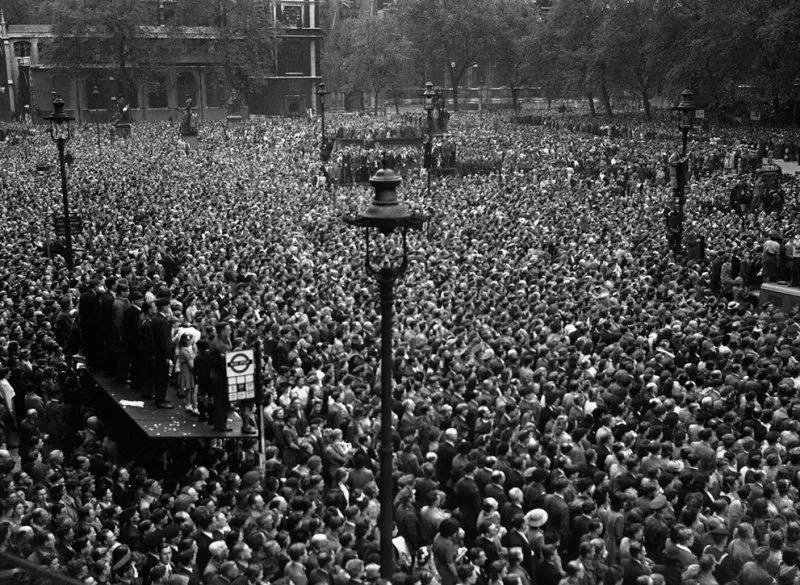
A huge crowd in central London on 8 May, Victory in Europe Day, listens to the prime minister's announcement of Germany's unconditional surrender.
About a million people came out onto the streets of London that day.
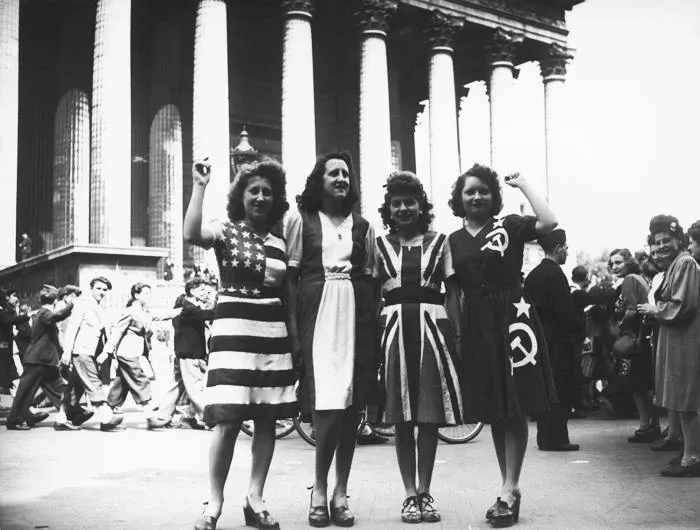
8 May 1945, Paris, by the walls of the Church of the Madeleine
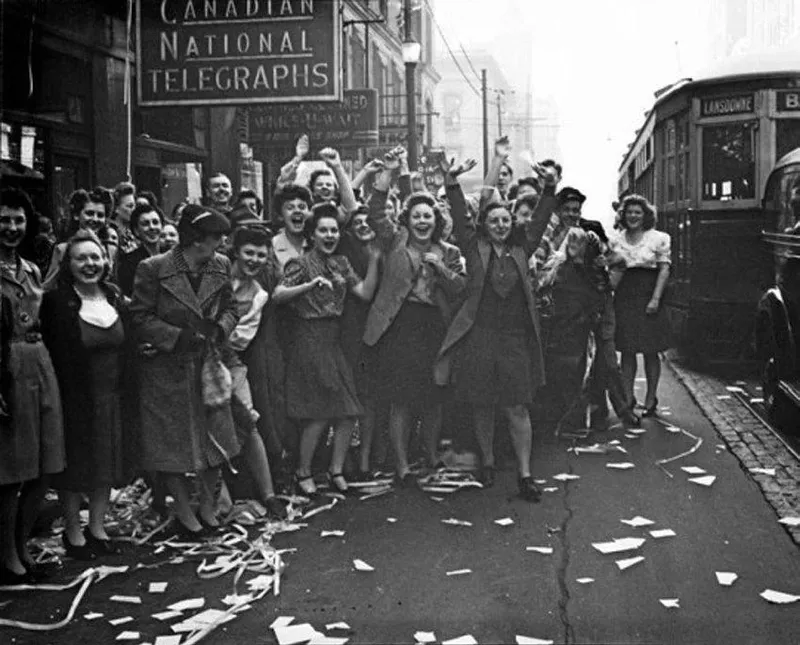
Telegraph office workers in Toronto, Canada, poured out into the street.
For them the time was over when every day they had to send out dozens of telegrams with news of the deaths of husbands, brothers and fathers.
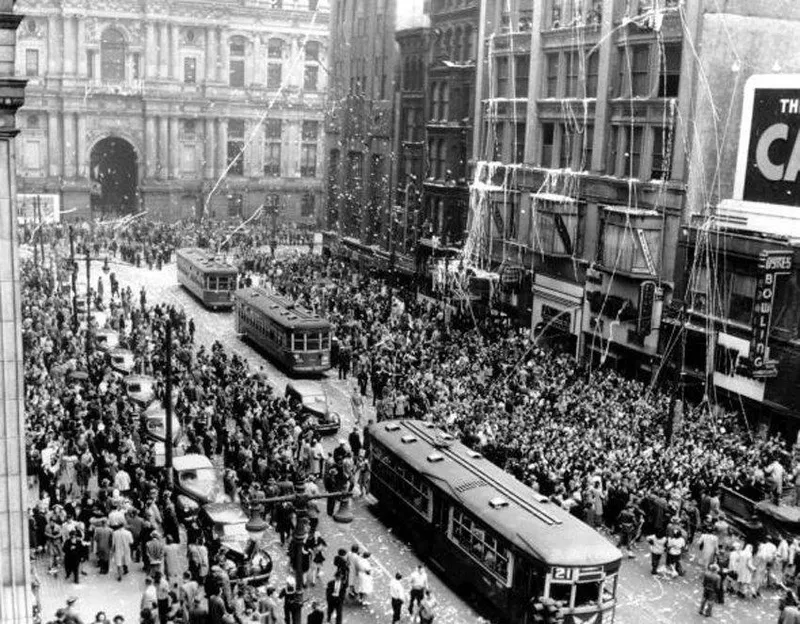
In Philadelphia on 8 May 1945 everything stopped.
The trams did not run, the banks did not work, construction sites fell silent.
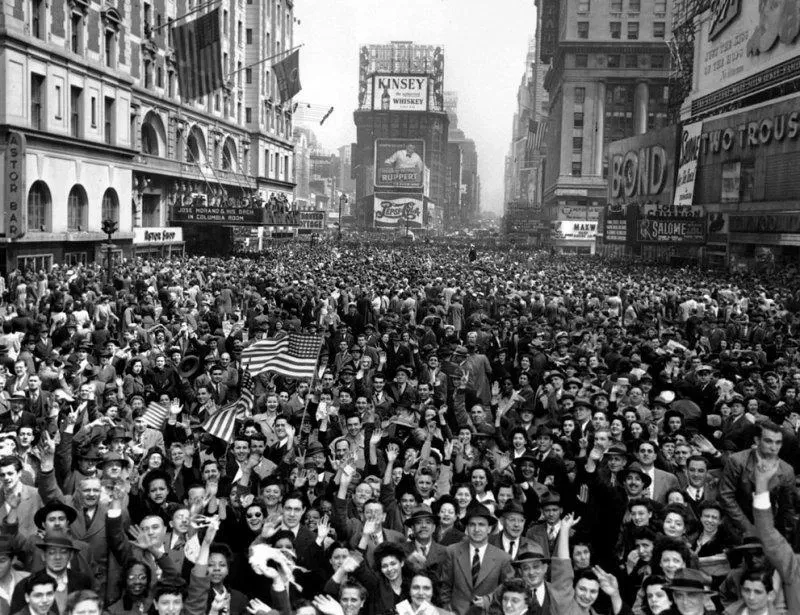
Times Square in New York is filled with people celebrating the victory over Germany, 7 May 1945.
In Europe at that moment, on 8 May, they are celebrating too, with the exception of the USSR, which chose for itself a separate date for its own war.
To justify this fact, many Soviet historians, foaming at the mouth, shake out far-fetched arguments, but the truth is extremely simple: for many decades we never bothered to celebrate Victory Day together with the whole world.
Even former enemies have long since become friends, and only we, the late spawn of Soviet propaganda, have still not managed to reconcile... no, not with enemies, but with our former allies, who helped us enormously in a difficult time and fought side by side with us against a common enemy.
Like boors, we have set ourselves apart and celebrate some war of our own, a separate one, distorted by propaganda myths, outright lies and patriotic pathos.
In it we are GREAT heroes who won a GREAT victory in a GREAT war, yet never actually received it.
Every year, from the tribune of the Mausoleum, those who appropriated this victory for themselves smear it across our lips, and we smack our lips with delight: after all, we are heroes.
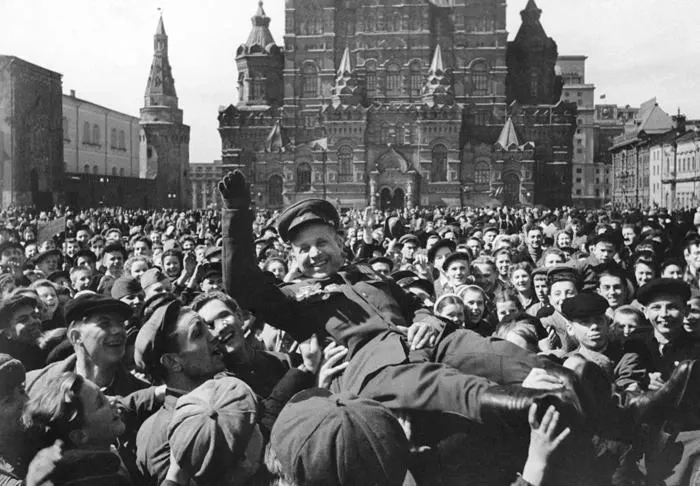
9 May 1945, Moscow, Red Square
The words of B.N. Yeltsin, speaking on Poklonnaya Hill in the year of the 50th anniversary of the Victory:
There are still unwritten and torn-out pages in the history of the war. Many of them remain unfinished to this day.
References:ehorussia.com