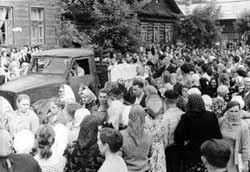
1961, Murom. Soviet policemen beat a detained worker of the Ordzhonikidze plant to death.
Murom, Alexandrov, Novocherkassk, Donetsk, Odesa, Sumgait, Kryvyi Rih, Chimkent and dozens of others. If everything was fine in Sovdepia, then why did riots and strikes break out? A bit of history under the cut:
1961, Murom. Soviet policemen beat a detained worker of the Ordzhonikidze plant to death. In response, more than 1,500 workers went to storm the cop shop. Dozens of people, armed with stones, crowbars, axes and other objects, took the police building by storm. The attackers seized 68 firearms and about a thousand rounds of live ammunition.
The uprising was suppressed, and some of the participants were executed. On 25 August, in the town of Kovrov in the Vladimir Region, inscriptions appeared on walls: "We will avenge the people of Murom!" and "Down with the communist regime. Young Guard."
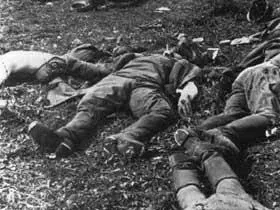
*Almost immediately the uprising spread to Alexandrov. The clashes here were more serious: when the police fired on the rebellious people, four workers were killed.
According to some reports, about 300 people took part in the disorder. As in Murom, threats against the police and the city authorities and calls for decisive action began to be heard from the crowd. Extremely agitated people approved of these calls and shouted: "We'll show you Murom!" Later, armed battalions under Major General Korzhenko entered the city and with difficulty put an end to the unrest.
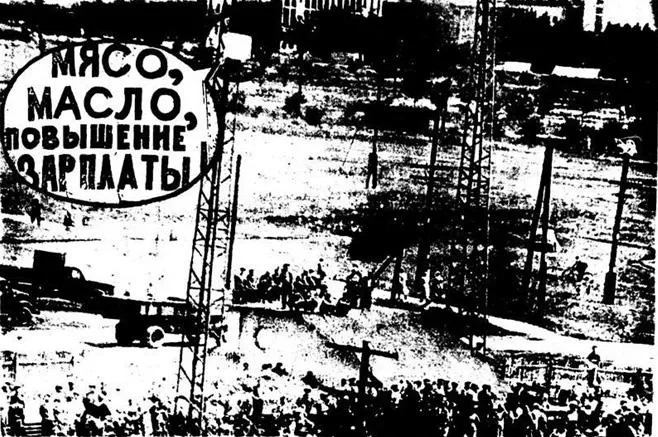
*In 1962 the people rose up in Novocherkassk. The cause was a sharp drop in the standard of living resulting from rising food prices and falling wages. Only 30 years later did activists of the "Novocherkassk Tragedy of 1962" foundation, together with the military prosecutor's office, find witnesses and the burial sites of the dead after persistent searching.
Despite all the bans and the strictest secrecy, news of the Novocherkassk tragedy began to spread across the country and to reach the West. In Rostov-on-Don, slogans were found such as: "Long live the Novocherkassk uprising!" "Viva, Novocherkassk!" and others.
*The struggle of the Soviet working people for their rights in 1962 was not limited to Novocherkassk. In June, the workers of the floating factory "Chernyshevsky" in the Sea of Okhotsk went on strike, demanding higher wages. The response was repression. That same summer there were strikes by workers in Donetsk, Artemivsk, Kramatorsk, Omsk and Kemerovo.
In Ivanovo, an agricultural machinery plant and a textile factory went on strike. In Odesa, dockworkers went on strike. They refused to load food for Cuba, explaining that they themselves were short of food.
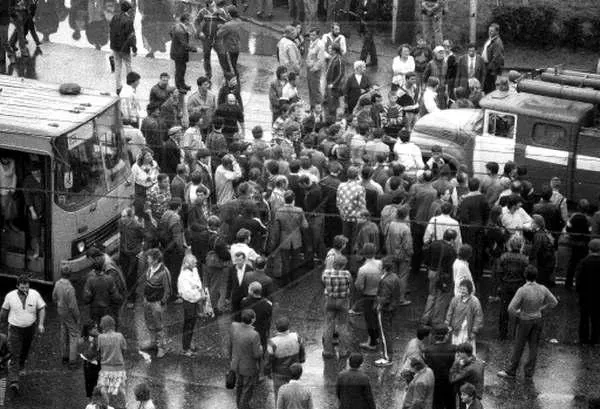
Kryvyi Rih
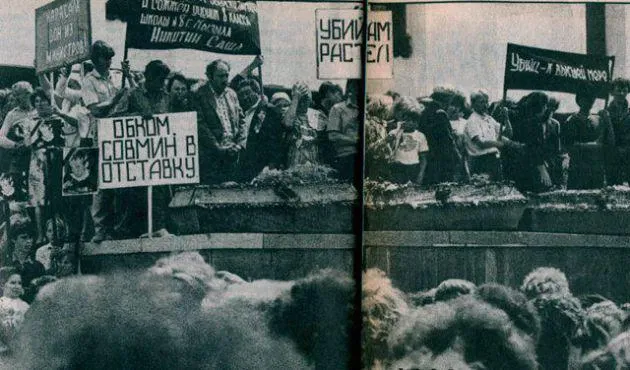
Kryvyi Rih
*In 1963 there were two uprisings, in Sumgait and in Kryvyi Rih. The Sumgait uprising, which lasted 3 days, involved 600 people. During its suppression, 4 Soviet working people were killed. The Kryvyi Rih uprising took place on the day of the 7 November celebrations. Some demonstrators raised postcards with portraits of Stalin, the cops rushed at them, and the people intervened. Weapons were used in the disorder, and there were wounded.
*In 1964 the working people rose up in Bronnitsy. The reason was the standard one: Soviet pigs beat a man to death at the cop shop. The rebellious people wrecked the station. In the same year the people of Stavropol rose up. About 700 rebels stormed the district police department and burned a police car. Troops were brought into the city, and the organizers of the uprising were arrested.
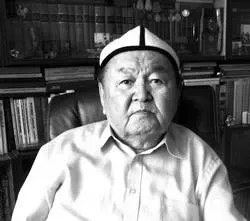
*The most fruitful year for popular uprisings and disorder was 1967. In May, in Frunze, the rebellious people stormed a district police department where the cops had beaten a detainee to death. The uprising spread across the whole city, and the rebellious people seized and burned two district police departments and one city police department. There were casualties when the uprising was dispersed by force. The leaders of the uprising were arrested.
*The following month Chimkent rose up. The occasion was rumors about a driver from the local motor pool killed by the cops. A huge crowd gathered at the police headquarters building, stormed it and burned it. Once again the people were dispersed with weapons: troops were brought into the city, 7 people were killed and 50 wounded. 18 leaders of the uprising were arrested.
*Only a month passed before major popular disorder began in Stepanakert. There were 2,000 rebels. The cause of the uprising was dissatisfaction with the lenient sentence given to criminals who had killed a boy. The rebellious people took the convicts from their escort and burned them alive right in the street. There were casualties when the uprising was dispersed by force.
* In the town of Pryluky the rebellious people stormed the district police department, since rumor had it that the cops there had killed a citizen. In this case it was possible to avoid casualties.
*The uprising in Slutsk. The Slutsk disorder began with a criminal case over a murder. Perhaps the incident would not have drawn such great attention had it not been for the identities of the accused.
The first was Communist Party member Gennady Gapanovich, who until the events described had served as head of the culture department of the Slutsk city executive committee. The second defendant in the case was the Party member's relative Leonid Sytko.
As the investigation established, on an April evening in 1967 Sytko and Gapanovich, in a state of alcoholic intoxication, "committed hooligan acts" in the stairwell of one of the city's buildings. Chancing upon a citizen named Nikolaevsky in the stairwell, they tried to drive him out into the street, accompanying their actions with beatings.
As a result, the drunken CPSU men broke the victim's spine and then beat him to death. "The population of the city was outraged by the crime committed, and especially by the fact that the culprit was a communist, a deputy, a responsible official of the city executive committee."
When the number of rioters grew to 5,000, "the outrages intensified": the first bottles of gasoline flew at the walls of the wooden courthouse. The courthouse burned down before the eyes of the firefighters, whose trucks were not allowed to come closer: "the rampaging crowd met them with stones." The lead truck, with its sirens on, was "rammed with a beam," and its driver was seriously wounded.
*Next came the popular disorder in Tula. Again the cause was a conflict with the police: the crowd demanded reprisals against the cops.
*In 1968 there was a serious riot in Nalchik. The cause was typical for the USSR: cop lawlessness, which flourished in those days. The cops beat a detained boy. The rebels, numbering 4,000 people, stormed the police station and killed the local beat officer.
*In 1969 motor pool workers went on strike in Kishinev.
*1972. The Dniprodzerzhynsk revolution. While detained citizens were being transported, a fire broke out in the vehicle and the detainees burned alive. A rally began, and so many people gathered that traffic in the city center was paralyzed. Cops were beaten. Then came the call: TO THE CITY COMMITTEE! All the windows of the CPSU city committee were smashed with stones, and the people burst inside. Then the crowd split into 2 parts: one stayed in the city committee, the other went to storm the city police department. Calls were made to burn the cops alive. The cops used tear gas against the people. In the evening troops were brought into the city, and the participants were subjected to mass repression: 350 people were arrested.
*In May 1974 popular protests against the CPSU regime spread to Rubtsovsk (Altai Territory). The occasion was the brutal murder of a detained young worker by the cops. Several hundred rebels seized the district police department building and wrecked it. The authorities were forced to investigate the murder, the cops were put on trial, and one was shot.
*In 1977 the people of Novomoskovsk rose up. The cops, as is typical of Soviet cops, were engaged in lawlessness: they beat minors. The rebellious people (up to 1,000 of them) wrecked the police station.
*In December of the same year, workers in Kaunas went on strike, dissatisfied with wage cuts. Workers at textile enterprises in Ivanovo also went on strike.
*1980: a strike by workers of agricultural machinery enterprises in Tartu. The reason was dissatisfaction with a higher plan and reduced bonuses.
*In 1981, mass disorder in Ordzhonikidze. About 4,500 people took part.
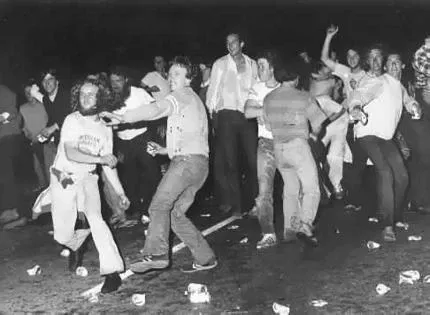
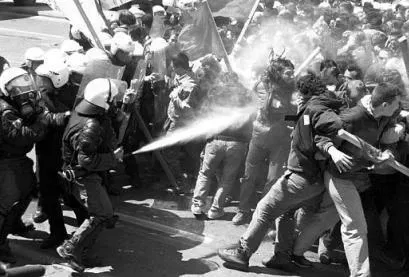
*In 1984 the people of Leninogorsk rose up. A cop car hit two girls, killing one. About a thousand people stormed the city police department and wrecked it.
References:foto-history.livejournal.com