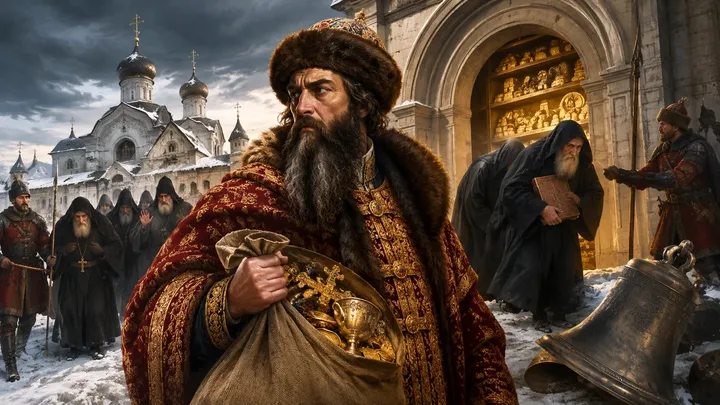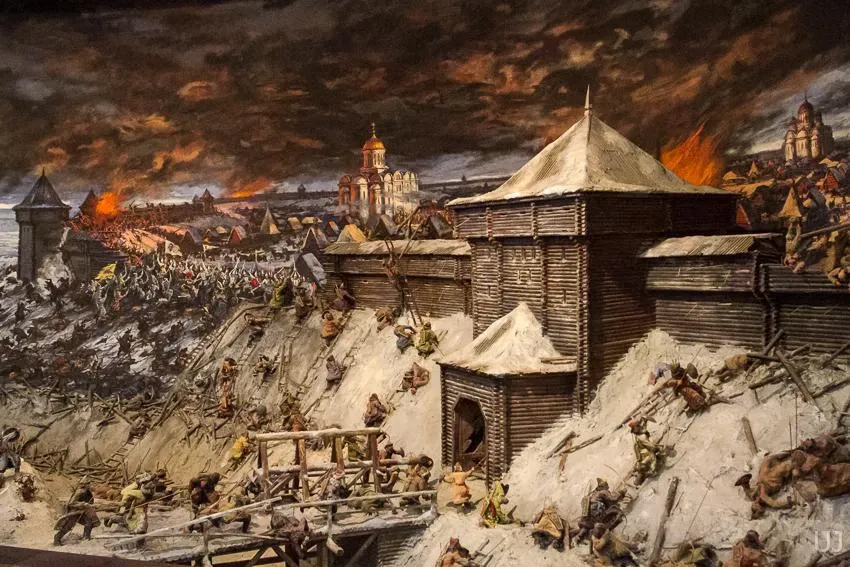
Where did the belief come from that the "Tatar-Mongol" yoke ended in 1480?
Where did the belief come from that the Tatar-Mongol yoke ended in 1480?
What was so remarkable about what happened in 1480?
The Great Stand on the Ugra?
A proud shaking of the air by two Horde armies? One of which preserved Horde Orthodoxy, which mutated into the Muscovite kind, while the other found itself a new prophet and adopted Islam?
Russian historians claim that the Golden Horde yoke supposedly ended in the late 15th century, and they "prove" it by saying that Moscow supposedly stopped paying tribute to the Horde!
In reality, things were somewhat different:
In 1480, Ivan III's confessor, Archbishop Vassian, calls the grand prince of Moscow, ruler of the Great Russian land, a czar and releases him from his oath of loyalty to the Horde czar. But at the same time Moscow became loyal to another czar, the Crimean one.
So did Moscow become a Crimean Czardom? Or a province of Crimea?
This is confirmed by the fact that Moscow went on paying tribute to the Horde, namely to the Crimean Horde, almost up to the 18th century!
What are we to do with this fact?
With the fact that even Moscow's seizure of the three main Islamic czardoms of the Horde, the Kazan, Astrakhan and Siberian czardoms, by no means meant its victory over the Horde, because the Crimean Horde remained, and the Muscovite Horde had neither the strength, nor the might, nor the right to conquer it.
What is more.
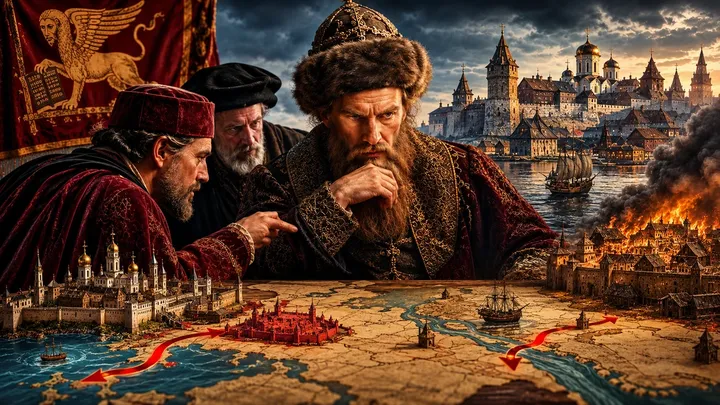
After the seizure of Kazan, Astrakhan and Siberia, the Crimean czar Devlet Giray demanded for a long time that the Terrible one free the territories he had occupied, and when the latter did not heed his request, he simply came and burned Moscow in 1571.
At the same time he wrote to Ivan:
I burn and lay waste to everything because of Kazan and Astrakhan, and I count the wealth of the whole world as dust, putting my hope in the majesty of God. I came against you, burned your city, wanted your crown and your head; but you did not come and did not stand against us, and yet you boast that you are the sovereign of Moscow! If you had any shame and valour, you would have come against us and stood your ground.
Stunned by the rout, Ivan the Terrible replied in a letter that he agreed to hand Astrakhan over to Crimean control, but refused to return Kazan to the Girays. He did, however, offer Devlet Giray a ransom and, as Karamzin writes, at the czar's demand handed over to Devlet Giray a certain noble Crimean prisoner who in "Russian" captivity had adopted Orthodoxy.
One can of course assume that this was the Kasimov khan Simeon Bekbulatovich, whom Ivan the Terrible later crowned as ruler, but whether this is true or not is unknown.
All that is known is that thanks to such a cunning move Ivan the Terrible gave legality to the Moscow throne, which could be recognised as neither ancient, nor hereditary, nor lawful, since none of Muscovy's rulers belonged to the highborn estate. Bekbulatovich, on the other hand, was a direct descendant of Genghis Khan, and by sitting on the Moscow throne he legalised it in a peculiar way, after which, a year later, he gave it back to the Terrible one.
That's how the cookie crumbles.
So the Great Orthodox Horde, Muscovy, was a vassal of the Horde not for 300 years, but for nearly all of 500!
Muscovy-Russia as a sovereign, independent state really appeared only in the 18th century, and again thanks to the efforts of Peter the First.
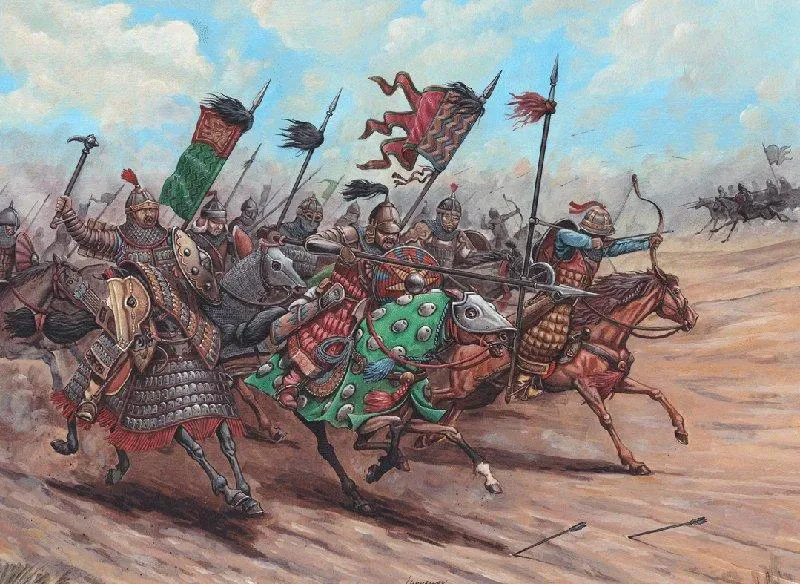
Moscow is a product of the Horde
In the 13th to 16th centuries Muscovy was no different from the other vassal uluses of the Horde.
Muscovy differed from the Kazan, Astrakhan and Siberian czardoms only in that those were ruled by more noble Tatar-Mongols of the line of Genghis Khan.
Yet, remarkably, in 15th-century Muscovy, unlike the rest of the Horde, the faith was "Rus" (or, if you like, Orthodoxy), but it differed radically from the faith of the people of Rus (Kyiv), Novgorod and Pskov, the Litvin-Belarusians and the Rusyn Ukrainians.
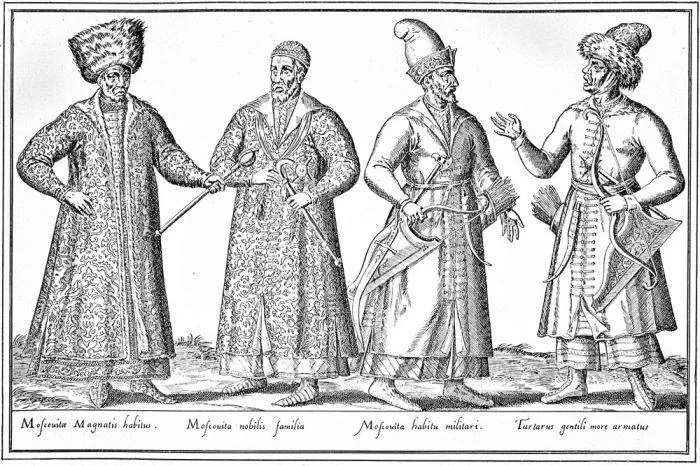
Although the rulers of Moscow were "Rus" in faith, they preferred Turkic, that is Eastern, clothing, and at all official receptions wore Arab turbans and curved sabres.
And not only the nobility: the Muscovites themselves also went about in Eastern clothes and kept their women locked away in terems (harems). Moreover, when going out into the street, women were required, by Eastern custom, to cover their faces with a chadra.
Women were also, by Muslim tradition, not admitted into churches, and they prayed by their walls.
A strict prohibition on alcohol reigned in Muscovy. When meeting, Muscovites greeted one another with the word "Salam", short for the traditional Muslim greeting: "As-salamu alaykum".
The mores in Muscovy were, from the start, exceptionally obscurantist, and any education was censured.
It was in this dreadful state that it passed to the first learned prince of Muscovy, Ivan the Terrible.
The church in Muscovy of that period was of the Nestorian persuasion, and its most important dogma was the recognition of the czar as God's representative on Earth, a Heavenly Scourge, a new Messiah.
Accordingly, as the man closest to God, the czar was allowed everything.
And since the czar is in effect God in human likeness, all people are slaves of Christ, all without exception his slaves, and so on...
That is precisely why the Nestorian Orthodox Ivan the Terrible turned the Polotsk St. Sophia, alien to him, into a heap of stones and made a soldiers' latrine on them.
The relationship between Islam and Christianity is a separate and serious subject for discussion.
Within the scope of this material one can only note that Muhammad declared Jesus Christ his predecessor, a messenger of the one God, who now abides in the fourth Heaven (the Almighty himself being in the seventh Heaven), to which he ascended alive. Modern scholarship also has theses openly stating that Islam grew out of Nestorianism.
Until the 18th century the Muscovite religion forbade any contact with people of other faiths!
The Muscovite sovereigns suffered a great deal of discomfort from meetings with various heretics and commoners, among whom they counted all the monarchic houses of Europe without exception!
That, in fact, is why, by order of the Church, the obligatory ritual of washing the hands was performed with particular care, in order to wash away the sins of contact with the infidels.
This essentially insulting custom was described in great detail by the papal legate Possevino, who visited the court of Ivan IV.
Enlightened Moscow
Besides its strange faith in miracles and its deep obscurantism, Moscow was famed for its illiteracy.
Right up to Peter, historians find not the slightest trace of schools, whose existence was universal in Rus (Ukraine).
In the 16th century Archbishop Gennady of Novgorod stated that the priests he had ordained could neither write nor read, and did not know even the basic prayers.
The illiteracy of priests and monks in Muscovy was universal, as V.O. Kliuchevsky repeatedly mentions in his History.
Muscovite Orthodoxy was such a marvellous mixture that the Swedish scholar Botvid, who visited Moscow in 1620, seriously pondered the question: Are the Muscovites Christians at all?
And he gave a negative answer to this question!
Maxim the Greek, sent from Constantinople in the early 16th century to correct the Orthodox church books, was received in Muscovy with hostility.
He became especially unwelcome in Muscovy after he discovered a great many blunders in the religion of the Muscovites and rose against their beliefs.
First of all, he was outraged by the assertion that the sun did not set for a whole week after the resurrection of Christ, and by the superstition that on the bank of the Jordan a viper guards the testament of Adam, and so on.
For such ignorance the heretic Maxim the Greek was exiled to a monastery, where they set about guiding him onto the true path.
Until the early 18th century the Muscovite church banned all educational books from Europe, and especially those that dealt with such demonic sciences as arithmetic, astronomy, geography and music, because they were ill-omened and harmful to man.
Why did the Muscovite rulers hinder the enlightenment of their serfs?
This is explained not by the "back of beyond beyond the forests" and not by the roads, which in Muscovy never existed.
It is explained by the fact that they understood that it is far easier to rule slaves who are beaten down, cowed and crushed by the curses of a local sect than literate commoners, as the affairs of Europe showed, where time and again overly clever commoners tried to prove that the Earth revolves around the Sun, that the Earth is round, and soon enough figured out that there is no God!
And if there is no God, then the czar is no autocrat, but an ordinary deceiver!
In short, this suited no one, so everyone who felt a pull toward the sciences was invariably executed, thereby preserving that notorious spirituality in the slaves.
Besides, knowing the basics of arithmetic got in the way of fleecing the population bare. As Karamzin wrote in his History of the Russian State:
... thanks to the Horde, there came the knowledge of counting people, the establishment of a poll tribute and taxation with various levies hitherto unknown. And the taxes, collected supposedly for the Czar, were by Moscow's cunning turned into its own income. The baskaks, at first tyrants and later venal friends of our rulers, could easily be deceived in difficult accounts. The people complained, yet paid; the fear of losing everything sought out new means of acquisition.
Vladimir Belinsky in his book The Land of Moksel notes:
This thought once more confirms that throughout the whole period of the Tatar-Mongol existence, that is until the 17th century, the Muscovite princes had a personal interest in keeping the people in the harshest ignorance, in order to steal more under the guise of Horde taxes.
The Muscovite prince and his camarilla set taxes arbitrarily, robbed their subjects beyond measure, and at the same time robbed the Horde of its tribute.
Only historical necessity promotes the development of science, education and culture, and promotes the carrying out of large-scale reforms. Here we see the opposite.
The Muscovite rulers, having set themselves the goal of enrichment, had an interest in preserving the backwardness of the people, so as not to meet resistance.
In its plunder, under the guise of the so-called "gathering of the Russian lands", the Muscovite Prince did not reckon with morality, not even with that of a wild beast, which does not touch more than it needs. He raked absolutely everything under himself! "Russian" great-power statehood is a direct repetition of the khan-and-Horde form of rule, inherited from the Golden Horde!
The Muscovite princes blindly copied the ways of cruel Eastern tyranny. Muscovy is plunder, betrayal of neighboring principalities, unlimited despotism.
The path by which the Muscovite state took shape is the Horde type of great-power statehood.
The New Horde, with its capital in Moscow, completely destroyed and plundered all the cities and countries it conquered. The culture and crafts of Novgorod and Pskov were wiped out entirely.
People of great intellect were destroyed and persecuted especially.
So much for the centralization of power in Rus, which the historians of today's traditional Orthodox Russia now proclaim so loudly.
Their notorious great-power statehood turned out, on inspection, to be an Asiatic deification of the Czar-despot who stands above society, while the man within that society was nobody, called nothing, and had neither right, nor voice, nor name, nor rank: simply a slave.
Even Karamzin, who is, on the whole, a historian of the pro-Moscow persuasion:
Beginning with the 13th century Muscovy not only did not advance in civil legislation, but seems to have stepped back, to the primitive ignorance of peoples in this important part of the good order of the state!
That is, Moscow not only became the Horde outwardly and inwardly, but degraded even further!
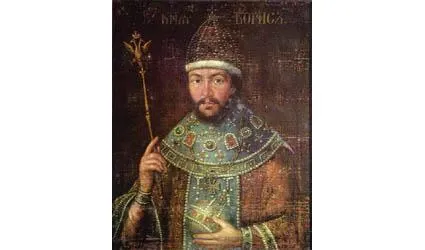
The Saving Castling Move
However much Ivan the Terrible wanted to become czar, whatever he did, he actually seized power in the Horde, and even wrote a book about his descent from Octavian Augustus, yet neither Europe nor Crimea recognized him.
No matter how Ivan the Terrible tried, in Muscovite churches even after the conquest of the Horde they went on praying for the one Czar, the great Crimean Czar of Czars, and only then mentioned their own Ivan. Even the capture of Kazan and Astrakhan was carried out by Muscovy with the tacit consent of the Crimean Horde.
By recognizing themselves as the younger brothers of the Giray line, the Muscovite princes not only recognized the Crimean rulers as their Czars, but at the same time gained the support and patronage of the reigning Girays, as well as certain rights and duties in gathering the Golden Horde lands into a new single state headed by the heirs of the Genghisid line, the Girays.
Czar Giray encouraged and welcomed the military actions of Ivan IV, since the foremost task before the Giray line was to gather together the possessions of the Great Golden Horde. That, with Crimea's permission, is precisely what the Muscovite prince was doing.
After the defeat of the Great Horde by the Crimean Czar in 1502, it was precisely the Girays, as victors and heirs of the Genghisids, who became Czars in the New Horde.
Muscovy not only agreed to this, but did everything to help the Girays ascend the throne, for which it waged war on Kazan without cease.
It is interesting that Ivan III, the grandfather of Ivan the Terrible, personally swore allegiance to the new czar of the Horde on his knees, and on the Bible took an oath of Moscow's eternal loyalty to the new dynasty of Crimean Czars.
After which Muscovy paid tribute to the Crimean Czardom, as to its Emperor, Sovereign and Master, until 1701.
And it was freed from tribute, again, thanks to Peter, who waged ceaseless wars with the Ottoman Empire.
And only when Turkey asked for peace did he win Azov from it, with all sorts of old and new towns already built, and sign a document under which the Crimean Czar had to renounce the tribute that Moscow had paid him until then!
That is, if we speak of Russia's independence, then as such it never took place. Peter conquered his Masters precisely by war, breaking the eternal oath of loyalty given by his ancestors.
But was the alliance Moscow concluded with the Crimean Horde advantageous all those years?
Undoubtedly yes!
Muscovy, despite the tribute, received regular military and political support from the Crimean Czars in all the wars it waged!
All of Ivan the Terrible's successes in the Livonian War in fact came down to his skillful use of the alliance with Crimea.
Only that was not enough for the Terrible!
He felt slighted.
The Czar of Czars could not live in the shadow of the Crimean Horde.
So in 1561 he cooked up a simple document, namely the so-called False Charter of the Patriarch of Constantinople, under which Ivan IV was recognized as the direct heir of the Byzantine Emperors!
This living charter became an important addition to the Book of Degrees, also a work of the Muscovite church lords, and it proclaimed Ivan IV's claim to the inheritance of the ancient title of the Byzantine Caesar!
That is, the Muscovite prince made himself the official heir of Constantinople (true, Constantinople itself did not know of this Charter, or did know, but did not want to recognize the forgery).
When word of this wish of the Muscovite Prince to take the throne of Constantinople was carried to the Crimean Czar, who not without reason considered Ivan IV his subject, he was greatly outraged and demanded an answer from Ivan IV.
Note that from 1473, when Ivan III swore an oath on the Bible to the Crimean Girays, until 1563 there were no serious disagreements between the Crimean Horde and Muscovy. The Crimean Sovereign even allowed Ivan the Terrible to seize the Kazan Czardom in 1552 and later, in 1554, the Astrakhan Czardom.
But after the claim to the throne of Constantinople, from 1563 relations between Muscovy and the Crimean Horde began to change sharply, and in 1570 the Turkish Sultan even demanded that Muscovy enter the Ottoman Empire!
From 1563 to 1570 Ivan tried in vain to avert the Tatar invasion... His envoys, such as Nagoy and Rzhevsky, appeared in vain before the czar with peaceable speeches and magnificent gifts... But the sultan demanded the return of Kazan and Astrakhan and the recognition of the Muscovite state as subject to the Porte.
K. Waliszewski. Ivan the Terrible, p. 224.
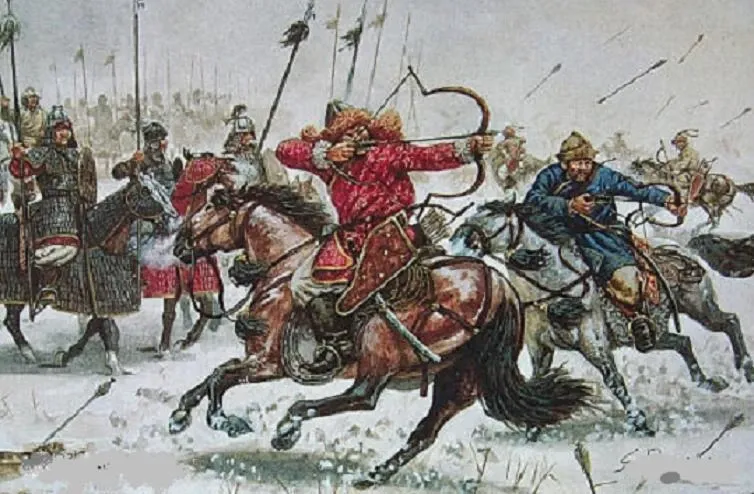
Ivan IV's cunning and slipperiness turned against him.
Czar Giray, with the support of the Turkish Sultan, decided to teach the unruly oath-breaker a lesson for encroaching on the title of Czar, and in 1571 moved his troops against Moscow.
The Muscovite princes met the Tatar troops on the borders of their domain, that is, on the line of the Oka, but Giray went around the Muscovite forces and advanced by forced march straight on Moscow.
Ivan the Terrible fled in disgrace, first to Kolomna, from there to Sloboda, past unhappy Moscow, and from Sloboda toward Yaroslavl.
Meanwhile on 24 May, the feast of the Ascension, Giray approached Moscow, and within three hours Moscow was no more.
More than one hundred and twenty thousand soldiers and citizens perished, not counting the wives, infants and villagers who had fled to Moscow from the enemy, and all together about eight hundred thousand, wrote Karamzin.
On 15 June Ivan IV made his appearance, answering Devlet Giray's wish to come to a sincere understanding...
Thus says our Czar to you: ...I sought you everywhere, in Serpukhov and in Moscow itself; I wanted the crown from your head: but you fled from Serpukhov, you fled from Moscow, and you dare to boast of your Czarist majesty, having neither courage nor shame!.. I will come to you again, ...if you do not do what I demand, and do not give me a sworn charter for yourself, for your children and grandchildren, Karamzin described the words of Devlet Giray's messenger.
Understanding that without Crimea he was nobody, Ivan IV did just that:
He swore allegiance to the Czar of the Horde, gave the so-called sworn charter for himself, for his children and for his grandchildren, as all his ancestors had given such oaths!
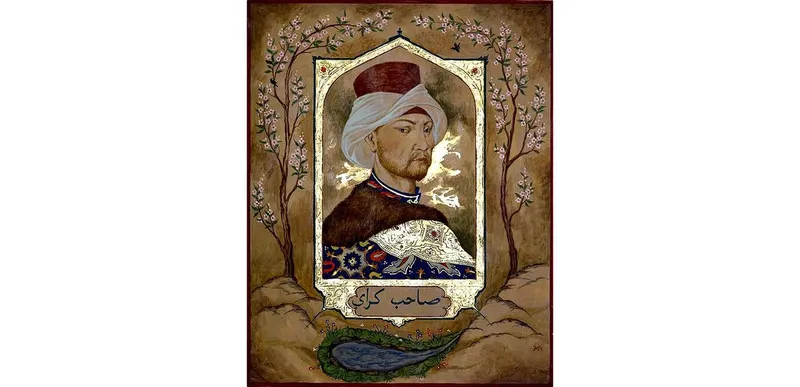
That is, he, like his grandfather, gave a second eternal oath to the Crimean Czar! In which he signed for himself, and for his children, and for his grandchildren.
It is clear that Russian historians in no way connect this episode with Ivan IV's abdication of the throne and the transfer of his title of Czar to the Tartar Simeon Bekbulatovich, and call the very fact of the abdication a curiosity, but I believe that it was precisely the repeated giving of the oath that served as one of the preconditions for this act.
For a whole year Ivan the Terrible handed power to the Orthodox Tartar Sain-Bulat, an heir of Genghis Khan himself, while he became Prince of Moscow, Pskov and Rostov, and styled himself nothing other than the appanage prince Ivanets.
It is hard to actually guess what really made the Terrible act so, for to understand him one would have to be a paranoid schizophrenic bloodsucker.
But there is a certain logic in his act.
Under the guise of accepting Crimea's conditions, and also for a temporary withdrawal from affairs, given a certain crisis in the country, stepping into the shadows was very advantageous to him. All the more so since in handing the throne to the Orthodox Simeon he did not lose his own power over the country, and in fact went on running the country through Simeon's hands, hiding his true role for exactly as long as he needed in order to attain political goals known only to him.
Governing the country from the shadows gave him the chance to escape responsibility for the state of affairs in Muscovy, and after the actual act of non-recognition of the Horde's authority, life in Muscovy was very hard.
For, having learned of Ivan IV's wish to become czar of the Horde, the Girays dealt Muscovy a most brutal blow in 1571, in which, from the burning of Moscow alone, the principality lost about one million people killed and taken captive, while Ivan the Terrible himself, by his policies, had by then thinned its population by no fewer than 1.5 million human lives.
Then again, the terrible plague of 1566 laid waste the lands of Muscovy, and the unending war with Livonia devoured ever more of its already scanty material and human resources.
That is, thanks to the balanced and well-considered policy of Ivan the Terrible, Muscovy lost almost half its population over the years of his reign!
It is clear that with such a consumption of slaves Muscovy was not capable of continuing to wage war in the North, all the more so as its Southern ally had in fact become its enemy.
One must understand that the war in the North was as necessary to Ivan the Terrible as air, for it was waged in the interests of the British Crown, on kinship with which the Terrible was counting very heavily!
For precisely this reason, and for the other reasons described above, he decided to humble himself before the Crimean Czar and join forces with the Horde against Livonia.
As Belinsky described the act:
Blood kinship of 350 years with the Horde, the Horde instinct of Moscow, commanded him to bow his neck, as usual, before the heirs of the House of Genghis. All the more so because the Crimean Khanate could support Muscovy in the Livonian War and secure its southern and southwestern borders on one condition only: Moscow and its Prince had to remain vassals, that is, subjects of the Crimean Girey dynasty ..
All the more so because Davlet-Girey promised that, should Ivan IV refuse his terms, he would come to Muscovy again with his armies! And a second such guest visit would have put an end to the Third Rome, forever!
So in 1574, three years after the blow Czar Davlet-Girey dealt Moscow, in exactly the year when a repeat blow could be expected, Ivan IV publicly renounced the title of Byzantine Czar, heir to the throne of Constantinople.
But what did the Terrible gain?
Time. He gained time for reforms in the army and the country.
He gained the chance to consecrate the throne of Moscow by officially placing a descendant of Genghis Khan upon it.
And since Sain-Bulat came from a Czar's line and had earlier been styled Czar of Kazan, and since Kazan had become part of Muscovy, the title of Czar was in fact kept for Bekbulatovich's heir as well, after the reign of the Czar.
Immediately after Ivan IV's renunciation of the title he had appropriated unilaterally, a great embassy with many gifts was fitted out and sent to Crimea, to report these events to the Gireys, to explain everything and to repent of the misunderstanding that had arisen earlier.
Even after the warlike Davlet-Girey died in 1577 and his son Magmet-Girey took his place, Ivan IV, as Karamzin wrote:
John hastened to send to him a distinguished dignitary, Prince Mosalsky, with greetings, with rich gifts (in fact tribute), such as Taurida had never seen before, and with a very indulgent instruction...: To bow before the Czar; to promise annual gifts (tribute)... to behave quietly... . So eager was John to find an ally in the new Czar... .
Note how Karamzin is being sly!
He calls Tribute "annual gifts"!
As a native Russian, that is, a Tartar absolutely devoted to Muscovy, he can be understood, all the more so because Karamzin, following the instruction of Catherine II, replaced in all his works the word "tribute," humiliating to Moscow, with "annual gifts," and he could hardly contradict his own claim that since the end of the 15th century Moscow had stopped paying tribute to the Horde. But as a historian he cannot be understood. This substitution of concepts is, on the whole, an insignificant but vivid example of how Muscovy interprets facts that are inconvenient for it.
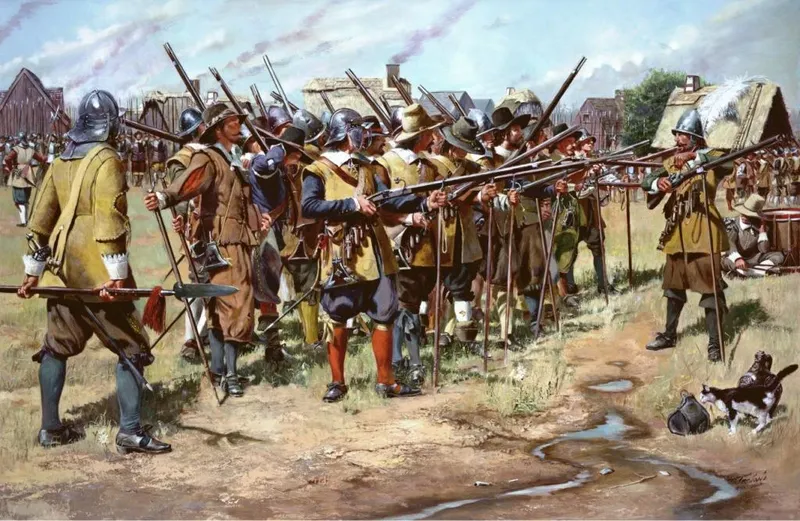
The role of the Horde in the Livonian War
Did Muscovy need Livonia?
Unequivocally NO!
Livonia got in the way of only one maritime power: Great Britain!
It was in her interests that the Muscovite despot Ivan the Terrible acted! It was to her that he had obligations which he could by no means break!
Muscovy began the war in the North together with Horde troops, and with them Ivan the Terrible resumed military operations in Livonia, after the Livonian Order had ceased to exist as early as 1561.
Let me remind you that, in order to find allies in the war with Muscovy, the Livonian Order ceased to exist as an independent power and divided its lands among Sweden, the Grand Duchy of Lithuania and Denmark.
Therefore after 1561 Muscovy, together with the Horde, was fighting not a mythical Livonian Order but Poland, Sweden and the Grand Duchy of Lithuania.
As Vladimir Belinsky wrote:
As early as 1577 Tartar troops were helping the Muscovite ones in the Livonian War. Naturally, Russian historians keep silent about this help. But such omissions and outright lies are usual and quite natural in Russian Imperial history. Tartar troops began to march North together with the troops of the Muscovites.
Despite the Tartar military aid, from 1577 the Muscovite successes in the Livonian War began to decline rapidly. In 1576 the outstanding commander, the Hungarian Stefan Batory, was elected to the throne of the King of Poland, and literally within five years, that is, by the end of 1581, he completely drove the Muscovites out of the Baltic lands and even besieged Pskov, an ancient city of Kyivan Rus.
What is interesting is who exactly fought against the Grand Duchy of Lithuania and Rus', whose population shared one Rus' faith and spoke a language extremely close to modern Ukrainian?
The national composition of Ivan the Terrible's troops, as Karamzin writes, was as follows:
...John... in a general council of the Boyars and the Clergy declared that the time of great bloodshed had come; that he... was going... to the German and Lithuanian land; he moved all the regiments to the west; ...besides the Muscovites, the Circassian, Shevkal and Mordvin Princes, the Nogai Princes, the Czarevichs and Murzas of the ancient Golden Horde, of Kazan and Astrakhan marched day and night to Ilmen and Peipus .
The Muscovites marched on the Rus' Land together with their de facto fellow tribesmen, the Horde men! At the same time, more than half of Muscovy's troops were clearly Horde troops.
It is also strange that Karamzin forgot to mention in his list of John the Terrible's troops the names of other Tartar forces: the Kasimov, Bulgar and Tula Tartars. Or did he consider them by then to be the native population of Muscovy?
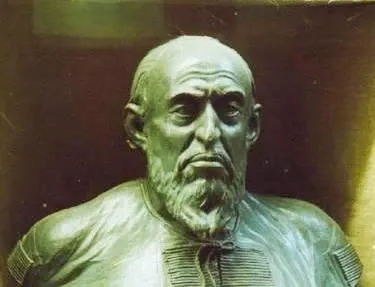
John the Terrible, the Half-Czar
The Terrible himself was very seriously ill. Ill with an incurable disease with which the Moscow throne endowed all its monarchs.
This marvelous disease was called, and is still called: Megalomania.
And the rulers of Muscovy regularly nurtured, pampered and cherished this mania.
One after another there appeared sacred books telling of the great deeds of the Moscow princes.
Thus in a folio compiled at the beginning of the 16th century, the Tale of the Grand Princes of Vladimir of Great Rus' , it was claimed that, supposedly, the Princes of Vladimir moved the capital of Rus' from Kyiv to Vladimir, and from there to Moscow!
And that they trace their genealogy, through Rurik, who was called to reign, from the Roman emperor Augustus himself!
The same book mentioned the famous legend of the Byzantine emperor Constantine Monomachus handing over the czar's regalia, including the so-called Cap of Monomakh, to the Prince of Vladimir Vladimir Vsevolodovich, also known as Vladimir Monomakh.
With them he was supposedly crowned to the throne of his free and autocratic czardom !
Based on the claim that Vladimir Monomakh was supposedly crowned as czar, the Grand Prince of Moscow could call himself czar even before Ivan the Terrible performed the official coronation rite.
In the Muscovite political consciousness the title of czar was far higher than that of king, since it was mentioned even in the Bible, while caesar and king were words created by man, titles appropriated by conquerors, whereas the title of czar the autocrat came from God!
Therefore, when the emperor of the Holy Roman Empire offered Ivan III a royal title, the Grand Prince of Moscow rejected the offer, considering his significance and position to be no lower than royal.
The symptoms of this obscurantism, Muscovy's claim to take the place of the collapsed Byzantine Empire, were substantiated in more detail in the political doctrine: Moscow, the Third Rome
But what was the most dreadful mishap!
No one in Europe shared the Moscow princelings' conviction that they were God's chosen, and no one intended to recognize the title of czar for John, despite all the "evidentiary" waste paper he published.
First of all, this was because all the royal houses of Europe knew the actual genealogy of the Moscow princes and frankly did not understand how they could lay claim to the title of czar, let alone of Rus'! For in the 16th century princes of the senior Rurikid dynasty, standing considerably higher in the dynastic line than the Moscow princes, still lived in the Grand Duchy of Lithuania and in Ukraine.
Moreover, according to Karamzin, Stefan Batory himself, not mincing his words, openly accused the Terrible of elementary lying and of unseemly fabrications:
Stefan wrote:
- that the Moscow charter (on the claims to the throne of Constantinople) is forged.
- That the Moscow Boyars fraudulently inserted into it an article about Livonia (invented the fact that Livonia occupies territories that had belonged to Muscovy since time immemorial)
- That John, speaking of peace, makes war on this Royal land and invented a fable of his descent from the Roman Caesars!
- That Muscovy unlawfully took from Lithuania both Novgorod and the Seversk lands, and Smolensk and Polotsk! .
And further Stefan wrote:
You boast of your hereditary State. I do not envy you, for I think that it is better to acquire a crown by merit than to be born on a throne to a Glinskaya (heiress of the disgraced Horde man Mamai), the daughter of Sigismund's traitor (a reminder of Ivan the Terrible's mother, who fled from Lithuania)... You condemn my supposed perfidy, you, the author of forged treaties, altered in meaning by deceit and by the secret addition of words pleasing solely to your mad lust for power!
Batory did not even want to speak further with the Moscow Ambassadors and simply drove them out of his camp.
And to wipe the runny nose of the czar of czars, he sent John books published in Germany in Latin on the true origin of the Moscow princes, as tributaries of the Perekop Czars!
Stefan Batory wrote to Ivan the Terrible outright that his grandfather Ivan III, like all his previous forebears:
Licked mare's milk from the manes of Tartar horses!
Such is the marvelous story of a czar of highly noble origin according to the books and charters he published himself, an origin that was recognized neither in Europe, nor in Crimea, nor in Constantinople.
Thus the Terrible's attempt to seize the Byzantine inheritance by lies and falsifications, alas, was not crowned with success, but it gave his descendants ample ground for developing their own paranoid ideas.
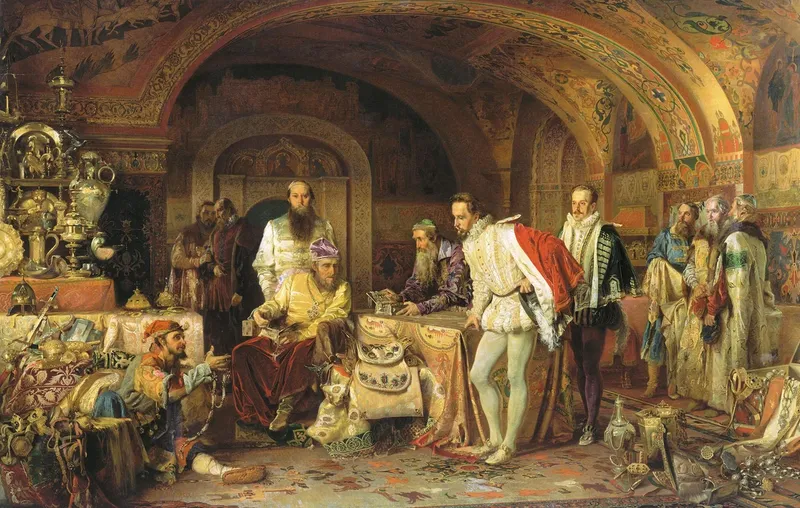
The end
In 1582, in the so-called Livonian War, Poland, the Grand Duchy of Lithuania and Sweden, each from its own side, won back from Muscovy all the lands it had previously seized.
Stephen Báthory, at the head of the united armies of Poland and the Grand Duchy of Lithuania, struck Muscovy in a completely unexpected place. His troops besieged and stormed Polotsk. Then, one after another, fell Velikiye Luki, Nevel, Ozerishche, Zavolochye, Kholm, Staraya Russa, Ostrov and the castle of Schmilten.
The road lay open for Báthory's troops both to Pskov and to Moscow.
The Swedes, advancing through Karelia, won back from the Muscovites what had been seized earlier: Lode, Fickel, Leal, Gapsal, Narva, Ivangorod, Yam, Koporye and Wittenstein.
Ivan the Terrible, although he had an army almost 60,000 strong, twice the size of the allies' forces, was unable to wage war against Báthory with his 17,500 men and a Swedish army of only 8,100!
The Tartar army of the Muscovites was incapable of fighting even with so small an advantage, and was forced to sign a peace with Europe on Europe's terms.
Thus the peace concluded in a peasant smoke-filled hut in the village of Kiverova Gora near Yam-Zapolsky, a town ruined by the war, recorded: Muscovy lost everything it had managed to grab in 24 years of wild brigandage in the region!
It is noteworthy that the signing of the peace ended in a scandalous embarrassment: in Stephen Báthory's copy Ivan IV was called Prince of Moscow, while in the copy for Muscovy he was brazenly given all the titles he had awarded himself.
Ivan IV died in 1584.
The return of the Horde
The son of the Terrible, Fyodor Ivanovich, was not distinguished by a broad mind, and after ascending the throne he forgot to kiss the feet of his Crimean overlords, for which he was cruelly punished.
In 1591 the Crimean Czar Kazy-Giray marched on Moscow again, to restore order.
After some unserious skirmishes, everything ended once again with an oath of loyalty to the house of the Chingisids and the recognition of Kazy-Giray as the Supreme Czar. And for the trouble that Moscow had caused its true ruler Kazy-Giray, great pominki were paid, or, in plain language, the Great Tribute.
As the Muscovite vassal wrote to his master, according to Karamzin:
...I (Fyodor), desiring your friendship (Kazy-Giray's) and the Sultan's (the Turkish one), heed neither the Ambassadors of European Sovereigns nor the cry of my people, and offer you brotherhood with rich gifts (the Tribute) ...
Fyodor confirmed his words by handing over 10,000 rubles, on top of fur coats and precious fabrics, promising to send the same amount every year!
For this he received from him a SHERT, or oath charter, with a golden seal, similar to the one signed by all the Muscovites beginning with Ivan III.
In fact, this document can be titled in no other way than the notorious Yarlyk for the principality, which the Horde traditionally granted to Moscow's princes in return for payment of that very annual tribute.
That is, in describing the events of the end of the 16th century, Karamzin himself refutes his own claim that Moscow stopped paying tribute to the Horde and receiving yarlyks for the principality from it as early as the end of the 15th century!
This oath charter of loyalty and subjecthood to the house of Giray, signed by Fyodor, was later signed also by Fyodor Godunov, who became ruler of Muscovy after the last of the Rurikids.
It is noteworthy that Godunov never forgot or hid his Horde origin, and was even proud of it!
The Romanovs also paid the Horde, until the end of the 17th century, remaining faithful vassals of the Crimean Horde.
Russia paid the shameful annual tribute to the Horde right up until 1700.
That is, Moscow was a vassal of the Horde since time immemorial, and never an independent state at all. And from 1242 to 1700, that is, for 458 years, it dutifully paid the Horde tribute.
And the problem, essentially, is not the tribute itself, but that the rulers of Muscovy regularly received yarlyks for the principality in Moscow, and recognised the Horde's vassalage and supremacy over themselves, and in the churches of Muscovy it was first of all the names of the Czars of the Horde that were sung, and only then the names of their own local Moscow rulers.
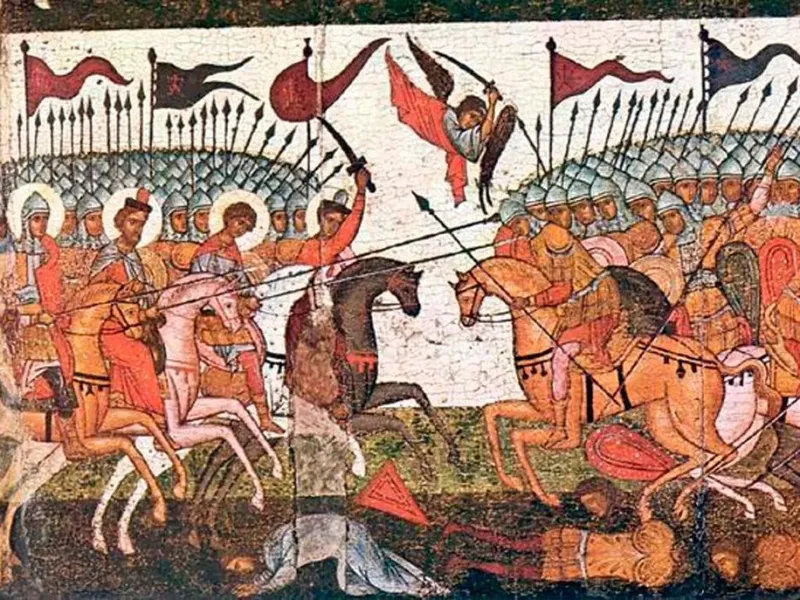
The Tatar-Mongol Yoke
That Muscovy, with its anti-national approach to the formation of an ethnos, could never become a brotherly people to the Slavs: Ukrainians, Belarusians, Poles, was always clear, both to the Muscovites themselves and to everyone around them.
That there is, and will be, no justification for any of the sects which, with good intentions, wiped whole cities off the face of the Earth is also a fact.
As is the fact that a nation of traitors and executioners of Rus, a nation of eternal servants, lackeys of the Horde, will never be recognised as brotherly, or kindred, or close, or friendly.
The whole life of the Muscovites is crime, falsification, betrayal, forgery. But the Muscovites seem not to understand this, and mass-produce for us their Muscovite truth. A truth that tells us of the atrocities of the Tatar-Mongol Yoke and of Muscovy's heroic resistance to the Yoke!
I simply cannot understand how one can believe the Muscovite fairy tale about the struggle against the Tatar-Mongol Yoke, if Moscow, from time out of mind, took for itself half of what it collected from RUS!
This real, one hundred percent proven FACT is a very significant FACT, I must tell you!
And although Russian historians, in an attempt to disown the Horde forever, invented the Tatar-Mongol Yoke, onto which they hung the blame for all the troubles of Rus, this fact does not absolve them of guilt for their atrocities!
Muscovy ALWAYS shared equally with the Horde the results of the predatory raids on the LAND OF RUS. And, as is well known, only real brothers split the loot tribute taken from a pseudo-brotherly people in half!
Receiving even a small share of the loot would have put an end to any idea of forgiving Moscow for collaborating with the occupiers, but evidence that Moscow split the plunder in half makes Moscow not merely an accomplice to the crime, but a full co-defendant for all the crimes of the Horde.
Muscovy, conquering the lands of Ukraine and Belarus, always shared in a brotherly way only with the Horde!
The Horde and Moscow, those are the real brothers!
And the younger brother is precisely Moscow. That very younger brother who coveted everything the elder one possessed and destroyed the Horde from within.
That very younger one who, over centuries, nurtured a plan to conquer the Horde in order to conquer, further on, the whole world!
Moreover, tell me, what did Muscovy actually change by seizing power in the Horde?
What did this formation, which is now called Russia, achieve?
Nothing!
Muscovy, even by the words of Lev Gumilev in the book From Rus to Russia, contributed nothing to the foundations of the Horde's life, since for centuries it was itself their pitiful vassal.
Having seized the Horde, Moscow created no new civilisation!
On the contrary, instead of progress and the creation of something new, Moscow simply copied the goal set by Genghis Khan himself for his Empire of brigandage and enslavement: Reach the last sea!
Russia is a country that never built anything, but only destroyed.
Alexander II, in the preface to a geography textbook for cadet corps, described Russia's mission thus:
Russia is a state neither commercial nor agricultural, but military, and its calling is to be the terror of the world!
And how do you like this slogan of czarism:
Russia has no allies and cannot have any!
Don't you find that this phrase by definition completely rules out the idea of a brotherly union!
Muscovy-Russia is a country of eternal plunder and brigandage. For centuries it lived at the expense of conquered peoples, the victims of its brigandage.
Constant expansion was the most vital necessity for its existence, since without newly enslaved peoples the Empire could not exist!
Why?
Because as soon as Russia seized a new territory, it completely drained it. In an enslaved country, after its occupation by Russia, a period of degradation set in, which brought it to decline. And as soon as the revenue from the newly "reunited" country stopped, Russia needed a new victim, for otherwise collapse awaited Russia!
So it went on for centuries, and so it happens now.
Moscow-Russia-the Horde has no friends, nor can it have any!
A Master simply does not befriend Slaves! A Czar has no interest in an alliance with Slaves!
Russia always simply fed on other peoples: it devoured them, enslaving them, making them its elements: forcibly converting them to its faith, destroying everything local and national.
All the Great humanism of Russian Imperialism is in essence the most ordinary open genocide of peoples! Because any enslaved people, on entering the family of peoples of the Empire, lost not only freedom and property; its faith, its language, its culture, its national identity were taken away too, it was, in essence, wiped out.
And this is an ancient technology of the Horde, wholly and entirely borrowed by Moscow.
The same technology as joint theft, plunder and brigandage!
The Horde did not simply unite slaves under itself, it also forced them to become accomplices in terrible crimes: violence, murder, robbery, looting.
Nothing unites like a joint crime! is one of the most important postulates of Muscovy.
Lev Gumilev even called this phenomenon the birth of the Russian eastern unity of peoples, although it seems to me that it cannot occur to a healthy person that unity is born through brigandage and by drawing its victim into one's own crime.
I also like it when people today say, in Gumilev's words:
The Horde saved Rus from Catholicism!
At this moment I ask myself: what does Catholicism have to do with it, if in Moscow they regularly insist that Russia is a secular state, and all the religions of the world coexist in it without mutual persecution and accusations?
Or is the fairy tale about a secular state just one more lie? And is Russia, after all, nothing other than an Orthodox Jihad, and is one of its most important tasks an eternal war with all the other religions of the world?
So it turns out that the原 Orthodox Tatar-Mongol Yoke did not end but transformed, mutated into a huge, obscurantist, crippled religious country that, as before, fights for the dominance of its ancient and by now utterly uninteresting heresy over the world?
Is this the essence of the ancient spiritual "bonds" traditions of the Horde-Muscovy-Russia?