You know, I can't say I don't like the USSR, I hate it..
You know, I can't say I don't like the USSR.
No.
I hate the USSR, that is what I am ready to say.
I hate it with everything: heart, soul, brain, finger, foot, hand, everything!
Every particle of my being screams with pain when I remember this ghetto.
A country of eternally poor people, of empty gazes and empty store shelves.
A country of lies, deceit and falseness.
A country of betrayal, denunciation, brutishness and all the rest of the conceivable and inconceivable filth.
But most of all I hated the USSR not for any of the above.
I hated it for something else: for its predictability, for its hopelessness, for its predetermined course. My life seemed to me a drawn-out walk to the scaffold.
Already at school I knew that after school the army was waiting for me, rock-solid certain, because my parents had no money for the bribe needed both to get into a university and to dodge the army.
After that a dreary existence awaited me, with these important milestones: a wedding, an eternal wait in line for an apartment, a TV set, a refrigerator, and, if I learned to steal or was extremely resourceful, even a car and a dacha.
It was exactly when I was studying the possibilities of that last turn of events that I realized there was one more prospect, and it was not cheerful at all.
A dull, soulless, useless life, a mere existence.
Ups and downs at skirting-board level.
Despair.
And so when I read the lines written below, I remembered all of this, it hit me, so to speak.
It hit me, and I understood that I am ready to do anything so as never to go back there.
Anyway, read for yourselves, maybe you will understand me:
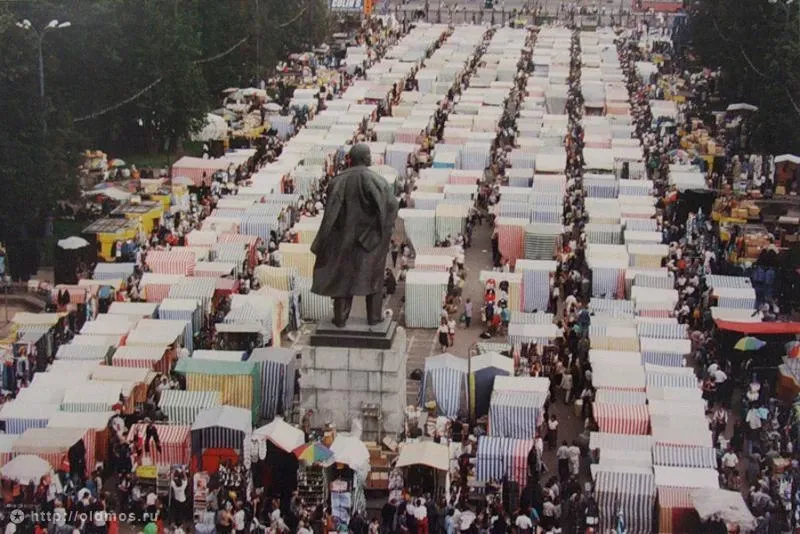
...Do you know that nowadays the easiest place for a woman to buy a fashionable, pretty item (a blouse, a skirt, shoes) is in a toilet? Yes, yes, in the big public toilets somewhere on Petrovka or in GUM. That is exactly where the hand-to-hand trade in foreign clothes flourishes. The main thing is that in a women's toilet the police won't interfere...
...When our state sells cars to working people, for example, it acts as an ordinary speculator. For a Zhiguli (Fiat), which costs about a thousand dollars all over the world, our state takes seven thousand five hundred rubles; for a Volga, which, as is well known, costs about two thousand on the world market, the state takes fifteen thousand from its own working people, and you still can't buy one. Rations, rations, dear friends...
...I could tell you about those rest homes, how they put four people in a room, how people wander along the park paths, wilting from idleness, how they drink, how they amuse themselves in the bushes and around the park, how they entertain themselves by singing Katyusha and Moscow Nights and by sack races under the direction of a culture organizer...
...Once I bought a little can labeled Lunch and fried its contents with potatoes, onion and garlic. It turned out tasty. The next morning my friends told me I had eaten canned chicken for cats. But it was tasty! It was better than the canned food for people that they still make in Russia today!..
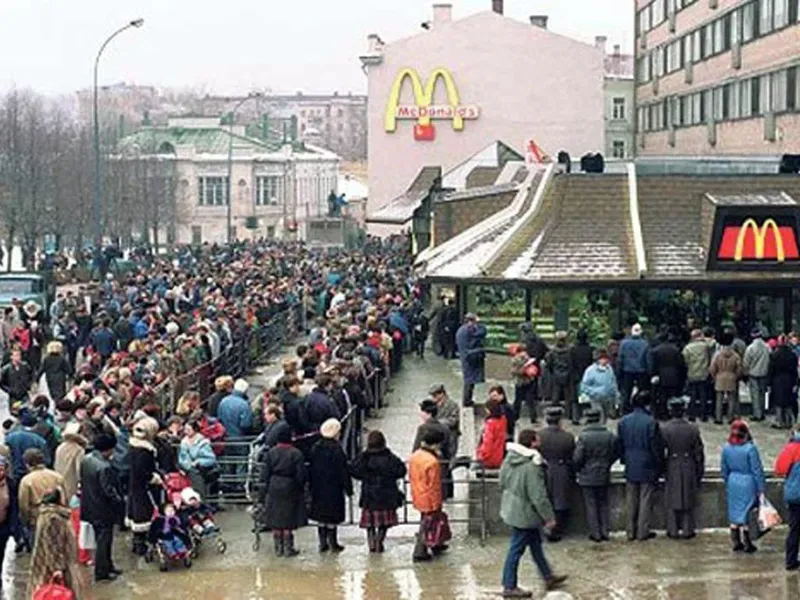
... For you McDonald's is the name of a posh restaurant...
...On New Year's night you bravely fought off sleep to watch foreign pop acts at 3 a.m.: East German television, Maryla Rodowicz, Karel Gott and the Italians...
...Have you ever had to show your school diary to the Komsomol patrol at the entrance to a movie theater...
...Smoked sausage has to be cut in a thin, thin, transparent slice, because the next time you see it will be half a year later...
...The coolest store in town is the second-hand commission shop, because that is where an imported two-cassette tape recorder is sitting...
...Sneakers, the Soviet Adidas, were cool. They were worn almost with dressy dresses...
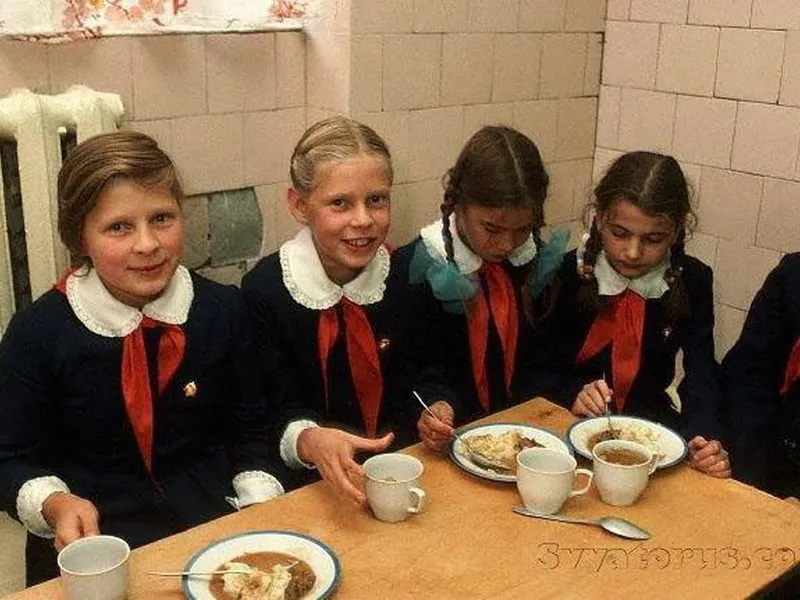
...Do you remember how in 1980, only for the duration of the Olympics, small juice packs with straws appeared, New Zealand butter in bright packaging, and Finnish jams in the school canteen. People kept the packaging, trying to give it a second life...
...In the summer holidays between ninth and tenth grade, the insanely cool thing was an exchange trip to Czechoslovakia (Bulgaria). The lists of lucky ones were approved a year ahead. Everyone tried to sink everyone else, and no one believed that you could want to go to Prague simply to look at the architecture. Back from Prague, the girls in your class show off in identical white slippers with tricolor Czechoslovak flags. You wouldn't have bought yourself such things. If only you had been put on the lists...
...You are certain that 35-kopeck ballpoint pens are not meant for writing. They are meant for hammering into a concrete wall and then screwing a screw in there...
...My parents left Latvia for several years for Kogalym. My mother, a piano teacher by profession, was sent there to unload cement from railcars, by hand, with a shovel...
...We were riding home by bus from a holiday on the Black Sea. The bus broke down and refused to go. The driver found that a rubber bellows had cracked, something to do with the fuel system. He put a couple of condoms on it, and we drove all the remaining 300 km...
...A hockey match between Soviet and Canadian juniors at the Sokolniki Sports Palace in Moscow ended tragically. Most of the exits were closed, and in the crush that followed the match 21 people died and 25 were maimed. Although there is another version of how the crush began: after the game the Canadians wanted to do something nice for the spectators and began throwing chewing gum into the stands...
...At the end of the month, a one-day strike in the largest ports of the northwestern part of the USSR: Leningrad, Vyborg, Tallinn, Riga, Klaipeda, Ventspils. The workers refused to unload food that had arrived from abroad, since this food was going not to the country's stores but to Moscow's closed special distribution points. Besides, the poor organization of receiving the goods made the work, in the strikers' opinion, pointless. Soldiers and students were rounded up to replace the workers...
...Members of the youth gang Tyap-lyap, 40–50 people armed with firearms (sawed-off guns) and metal rods, wearing masks, moved from the river terminal along the streets of Novotatarskaya Sloboda. Spreading out along both sides of the streets, they began beating and shooting at citizens and the police. Ten people were wounded, including 2 policemen, and two were killed: an elderly citizen and one of the bandits. As a result the existence of the gang was officially acknowledged, and almost the entire leadership of the Interior Ministry of the Tatar ASSR was punished. A large-scale investigation led to a trial of the gang in 1980; 28 criminals were convicted, including 4 sentenced to death...
...In 1980, before the Olympics, everything disappeared. Even butter. So-called sandwich butter was introduced, consisting mostly of water...
...A crafty kindergarten teacher would sometimes slip out during the walk to the neighboring grocery store with 3-4 kids from the group, so as to buy something there too, something sold at one item per head of the population...
...And a watch. Naturally, a Raketa case with a Pobeda movement. That was a normal tradition in the late 60s, when fathers gave their own watches to their sons...
...Until the mid-90s dentistry worked with 19th-century technology. For example, the cement for fillings was the one a German created in 1885. The same composition. Once they set up production, they kept making it without changing anything. And the low-speed buzzing drills with a rope drive? Do you know what that is? And killing a nerve with arsenic? Those are also 19th-century innovations. And the worst of it: a complete absence of anesthesia...
...On September 1 I came to school with a little diary whose cover had its symbol (of the 1984 Olympics). It was copied (not quite correctly, though) from a Coca-Cola can found in the trash bin of the Intourist hotel...
...Glue-together model airplanes had to be glued with the solvent dichloroethane. I remember my dad cursing for a long time, explaining that at his institute dichloroethane was stored as a poison, and here it was being handed out to children. And he was right. Dichloroethane is a strong narcotic, a hepatotropic (liver) poison. It damages the central nervous system, causes clouding of the cornea, dystrophic changes in the liver, kidneys and other organs, irritation of the mucous membranes and dermatitis, and accumulates in the brain. It penetrates through undamaged skin...
...My mother gave birth to my sister in 1975, in Moscow. I will never forget her story. For a start they stripped her naked and shaved her with a rusty razor; there were no sheets on the beds...
...A machine-building plant in the Moscow region. Also a cement plant and a reinforced-concrete plant. After the day shift, after 4 p.m., there was almost a laborer under every bush. By nine in the evening they were being fished out from under the bushes, either by their wives or on all fours by themselves. In the apartments of such proletarians there was no furniture except a wardrobe and a table, and of the items of cultured living the most luxurious was a demob album. From 1985 on, every stairwell stank of moonshine, because everybody was brewing...
...For lack of decent alcohol at hand, the working masses invented amazing and dangerous ways to douse their burning pipes. BF glue wound onto a drill bit. A rag, a drill bit, glue, and half an hour later you have an alcohol-containing liquid. Assorted solvents. Denatured and methyl alcohol. A paste-like compound spread on bread. You spread it, the bread soaks it up, you remove the filler, and that's it, you can quite well knock one back...
...Buckwheat and rice porridges were extremely rare, but they also cooked something monolithic and totally inedible out of millet, Artek groats and some other grains...
...Around the same time someone presented my father with a red disposable lighter. Luckily he knew how to find non-standard solutions, so for two years he refilled this lighter and changed its flint, until it finally fell apart for good...
...In 1987 one boy's parents brought him from abroad a toy M-16A1, a Parabellum P-08 pistol and a Beretta 92F. The toys turned out to be practically useless, since they never left the house grounds under any circumstances. It was clear to any fool that the yard riffraff would either take them away or smash them against the nearest tree, because no fucking showing off. I don't have one, so you shouldn't either...
...At my school there was a real rarity that I got in exchange for 100 chewing-gum inserts. It was a full-size Browning pistol cast from aluminum (by whom, I don't know). It was of zero use, but the swagger and respect from the schoolkids were through the roof. And at the glass factories they pinched glass balls from the production waste. That was a currency worth more than the inserts...
...Instead of lip balm in winter, women (and girls, and even some men) smeared their lips with Norka ("Mink") petroleum jelly...
...In 1986, in the music department of the Frunzensky department store in Leningrad, I was struck by a lone Ukrainian tambourine standing there...
...Dumplings came with vinegar straight from a bottle with a little hole. It poured unevenly and came out terribly sour. But everybody grimaced and ate. Much later I realized that this seasoning was provided for the case of a poor-quality dish, to drown out the nasty taste...
...Recently my grandmother tells me: you throw away pieces of soap, but you should put them in a nylon stocking and then you can still use them...
...We didn't melt gold, but lead from old car batteries, easily. The boys were into it: they would build a little fire in the nature protection zone of the Setun river valley, break old batteries with bare hands (horror!) (luckily the dump was nearby), and off they went! From the lead they got, they cast brass knuckles...
...And I remember perfectly how at six years old I came to the clinic in winter with my mother. Some woman rushed up, driven out of her mind by the total shortage, offering to buy the child's fur coat I was wearing...
...In the Brezhnev years bicycles were more affordable (though you still had to save up for one), but spare parts were always in short supply. I remember very well that valve nipples were scarce, and people stole them. Leave your bike for a minute outside the bread shop, come out, and the nipple is gone...
...My grandmother still keeps supplies bought back in the Union. It takes my breath away to look at the pantry stuffed with petrified packs of salt made in 1981...
...I still shudder when I remember a canteen buffet in an Urals town, where a liquid the colour of weak tea was, in the buffet lady's opinion, strong coffee... ...The famous French actor Gérard Philipe mortally offended all the women of the former USSR. After one of the Moscow film festivals, having stocked up in our shops, he brought samples of Soviet-made underwear back to France and set up an exhibition in Paris. The French laughed at the cut, the colour and the quality of the fabric of Soviet underwear. French women died of laughter looking at the flight of fancy of Russian textile workers: brushed-fleece panties in washed-out blue and pink, cotton stockings that resembled corrugated cardboard in both colour and texture...
...He stole only what he had managed to grab from the things he had got ready. Among them turned out to be my worn (!!!) corduroy trousers. Do you think you could buy decent trousers for a teenage girl? Ha ha. Jeans, of course, were hard to get then (though I'll note that the family was by no means poor: Mum earned 170, later something over 200, Dad quite a lot, 320, there was also a working grandmother, and my great-grandmother earned extra by giving English lessons. We weren't rich, but we probably lived better than many). Mum used to bring me trousers from the Baltics, where you could buy more decent and more original clothes and shoes. So these trousers (a sort of substitute for jeans) caught the burglar's eye too, even though they weren't just worn, they were well worn. And among the things he had prepared to carry out were, in particular, mink collars unpicked from old coats, which had been carefully kept in case they might come in handy someday...
...I remember the story of a chance fellow traveller, who was from Sakhalin. The sea washed up rubbish from Japan on their shore, and they walked along the beach collecting it, not because it was rubbish but because it could be used. Boxes, little jars and so on. And shoes too: old Japanese shoes, where they cut off the upper, kept the sole, and made the upper themselves. Those shoes, she said, never wore out...
...You stand in line for potatoes, and they are small as peas, sometimes a bit rotten, and you are not allowed to choose; they put in whatever comes, and if you start picking, the shop assistant starts yelling: Take it all as it comes, no rummaging around here! You come at the tail end of the day and the milk has run out, and the leftovers are lying around, torn, burst bags; you pick the one that leaks least and carry it home carefully...
...Toilet paper was always in short supply, so wherever you came across a queue for it, you joined it at once. And you took as much as they gave (the amount of goods was limited per person). Then a couple of dozen rolls were strung on the piece of string that came with them and hung around the neck...
...Once our cousins came to visit from the Far East. They brought a crate of oranges, and we rolled them around like balls until someone explained to us that they were fruit...
...I was only able to buy myself jeans when I started working: they cost exactly two of my monthly salaries...
...To keep your feet from getting wet in autumn, you first put a plastic bag on your foot and then the boot. The bags, by the way, were washed and dried...
...Instead of sanitary pads they used torn underpants or vests, which were cut into a rectangle in several layers and stitched together. Then they were washed (boiled) and dried...