Thanks to the propaganda of Russian media, most people living on the territory of Russia, and many others, have been left with the impression that Russia is invincible.
Thanks to the propaganda of Russian media, most people living on the territory of Russia, and many others, have been left with the impression that Russia is invincible.
But is that really so?
We already know how heroically Russia knew how to occupy foreign territories and how well it managed to rob, kill and rape, but for some reason nobody knows how heroically it knew how to endure defeats.
In total Russia has suffered on the order of a sufficient number of defeats, and of course one ought to try to describe all these feats of the liberator heroes, but I will limit myself to just a few selected defeats, which the Russians will not be able to hide.
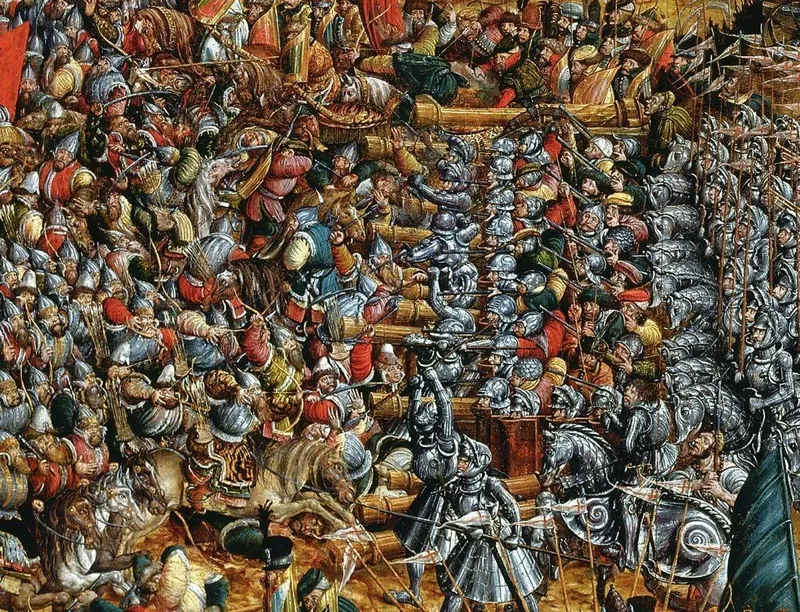
Russia's defeat in the Battle of Orsha
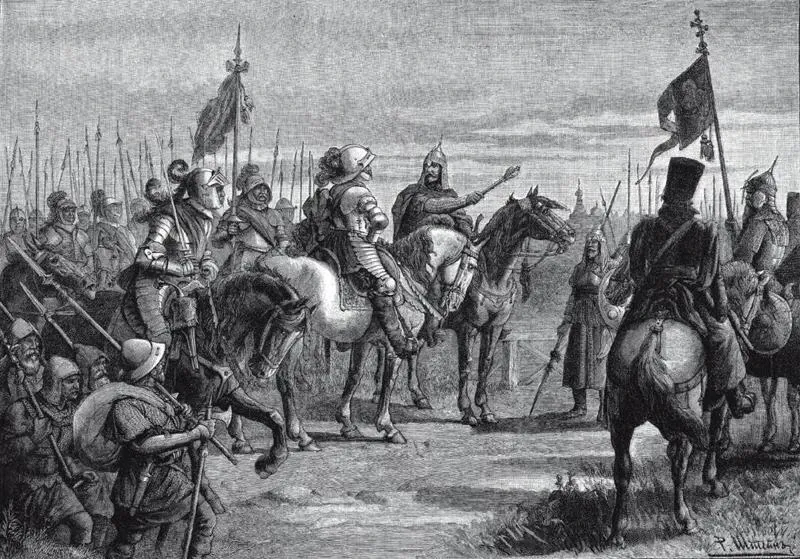
At the beginning of the 16th century Muscovy began a war of occupation for the lands of the Grand Duchy of Lithuania. Thanks to an enormous superiority in forces, already in the summer of 1514 the Muscovite army captured Smolensk after a month-long siege.
And at the end of August, with an army of more than 80,000, the Muscovites, under the command of princes Mikhail Golitsa-Bulgakov and Ivan Chelyadnin, came out onto the left bank of the Dnipro near Orsha.
King Sigismund was able to oppose the Horde with only a 15,000-strong army of the Grand Duchy of Lithuania.
In the night of 8 September the Slavs built pontoon bridges on barrels across the Dnipro opposite Orsha and crossed to the left bank.
The army of the Grand Duchy of Lithuania consisted not only of Slavs themselves, that is Lithuanians, Belarusians, Poles, Ukrainians and Serbs, but also of those who had joined them: Tatars, Hungarians and even German detachments.
The united army was commanded by the Volhynian prince Konstantin Ostrozhsky.
Early in the morning Chelyadnin attacked Ostrozhsky, trying to cut him off from the bridges, but the allies repelled the attack.
At noon the Russian and Lithuanian horsemen, with a feigned retreat, drew the Muscovite cavalry under the fire of their guns, and then a reserve detachment attacked it from an ambush in the forest by the river. Under the onslaught of Ostrozhsky's army the heavy Muscovite cavalry retreated and on the marshy banks of the Krapivna River between Orsha and Dubrovno was almost entirely destroyed.
The attack of the Polish hussars completed the rout of the Muscovite army, although the pursuit of its separate units, which fled to Smolensk, continued until night.
The losses of the Muscovite army reached thirty thousand men.
The victory at Orsha made Ostrozhsky the most famous commander in all of Europe; rumor of it was told in four brochures published in Latin and German.
Ostrozhsky was met with triumph in Warsaw and Vilnius, and in honor of the victory at Orsha he built the Holy Trinity and Saint Nicholas churches in Vilnius.
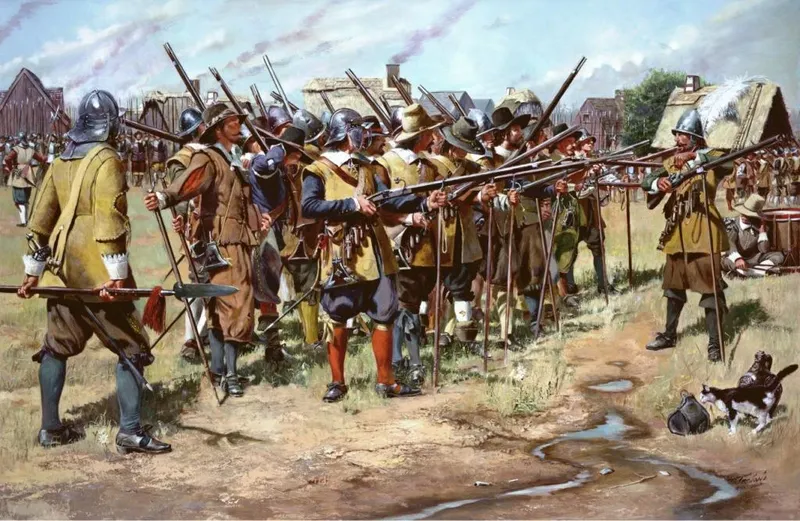
Russia's defeat in the Livonian War (1558-1583)
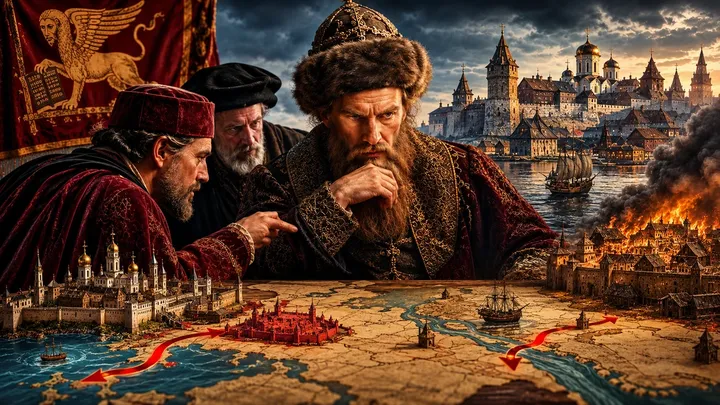
The Livonian War is the name given to an occupation expedition to seize the Baltics, which did not become a blitzkrieg and turned into one of the longest wars in which Muscovy took part, lasting almost thirty years.
At the first stage everything went as well as could be for the Muscovites: from May to October 1558, 20 fortresses were taken, including Narva and Dorpat, but they failed to hold their conquests because of the Crimean campaign.
In 1559, during a truce, the Livonian Order signed an agreement and handed over the lands of the Order and the possessions of the Archbishop of Riga under the protectorate of the Lithuanian principality. Reval came under Sweden, and the island of Ösel under the Danish prince Magnus.
The Muscovites did not look for righteous paths and a month before the end of the truce treacherously attacked the Livonian Order, as a result of which already in 1560 the Livonian Confederation, whose forces did not expect such a turn, was completely defeated and ceased to exist. Only this base operation did not become a victory for Moscow, since now Lithuania, Poland, Denmark and Sweden had lawful claims to the Livonian lands.
Muscovy's war with the Grand Duchy of Lithuania was not as successful, but nevertheless, when three years later Lithuania offered to divide Livonia, the Terrible refused.
The outcome of the war was predetermined by the union in 1569 of the Slavic states of Lithuania and Poland against the Muscovites, which, not without the help of Sweden, which came to their aid, made it possible to throw the Muscovites back.
Russia lost the Livonian War because it did not expect the Slavs to unite against it.
And all the attempts of Ivan the Terrible, all his dirty methods, and even the oprichnina he introduced, could not give him the necessary advantage over the Slavic state.
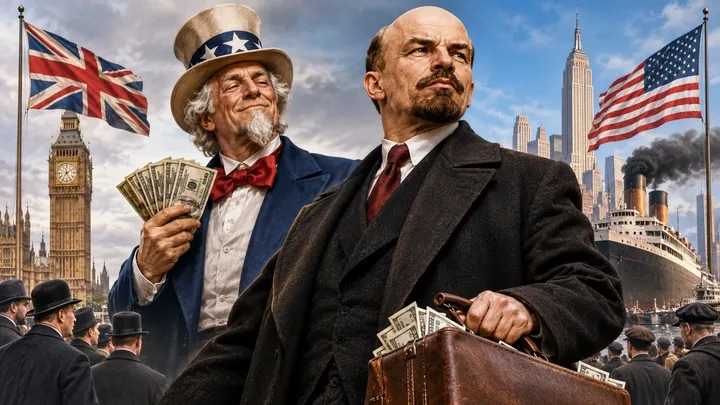
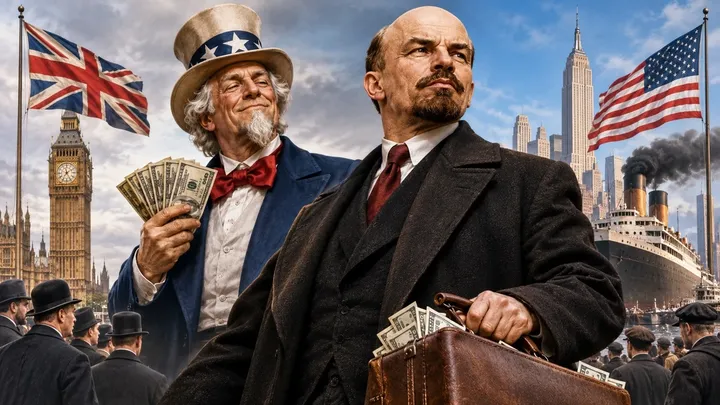
One of the causes of the Livonian War is said to be its commissioned character: supposedly Ivan the Terrible led his troops to Livonia not for the sake of gathering lands, but on the order of England, which paid for this expedition of Muscovy in order to gain full control over the Baltic.
But seeing the inept actions of the Muscovite czar, at the last moment they changed the terms of the agreement and instead of concluding a defensive-offensive treaty with Russia, and other preferences, refused further cooperation with Moscow.
As a result of the war, Muscovy-Russia was practically defeated.
England pushed the Hanseatic League aside in the Baltic and, finally seizing the trade initiative, turned into the strongest naval power.
For you and me, the positive result of the Livonian War was the union of the Slavs into a single front of struggle against Russia.
Defeat in the Muscovite-Swedish War (1610-1617)
In 1611 a new king ascended the Swedish throne: Gustav II Adolf, who continued the policy line of his father, Charles IX, from whom he inherited three wars, one of which was with Muscovy.
The young king was more diplomatic than his father and tried to conclude peace with Mikhail Romanov on the most favorable terms for him, but the czar was unyielding.
And instead of concluding peace he led his troops against Sweden, but the Swedish king, instead of retreating, in 1614 took Gdov, and the following year laid siege to Pskov.
After that the Muscovite czar demanded negotiations.
At the peace negotiations in 1617, again not without the mediation of the English diplomat John Merrick, the Swedes came to an agreement with Moscow.
As a result of the negotiations a compromise acceptable to both sides was reached: Sweden got peace and kept all the Baltic cities, cutting Moscow off from access to the sea, and also received almost a ton of silver, for which it gave Novgorod to Muscovy.
Russia's defeat in the Crimean War (1853-1856)
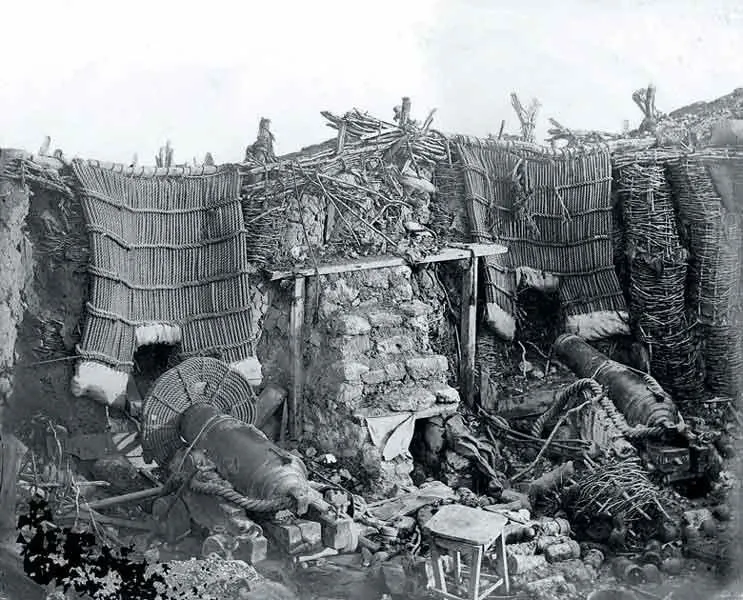
The war for Constantinople was grandiose in scale, both in the breadth of the theater of military operations and in the number of mobilized troops.
The Crimean War was in scale quite comparable to a world war.
Russia started combat operations simultaneously on several fronts: in Crimea, in Georgia, in the Caucasus, at Sveaborg, Kronstadt, the Solovetsky Islands and Kamchatka.
Russia completely failed to expect that an international coalition consisting of Great Britain, France and Sardinia would stand up for weak Turkey, which nobody needed.
The war was ineptly lost and on 30 March 1856 in Paris, at an international congress with the participation of all the warring powers, as well as Austria and Prussia, a peace treaty was signed.
Under the terms of the treaty Russia returned Kars to Turkey in exchange for Sevastopol, Balaklava and other cities in Crimea captured by the allies; it ceded to the Principality of Moldavia the mouth of the Danube and part of Southern Bessarabia.
Russia was forbidden to keep a military fleet in the Black Sea, and its merchant fleet could consist of only 6 steamships of 800 tons each and 4 vessels of 200 tons each for guard duty.
Serbia and the Danubian principalities were also returned to Turkey.
The earlier provisions of the London Convention of 1841 on closing the Bosphorus and Dardanelles straits to the warships of all countries except Turkey were confirmed.
Russia undertook not to build military fortifications on the Åland Islands and in the Baltic Sea.
Russia's defeat in the Russo-Japanese War (1904-1905)
Large-scale combat operations of the Russo-Japanese War began on 26 January 1904.
The war showed the absolute ineptitude and incapacity of the Russian army, demonstrating that to destroy the Russian army one need only put it into its own hands.
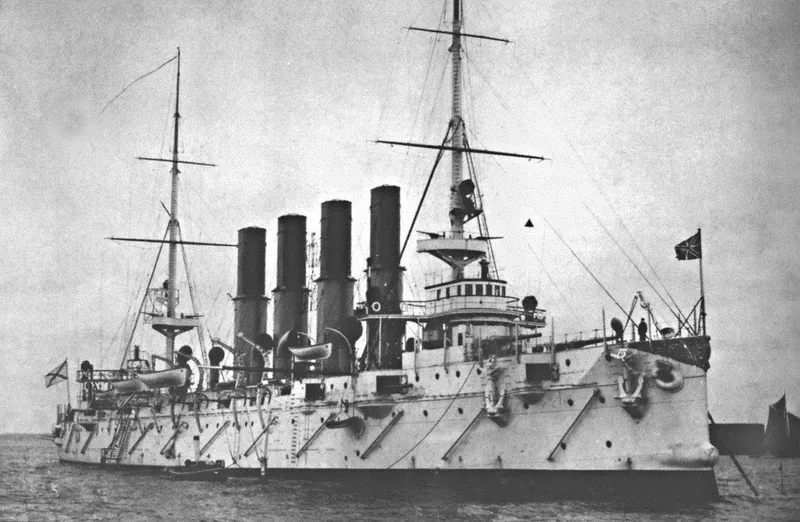
Numerous facts show that the greatest Russian losses in the war were caused by their own negligence, as for example already two days after the start of the war the minelayer Yenisei and the cruiser Boyarin perished on their own mines.
The peace treaty was signed on 23 August 1905, and as a result Russia surrendered Port Arthur.
Russia's defeat in the First World War (1914-1918)
The First World War put an end to the Russian Empire.
All its military operations: the capture of Przemyśl, the Battle of Galicia, the Sarikamish operation, the Erzurum and Trabzon operations and the Brusilov Offensive, look more like gigantic meat grinders, in which Russia simply flooded the enemy with the blood of its soldiers.
Thanks to Brusilov, during his offensive Russia lost up to 1.5 million people killed, wounded and captured.
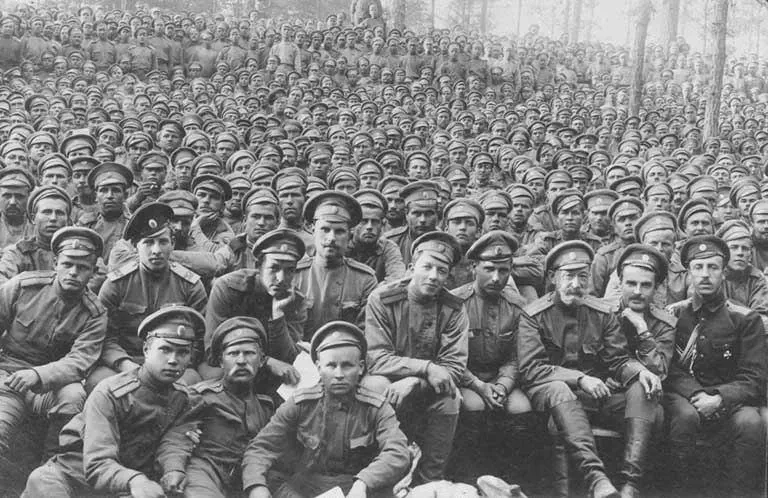
In total, by the time of the Treaty of Brest-Litovsk Russia had already lost about 4 million people killed, and almost 2.5 million Russian soldiers were in captivity.
Russia ineptly disposed of its main capital, people, and it was not fated to come out of the war a winner.
Thank you, Lenin, for preventing this disgrace by the premature suicide of the Empire.
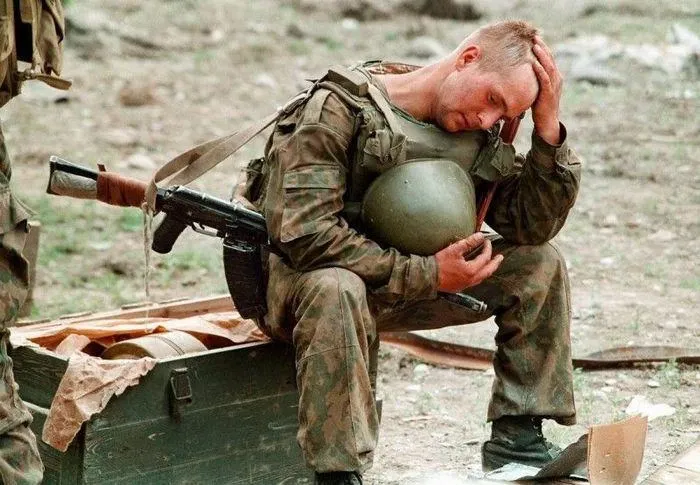
The Chechen War
The peculiarity of the two Chechen wars, which in fact were one long war with an interval, is that Russia ineptly lost them.
Despite an enormous superiority in strength, and cities and villages burned out and slaughtered, Russia was unable to keep Chechnya among its possessions.
And understanding that defeat cannot be admitted, Russia sold power in Chechnya to one of the most cruel field commanders: Kadyrov.
Ramzan Kadyrov only formally pretends to a doglike devotion to Russia.
In reality Kadyrov enjoys far more independence than Aslan Maskhadov and Dzhokhar Dudayev could have dreamed of. Chechnya feels so much at ease in Russia that it does not even think about actual independence.
Moreover, Russia even pays Chechnya what is in effect tribute: in the form of subsidies!
Chechnya won this war, and the behavior of Chechen youth in Russian cities shows it quite clearly!
The defiant, aggressive behavior of the winners, whom the president who betrayed Russia personally looks after.
Russia has lost many more wars and battles, but about them later...