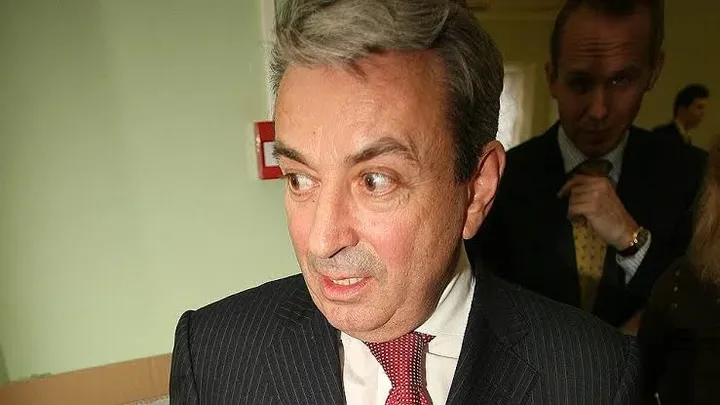
Some texts are dangerous not for what they say, but for what they ask you to believe. The VChK-OGPU leak about Dmitry Kozak's resignation is exactly that kind of text. In form it is an exposé: look, they say, Kozak was never "anti-war"; an energetic man simply lost his functions, took offense and went off to sit at his dacha.
In substance, though, it is a quiet rehabilitation. A figure who spent decades building the mechanism for swallowing Ukraine is being carefully molded into an almost sympathetic bureaucrat who "wasn't interested" in the war.
And this is where we should stop. The source deliberately glues together two things that need to be pulled apart. Kozak's personal position is one thing. The objective function of his work is something else entirely. And the second is far more interesting than the first.
What "negotiations" meant in Kozak's hands
We are offered the image of a "Kremlin negotiator": a man who spent years "conducting the negotiation process with obstinate Ukraine" and persuaded Putin until the last that "the negotiating resource had not been exhausted." It sounds almost noble. A dove of peace among the hawks of war.
Except that negotiations in the hands of the Kozak-Medvedchuk tandem were not an alternative to occupation. They were occupation, just by other means. Cheaper, more durable and far more dangerous than columns of tanks outside Hostomel.
The logic here is perfectly clear. Seizing territory by force is expensive, and it breeds resistance that cannot simply be stopped. But there is another way to occupy a territory: grow a comprador layer inside the country that will itself, voluntarily, to the applause of most of the electorate, lead the state back into the concentration camp called "Russia". It will do so under the banner of "peace", "neutrality", "normal relations with a neighbor" and "an end to fratricide". This is the classic comprador scheme: subjugation not through coercion but through the corruption and decay of the elites. Corruption is always stronger than the bayonet, because a bayonet has to be held every day, while corruption breaks the backbone of the state system.
Medvedchuk was the face and the wallet of this construction, and Kozak was its engineer on the Kremlin side. The Minsk format, the "special status", the endless haggling over concessions wrapped in the language of goodwill: none of it was an attempt at pacification. It was a technology of slow absorption, in which every "compromise" moved Kyiv a centimeter closer to Moscow's orbit.
On the numbers, without exaggeration
At its peaks in 2021, the OPZZh took about a quarter of the vote and in some polls came out first. Shariy's party hovered around the threshold. This construction did not win, and was unlikely to win, a majority of seats. But the point of a soft takeover is not a majority.
The point is a blocking, coalition-forming chunk, plus Medvedchuk's media machine with its channels before the sanctions, plus money, plus administrative resources in the South-East, plus coordination from a single center. That would have been more than enough, within one or two electoral cycles, to make any pro-Western government impossible without bargaining with the pro-Russian bloc. Not to "seize the country", but to make it manageable and controllable.
That is what stood behind the word "negotiations". Not peace. Deferred absorption.
The knot the source steps around
And now the main thing, the one the leak is demonstratively silent about.
By early 2022 the soft track was already crumbling. And it was not crumbling by itself: Kyiv was breaking it, through the hands of the Ukrainian authorities.
February 2021: Zelensky shuts down, by sanctions, the TV channels through which Medvedchuk's propaganda was broadcast. May 2021: Medvedchuk himself is charged with high treason and placed under house arrest. In other words, the Ukrainian state began dismantling the pro-Russian infrastructure a year before the full-scale invasion.
And here a conclusion suggests itself that turns the source's whole sugary picture upside down. It looks very much as though the "party of war" inside Moscow won precisely because the soft instrument had failed. For four months Kozak begged to "push a little more, the resource isn't exhausted", but there was nothing left to push against. The ground on which he meant to push had been knocked out from under his feet in Kyiv. The negotiating resource was zeroed out not in the abstract but in specific offices and courtrooms. And when the fine instrument stopped working, the crude one went into action.
Kozak, by all appearances, understood this better than most. And he "wanted nothing to do with the war" not because he loved Ukraine, but because as a professional he saw that this is not how you take this country. Tanks are not strength, after all. Tanks are an admission that the Kremlin has no arguments left with which to make Ukraine its colony again.
Putin saved Ukraine by attacking it
From here grows the final formula, and it works on one condition: it must not be understood literally.
Putin did not save anyone and never meant to. He made a strategic mistake of historic scale: he traded subtle hegemony through consent for crude domination through violence, and he lost exactly where the soft track, carried through to the end, might still have closed the deal. He got the opposite of what he intended, on every point at once.
The invasion made any pro-Russian politics in Ukraine toxic. The OPZZh was banned. Medvedchuk went from "gray cardinal" to a bargaining chip and left for Moscow in an exchange for Ukrainian servicemen. A nation that for years they had tried to split along an East-West line fused together for good. And the country itself turned West irreversibly, in a way that no reforms and no EU could have turned it in decades.
Everything Kozak and Medvedchuk built, Putin tore down within a few days of the invasion. With his own hands. Kozak did not want this, and in that sense the source is not even lying. It simply fails to say the main thing: Kozak was against it not because he pitied Ukraine, but because he was burying his project of its recolonization.
This difference is what the leak is trying to hide. The official's personal fatigue is shown to us in close-up. What this official was doing all the years before the fatigue is left off-screen. Though it is precisely there, off-screen, that the whole point lies.
References:open.substack.commedium.comx.com