A small "home" investigation into the origin of Peter I, the first Russian monarch
There is a rather interesting story that when the writer Aleksey Nikolayevich Tolstoy was working on his novel Peter the First, he came across a rather unusual fact: the greatest of the Russian monarchs, the pride of the Romanov name, had nothing to do with the Russian surname or the Russian nationality at all!
This fact greatly agitated the writer, and, since he was acquainted with another great dictator, and remembering the fate of other, careless writers, he decided to turn to him for advice, all the more so as the information lay, so to speak, rather close to the leader.
The information was rather provocative and ambiguous. Aleksey Nikolayevich brought Stalin a document, namely a certain letter, which clearly showed that Peter I, by origin, was not Russian at all, as had been believed before, but a Georgian!
Remarkably, Stalin was not in the least surprised by so unusual an incident. Moreover, after studying the documents he asked Tolstoy to keep the fact hidden so as not to let it become public, and he explained his wish quite simply:
Let us leave them at least one Russian they can be proud of!
He also advised destroying the document that had come into Tolstoy's hands.
An act that seems strange, if one remembers that Iosif Vissarionovich himself was Georgian by origin.
But if one thinks it through, it is perfectly logical from the standpoint of the leader of the peoples, since it is known that Stalin considered himself Russian! How else could he have called himself the leader of the Russian people?
After that meeting the information, it would seem, should have been buried forever. But, no offence to Aleksey Nikolayevich, he, like any writer, was an extremely sociable man, and it was told to a narrow circle of acquaintances, and from there, by the snowball principle, it was spread like a virus through all the minds of the intelligentsia of that time.
What was this letter that was supposed to vanish?
Most likely it is the letter of Darya Archilovna Bagration-Mukhranskaya, daughter of Archil II, czar of Imereti, to her cousin, the daughter of the Mingrelian prince Dadiani.
The letter speaks of a certain prophecy she heard from the Georgian czarina:
My mother told me about a certain Matveyev, who had a prophetic dream in which Saint George the Victorious appeared to him and said: You are chosen to inform the czar that in Muscovy there must be born a CZAR OF CZARS, who will make it a great empire. He is destined to be born of an Orthodox czar from afar, the Iberian czar, of the same branch of David as the Mother of God, and of the daughter of Kirill Naryshkin, pure of heart. If this command is disobeyed, there will be a great plague. The will of God is the will of God.
The prophecy unambiguously hinted at the urgent need for this act, but another problem could also have prompted such a turn of events.
The beginning of the end of the Romanov name
To understand the reasons for such a written appeal, we must turn to history and recall that the Muscovite czardom of that time was a czardom without a czar, and the acting czar, the monarch Aleksey Mikhailovich, was not coping with the role laid upon him.
In fact the country was run by Prince Miloslavsky, a swindler and adventurer mired in palace intrigues.
Aleksey Mikhailovich was a weak and puny man, surrounded mostly by churchmen, to whose opinion he listened. One of them was Artamon Sergeyevich Matveyev, who, being no simple man, knew how to put the necessary pressure on the czar to push him to deeds the czar was not ready for. In essence Matveyev steered the czar with his prompting, being a sort of prototype of Rasputin at court.
Matveyev's plan was simple: to help the czar rid himself of kinship with the Miloslavskys and to put his own heir on the throne...
So in March 1669, after childbirth, the wife of Czar Aleksey Mikhailovich, Maria Ilyinichna Miloslavskaya, died.
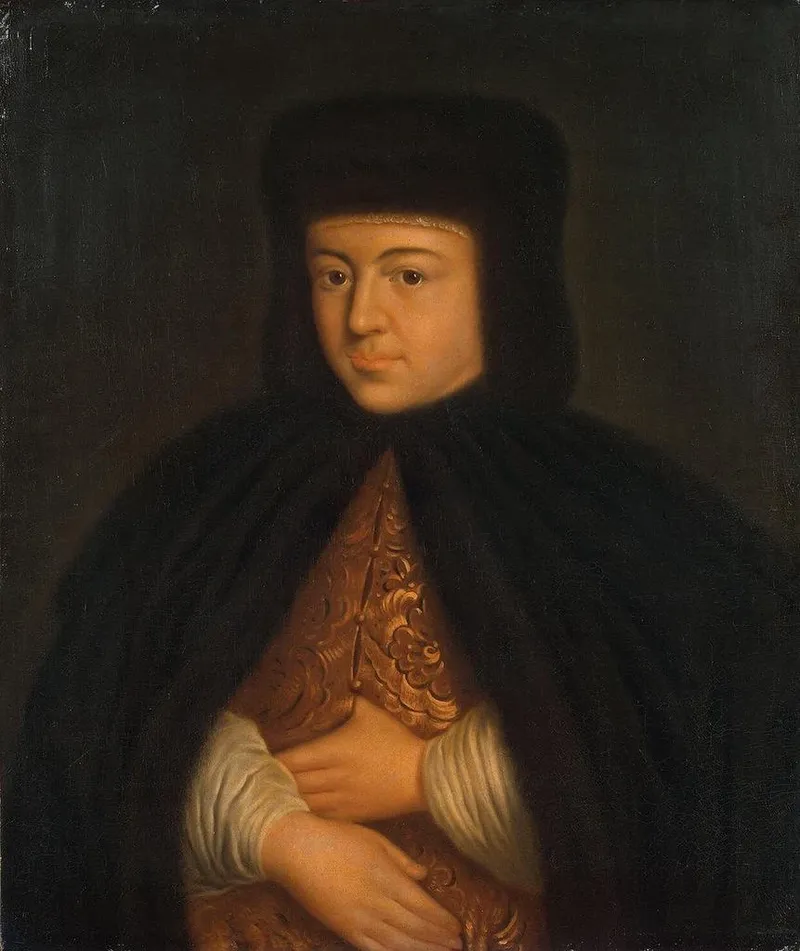
After that it was Matveyev who matched Aleksey Mikhailovich with a Crimean Tatar princess, Natalya Kirillovna Naryshkina, daughter of the Crimean Tatar murza Ismail Narysh, who lived in Moscow at that time and, for convenience, bore the name Kirill, quite easy for the local nobility to pronounce.
What remained was to settle the question of the heir, since the children born of the first wife were as sickly as the czar himself and, in Matveyev's opinion, hardly posed a threat.
In other words, as soon as the czar was married to Princess Naryshkina, the question of an heir arose, and since the czar was at that moment gravely ill and physically weak, and the children he produced were puny, it was decided to find him a replacement. It was then that a Georgian prince fell into the conspirators' hands.
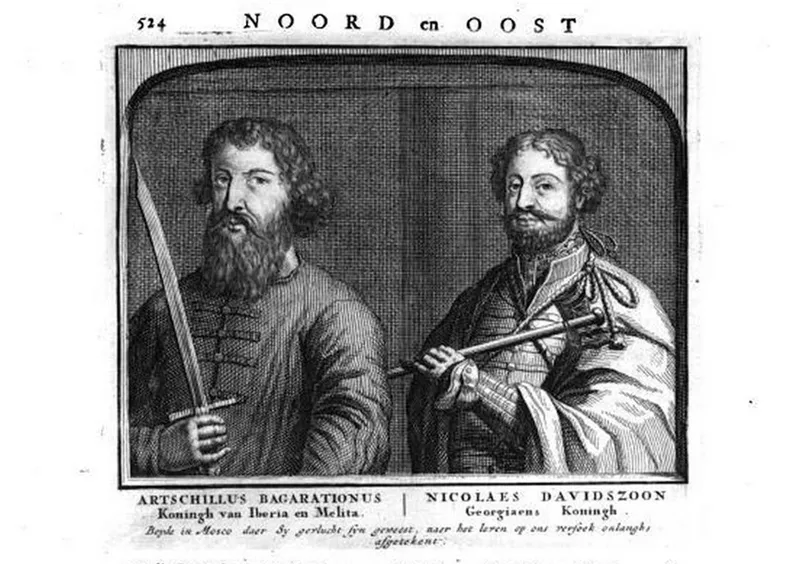
Who was Peter's father?
There are in fact two theories. Two great Georgian princes of the Bagrationi house are named as Peter's father:
Archil II (Georgian: არჩილი II, 1647 1713), czar of Imereti (1661 1663, 1678 1679, 1690 1691, 1695 1696, 1698) and Kakheti (1664 1675), a lyric poet, the eldest son of Vakhtang V, czar of Kartli. One of the founders of the Georgian colony in Moscow.
Heraclius I (Georgian: ერეკლე I, Nazarali-Khan; 1637 or 1642 1709), czar of Kartli (1688 1703) and czar of Kakheti (1703 1709). Son of Tsarevich David (1612 1648) and Elene Diasamidze (d. 1695), grandson of Teimuraz I, czar of Kartli and Kakheti.
Having in effect conducted a small investigation, I am forced to lean toward Heraclius as the father. The argument is that Heraclius was in Moscow at a time suitable for the conception of the czar, whereas Archil moved to Moscow only in 1681.
Tsarevich Heraclius was known in Russia under a name more convenient for the local people, Nikolay, with the patronymic Davydovich. Heraclius was a courtier of Czar Aleksey Mikhailovich and at the wedding of the czar and the Tatar princess was even appointed tysyatsky, that is, the chief master of the wedding festivities.
It is fair to note that the duties of the tysyatsky also included becoming godfather to the wedded couple. But by the will of fate the Georgian tsarevich helped the Muscovite czar not only with choosing a name for his firstborn but also with conceiving him.
At the christening of the future emperor, in 1672, Heraclius did his duty and named the infant Peter, and in 1674 he left Russia to take the throne of the principality of Kakheti, though to obtain that title he had to convert to Islam.
Version two, dubious
According to the second version, the father of the future autocrat in 1671 was Archil II, czar of Imereti, who had already been a guest at court for several months, having fled the pressure of Persia. He was practically forced to visit the princess's bedchamber, under the persuasion that by divine providence his participation was necessary in an extremely godly cause, namely the conception of THE ONE WHO WAS AWAITED.
Perhaps it was precisely the dream of the all but saintly Matveyev that made the most noble Orthodox czar go in to the young princess.
Peter's kinship with Archil may be attested by the fact that Archil's official heir, the Georgian monarch's son Prince Alexander, became the first general of Georgian origin in the Russian army, served with Peter in the poteshny (play) regiments, and actually died for the emperor in Swedish captivity.
And Archil's other children, Matvey, David and the sister Darya (Darjen), received from Peter such preferences as lands in Russia and were showered with his favour.
In particular, it is known that Peter went to celebrate his victory in the village of Vsekhsvyatskoye, in the area of today's Sokol, at his sister Darya's!
The wave of mass migration of the Georgian elite to Moscow is also connected with this period in the life of the country.
As proof of the kinship of the Georgian czar Archil II and Peter I, they also cite a fact recorded in the monarch's letter to the Russian tsarevna Naryshkina, in which he writes:
How is our little rascal doing?
Though "our little rascal" could be said both of Tsarevich Nikolay and of Peter, as a representative of the Bagrationi house.
The second version is also supported by the fact that Peter I was strikingly similar to Archil II, czar of Imereti.
Both were of truly gigantic height for that time, with identical features and characters, although this same argument can be used as proof of the first version, since the Georgian princes were directly related.
Everyone knew and everyone kept silent
It seems that everyone at the time knew about the czar's kinship.
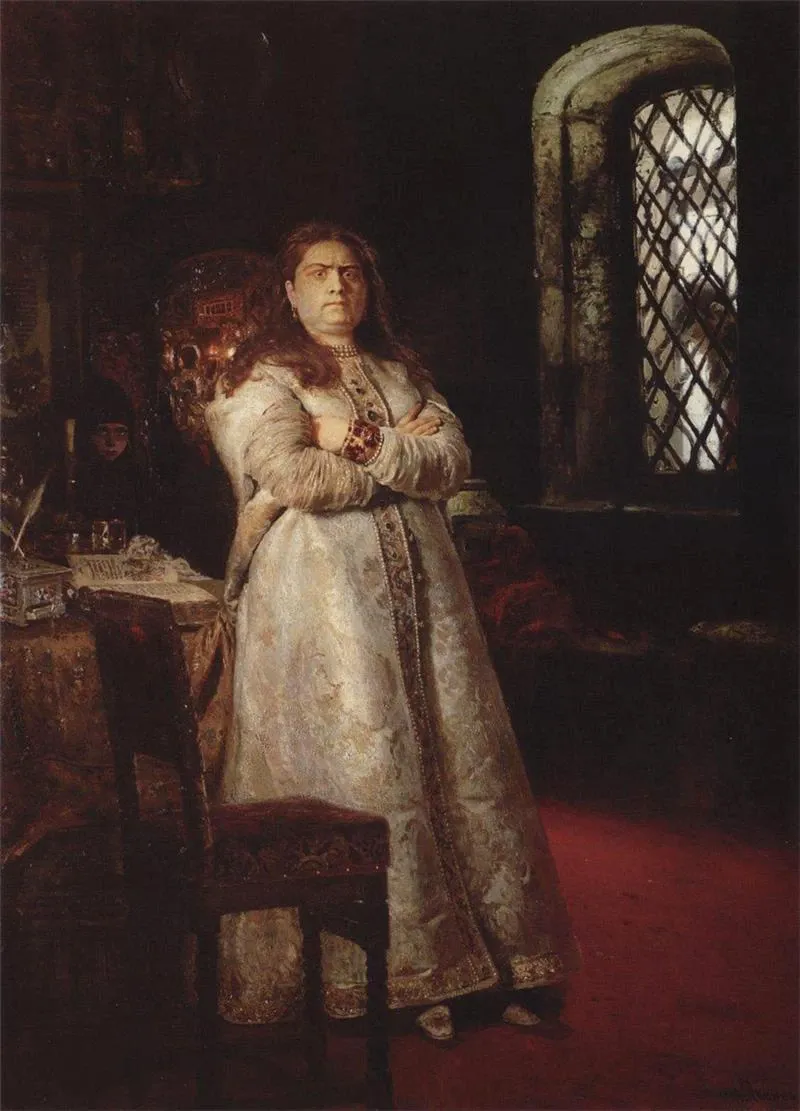
So Tsarevna Sophia wrote to Prince Golitsyn:
Power must not be given to an infidel!
Peter's mother, Natalya Naryshkina, was also terribly afraid of what she had done and repeatedly declared:
He cannot be czar!
And the czar himself, at the moment when a Georgian princess was being matched to him, declared for all to hear:
I do not marry namesakes!
Visual likeness, no other proof is needed
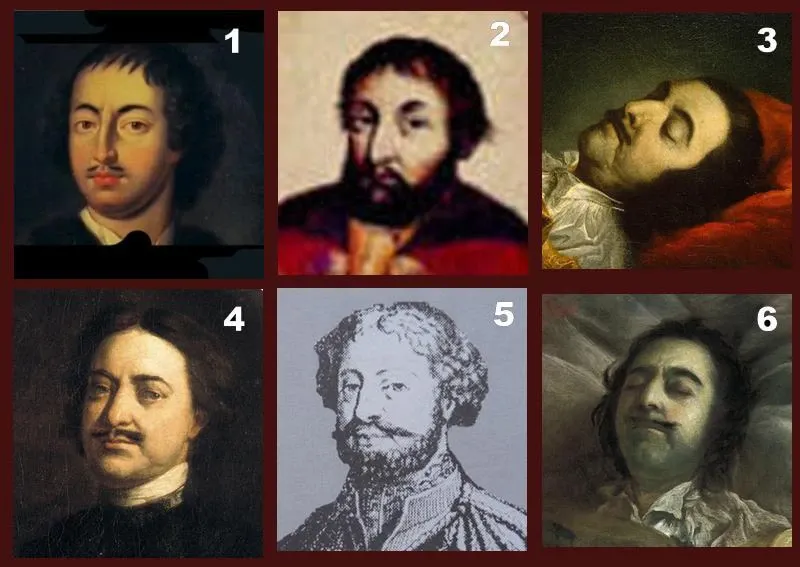
You have to see it. Recall from history: not one Muscovite czar stood out for height or Slavic looks, but Peter:
According to historical documents, Peter I was quite tall even by today's measures, as his height reached two metres, but strangely, he wore size 38 shoes, and his clothing size was 48! Yet it was precisely these features he inherited from his Georgian relatives, since this description fits the Bagrationi house exactly. Peter was a pure European!
But never mind, not even visually: in character Peter definitely did not belong to the Romanov line in any way. In all his manners he was a real Caucasian.
True, he inherited the unthinkable cruelty of the Muscovite czars, but this trait could have come to him through his mother's line as well, since their whole line was more Tatar than Slavic, and it was precisely this trait that enabled him to turn a shard of the Horde into a European state.
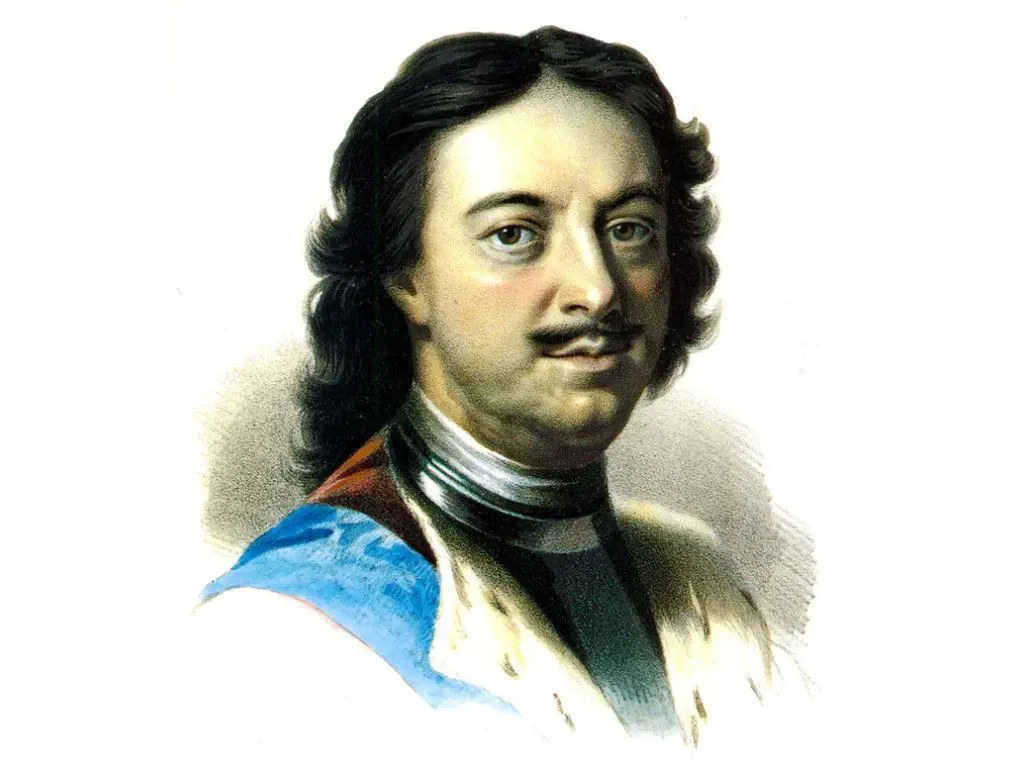
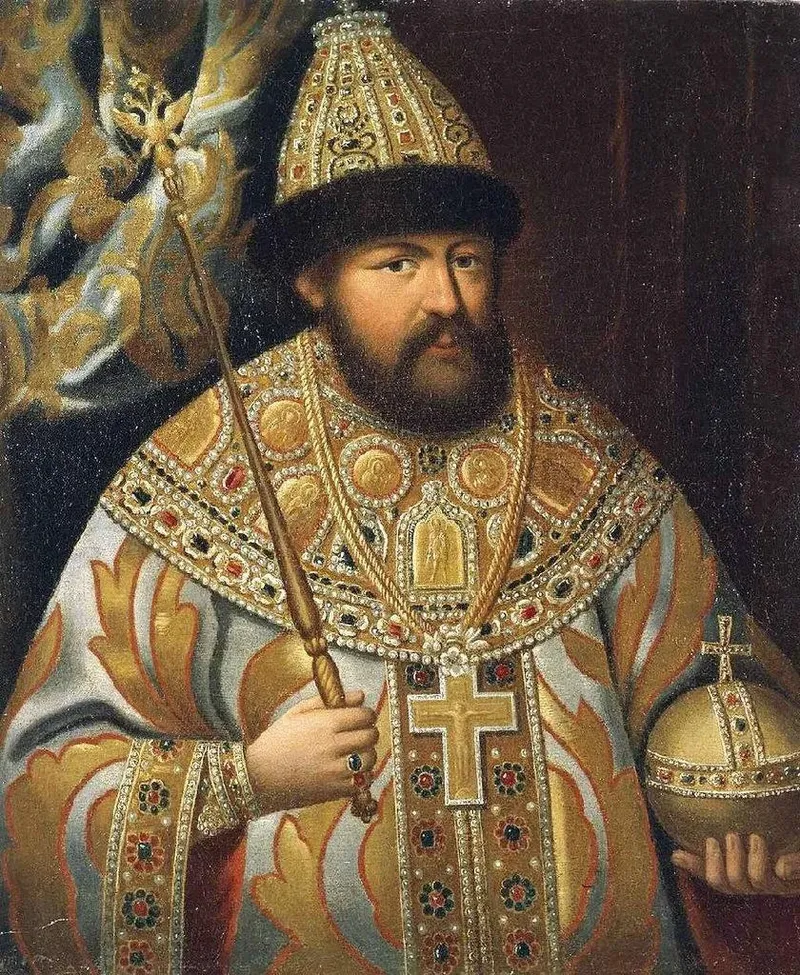
In the picture above you can see for yourself how alike they are: the father, marked in the picture with the numbers 2 and 5, and the son, to whom the remaining images belong.
Conclusion
Peter I was not Russian but a Rossiyanin, because despite his not quite proper origin he was nevertheless of royal blood, though he descended neither from the Romanovs nor, still less, from the Ruriks.
Perhaps it was precisely his non-Horde origin that made him a reformer and truly an emperor, who turned the district-level Horde principality of Muscovy into the Russian Empire, even though he had to borrow the history of one of the occupied territories, but we will tell about that in the next story.