Eastern despotism: the Muscovite Czardom was officially re-formed as a European state, the All-Russian Empire, only in 1721.
In "Revelations of the Diplomatic History of the 18th Century", written in 1856-1857, Karl Marx separated the history of Muscovy from the history of Rus. He compared the policy of Kyiv with that of the Germanic barbarians who flooded Europe. Of Moscow he wrote differently: "The cradle of Muscovy was the bloody mire of Mongol slavery, and not the rude glory of the Norman epoch".
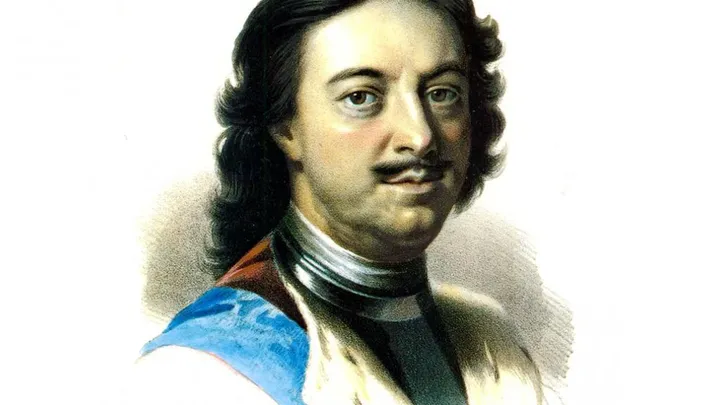
The Muscovite Czardom declared itself a European state only on 22 October 1721, when Peter I took the title of Emperor of All Russia.
Peter was a European only in his clothes. The Dutch gave him his fleet, William of Orange, King of England and Stadtholder of Holland in one person, set his tasks, and Peter himself shipped to the West the raw materials for which he was being equipped in the first place. Under him the Horde principality with imperial ambitions changed its master, but not its nature.
Peter's work was continued by Catherine II. She took up not the fleet but the past: she needed to prove that Moscow was Rus.
Geographical maps
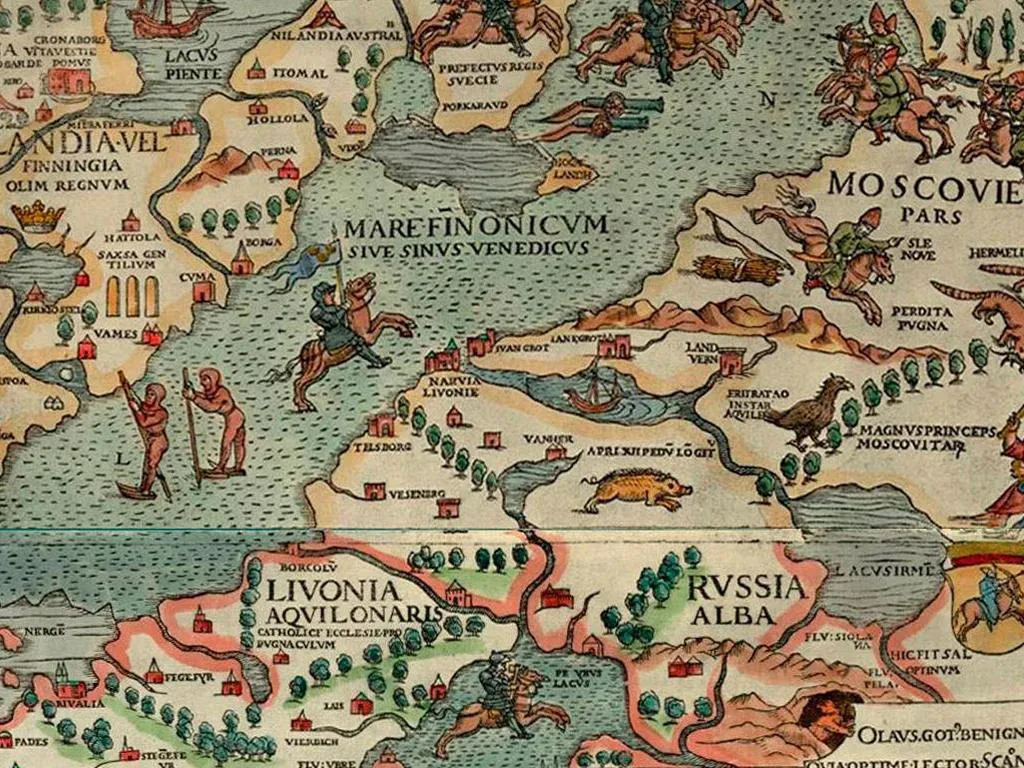
On the maps and in the atlases of the 16th and 17th centuries, a country named Russia is hard to find. Europeans called the Muscovite state Muscovy or Moscovitia, and the lands east of it Tartary.
The English merchant Anthony Jenkinson, an agent of the Muscovy Company, published in 1562 a map entitled "Russiae, Moscoviae et Tartariae descriptio", that is, "Description of Russia, Muscovy and Tartary". In 1570 Abraham Ortelius carried it into the first modern atlas. Already in the title of this map, Russia, Muscovy and Tartary are three different lands.
Around 1680 the Dutchman Frederick de Wit titled his map "Tabula Russia vulgo Moscovia", that is, "Map of Russia, commonly called Muscovy". By then Moscow had appropriated the bookish name for itself, but in Europe the country was still called after its capital. On the plan of Moscow that the same de Wit issued in 1697, the city is named the capital of "all White Rus". White Rus, and not simply Rus.
Admission of theft
Ukrainians did not reconcile themselves to the appropriation of their name. Taras Shevchenko called Russia Moskovshchyna and its people moskali.
At the turn of the 18th and 19th centuries an unknown author wrote "The History of the Rusy, or of Little Russia". From the early 1820s it circulated in manuscript copies among the Ukrainian nobility and asserted that Ukrainians had their own path, their own history and their own language, separate from Moscow. It was only printed in 1846: Osip Bodiansky published it in Moscow as a historical monument, so as not to run afoul of the censors.
The Ukrainian language distinguishes these names to this day. "Rusʹkyi" in it means connected with Rus, "rosiiskyi" means connected with Russia, and the people of Russia Ukrainians call rosiiany. They have never been called "russkie" in Ukraine.
Language and culture
Even after the renaming, the Muscovite state did not become a New Rus. This is best seen in the language.
The English clergyman Richard James visited Kholmogory and Moscow in 1618-1619 and recorded a dictionary-diary of what he heard in the street. The German Heinrich Wilhelm Ludolf published in Oxford in 1696 the first grammar of the Muscovite language. He formulated its main rule thus: one must speak in one language and write in another. In Moscow they spoke Muscovite. They wrote in Church Slavonic, a bookish language that had come to Moscow together with the church from Kyiv and the Balkans.
That is, even at the end of the 17th century Moscow had no written language of its own. It wrote in a foreign one.
The first attempts at falsification
The first to try to appoint himself heir of Rus was Ivan III. The title "sovereign of all Rus" became attached to him in 1493. Moscow took the words "of all Rus" from the title of the Metropolitan of Kyiv and all Rus, who lived in Moscow. Together with the title, Ivan III laid claim to all the lands that had once been subject to Kyiv, including those that belonged to the Grand Duchy of Lithuania, Rus and Samogitia. He called these lands his patrimony, that is, his inheritance.
His son Vasily III, who ruled in 1505-1533, pressed the war for this patrimony further and in 1514 took Smolensk from the Grand Duchy.
A genealogy to fit these claims was composed there too, in 16th-century Moscow. "The Tale of the Princes of Vladimir" traced the line of the Muscovite princes to Prus, supposedly a brother of the Roman emperor Augustus, and declared Monomakh's Cap a gift from the emperor Constantine Monomachus to the Kyiv prince Volodymyr. Thus Moscow acquired two ancestors at once: Rome and Kyiv.
The very word "Russia" is the Greek form of the name Rus, which began to be used in Moscow from the end of the 15th century. It became the official name of the state in 1721, together with the imperial title.
A grandiose falsification
In the three partitions of the Polish-Lithuanian Commonwealth, in 1772, 1793 and 1795, Russia took almost all the lands of the Grand Duchy of Lithuania, Rus and Samogitia. The seizure demanded a justification, and Catherine II took up history herself.
On 4 December 1783 she created the Commission for Composing Notes on Ancient History, Chiefly of Russia, headed by Count Andrei Petrovich Shuvalov. At the same time the empress herself wrote "Notes Concerning Russian History", in which the history of Moscow ran as a direct continuation of the history of Kyiv. Her state secretary Alexander Khrapovitsky was her adviser and collaborator in these historical labors.
In 1791 the Over-Procurator of the Synod, Aleksei Musin-Pushkin, received the right to collect ancient manuscripts from monasteries. His collection included the only manuscript of "The Tale of Igor's Campaign". The manuscript burned together with his house in the Moscow fire of 1812, and today the "Tale" is known only from its published edition and from the copy made for Catherine.
The outcome was summed up by Nikolai Karamzin. His "History of the Russian State" in 12 volumes came out in 1816-1829 and made Kyiv the first chapter of Russian history. Yet Karamzin himself let the truth slip. "Present-day Russia was formed by Ioann", he wrote, meaning Ivan III. Present-day Russia, according to Karamzin, begins with a Muscovite prince of the late 15th century, not with Kyiv.
Russians came to believe in this history. They believe in the brotherhood and common origin of Moscow and the peoples it has enslaved, in the primacy of Russian culture, language and faith, in the notion that the Russian language is the pure Slavic one and the rest are merely its dialects.
This belief is what feeds the imperial ambitions of Russians. It allows them to call the seized lands of other peoples primordially Russian.
It is no accident that Russia does not celebrate 22 October 1721, the day it declared itself an empire. The holiday would give away that the "1000-year-old Russia" is only 305 years old under that name. But whatever name an eastern despotism takes, it will remain the Muscovite yoke.