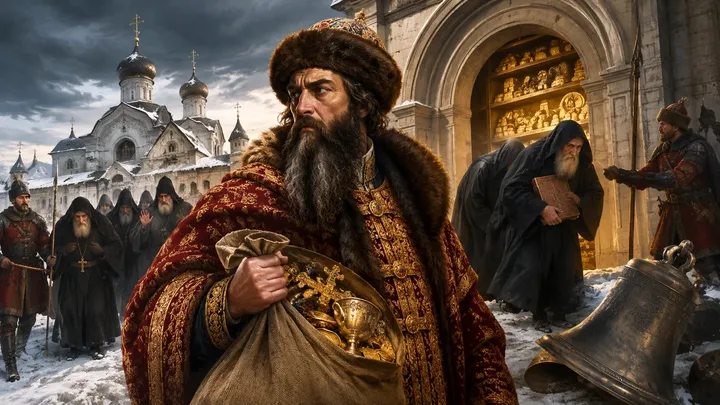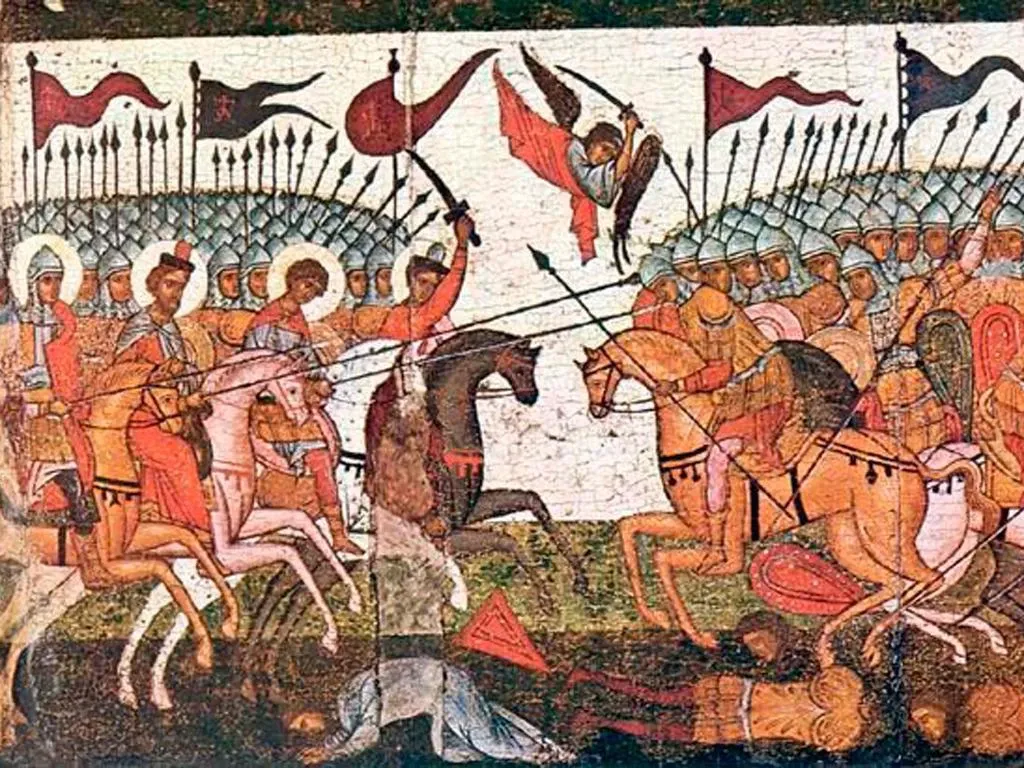
The Tatar-Mongol yoke is not only the biggest historical falsification in the world but also the main historical fake invented by Moscow to hide its bloody trail of raiding, first of the Horde and then of Rus'.
Let's start with the most interesting question: does anyone know
what religion the Mongols were? Buddhists? Pagans? Christians? Muslims?
All of them at once. Genghis Khan himself worshipped the Sky, while his army included Buddhists, Nestorian Christians and Muslims. The empire demanded neither a single faith nor a single language from its warriors, and it exempted the servants of any cult from tribute. Islam became the state religion of the Horde only under Czar Uzbek, who took the throne in 1313.
The appearance of the Mongols in Europe is explained by anything except economic interest. Yet by the time they came, Europe was already fighting over the eastern trade.
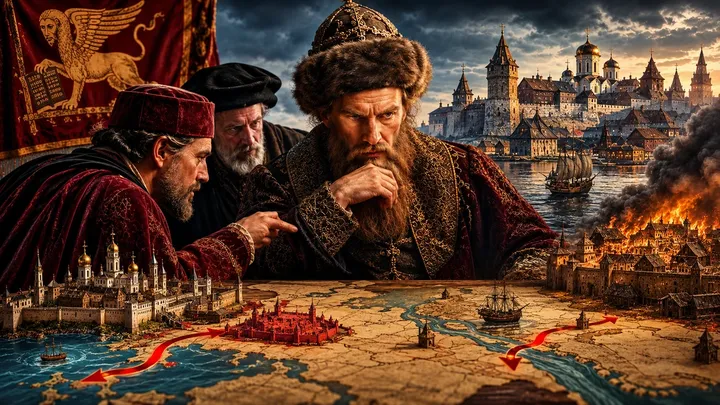
The two richest and fastest-growing oligarchies of the age, Genoa and Venice, divided the trade with the East between them. Both had plenty of money, and they preferred to fight with other people's hands, hiring whoever came along.
Venice found its mercenaries first. The Crusaders owed it money for ships and paid off the debt with the sword: in April 1204 they took New Rome, also known as Constantinople. For 57 years the city became the capital of the Latin Empire, and the straits and all the trade of the Black Sea went to the Venetians.
After this blow Genoa almost completely lost access to the riches of the East. It got that access back 57 years later, and two forces helped it do so: the Romans, who wanted to take New Rome back, and the Mongols, who by then had become masters of the steppe.
The Mongols moved west, swallowing state after state and bringing with them many Turkic peoples. The Polovtsians were the first to meet them. The Mongols called them blood brothers in order to tear them away from their allies the Alans, and then defeated the Polovtsians themselves. The Polovtsians turned for help to the princes of Kyiv, Halych and Chernihiv, but on 31 May 1223, on the Kalka River, the Mongol cavalry crushed both the Polovtsians and the princes. In 1237-1240 the army of Czar Batu swept through the principalities and in December 1240 took Kyiv.
The Mongols treated the servants of every faith with respect, and under them the Orthodox church lived better than the princes and townspeople: those paid tribute, the church did not. In 1261 an Orthodox eparchy opened in Sarai, the capital of the Horde. In 1267 Czar Mengu-Timur issued the metropolitan a yarlyk that exempted the church from tribute. Karamzin directly named the elevation of the clergy and the multiplication of monks and church estates as one of the consequences of Tatar rule. The church historian Metropolitan Macarius calculated that during 200 years under the Horde twice as many monasteries appeared as in the 250 years before it.
This church was headed by Metropolitan Cyril. The previous metropolitan, the Greek Joseph, vanished without a trace during the capture of Kyiv in 1240. Cyril was a protégé of Prince Daniel of Halych, but he went off to serve in the north-east, with Prince Alexander Nevsky. In 1252 he himself raised Alexander to the grand principality, and he was on close terms with the Horde's czar Mengu-Timur.
That is why the Moscow church canonised Alexander Nevsky in 1547. His father Yaroslav Vsevolodovich went to Czar Batu in 1243 and received from him the title of senior prince "in the Rus' tongue," that is, elder over all the other princes. In 1257-1259 Alexander himself brought the Horde's census-takers to Novgorod, and the Novgorodians who did not want to pay the Horde had their noses cut off and their eyes gouged out. The Mongols never took Novgorod; it was delivered under the Horde by its own prince.
Legends about the Battle of the Neva and the Battle on the Ice were composed later, about how Alexander defended Orthodoxy from the "wicked Catholics." The legends are silent about the fact that 15 years after the Battle on the Ice he subjected Novgorod to the Horde.
How the Mongol campaign ended for Genoa is visible from the dates. In March 1261 it concluded the Treaty of Nymphaeum with Michael Palaiologos and received the exclusive right to trade in the Black Sea. In July of the same year the Romans took New Rome back. In 1266 the Horde gave the Genoese Kaffa in Crimea, and Kaffa became the main Genoese harbour on the Black Sea.
No one recorded any collusion between Genoa and the Mongols before the invasion. The outcome is recorded. The sea went to Genoa, the straits to the Romans, the steppe road to the Horde, and from every caravan the Horde took the tamga, the trade duty. Venice received its share later: in 1332 Czar Uzbek allowed it to settle in Tana, at the mouth of the Don.
The friendship of the Romans with the Horde was sealed by marriages. The Mongol ruler of Iran, Abaqa, received as his wife Maria, an illegitimate daughter of Emperor Michael Palaiologos. Nogai, the strongest commander of the Horde, received Euphrosyne, another illegitimate daughter of the same Michael. In 1297 Czar Tokhta married an illegitimate daughter of Andronikos the Elder. Czar Uzbek, the most outstanding ruler of the Ulus of Jochi, was married to a daughter of Andronikos the Younger.
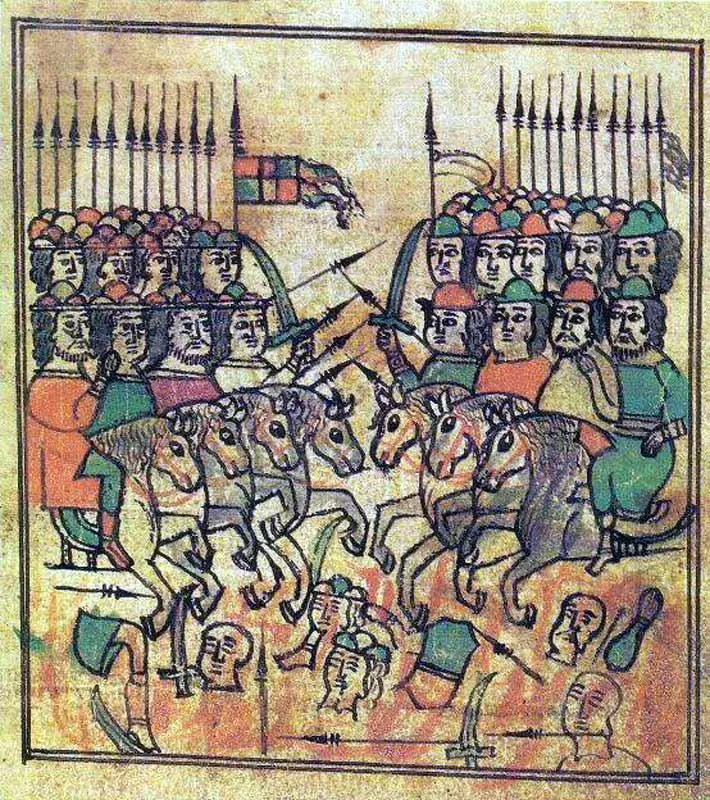
The war of religions
Czar Uzbek made Islam the state religion of the Horde. He did not touch the church, however: in 1313 Metropolitan Peter received from him a yarlyk confirming all its privileges. But at the court in Sarai it became uncomfortable to be of another faith. Noble Horde men who were Christians or did not want to change their faith began leaving to serve in Vladimir and then in Moscow.
In Moscow it was considered an honour to descend from a Horde murza. At the end of the 16th century the Godunovs recorded a legend about the murza Chet, who supposedly came from the Horde to Ivan Kalita in 1330, was baptised with the name Zachary and founded the Ipatiev Monastery near Kostroma. The Godunovs, Saburovs and Velyaminov-Zernovs traced their lineage from Chet. Historians consider this legend an invention, but the very desire is telling: a Moscow boyar proved his nobility by the fact that his ancestor had come from Sarai. The Romanovs do not belong to this lineage. They are linked to the Ipatiev Monastery by something else: in 1613 Michael Romanov was called to the throne there.
However, it was not the choice of religion but a banal struggle for absolute power that constantly led the Horde into internecine strife. This tradition was adopted by the Moscow princes too, who fought for the Moscow throne on every convenient and inconvenient occasion.
A vivid example of such strife is the Battle of Kulikovo in 1380. Mamai was not the czar of the Horde. He was a military commander, did not belong to the line of Genghis Khan and ruled through puppet czars. The lawful czar was Tokhtamysh. The Moscow prince Dmitry defeated Mamai, that is, an impostor. In 1382 Tokhtamysh burned Moscow, and the Horde regained its power over the Moscow prince. It was a war inside the Horde, in which Moscow took one of the sides.
Many say that it was the Horde that filled the Russian language with Turkisms. This is only half true. The Horde gave Moscow the words of power and money: yarlyk, yam, karaul, dengа, kazna, tamozhnya. But the first Turkic layer came earlier, together with the book language. Church Slavonic was created for Great Moravia, and it developed in Danube Bulgaria, where Cyrillic also appeared. The Bulgarians are Turks by origin who mixed with the local Slavs, and they brought their own words into the book language.
The fall of the Horde and the rise of the Third Rome
According to the Moscow historians, the Tatar yoke ended in 1480. This is a lie.
A series of events preceded the Great Stand on the Ugra.
In 1439 in Florence the Greek and Roman churches signed a union. The emperor of the Romans entered into it for the sake of Western military aid against the Ottomans, who had already besieged New Rome in 1422. The Moscow prince Vasily II, a tributary of the Horde, rejected the union. When Metropolitan Isidore brought it to Moscow in the spring of 1441, he was put under guard. In December 1448 Moscow chose its own metropolitan, without Constantinople. According to the Moscow version, both Romes, the old one and the New, had fallen and betrayed Christ.
In 1453 New Rome fell. Books and learned Greeks found refuge in Venice. The niece of the last emperor, Zoe, grew up in Rome under the guardianship of the Greek cardinal Bessarion.
Zoe was matchmade more than once. In 1466 Venice offered her hand to the king of Cyprus, who refused. In 1469 she was offered to the Moscow prince. The intermediary was the Italian Volpe, Ivan III's master of the mint. In 1472 Ivan III married Zoe, who received the name Sophia in Moscow.
According to the design of the court sages, the Moscow upstart, by marrying the niece of Emperor Constantine XI, who died in 1453 when the Turks took the city, acquired rights to New Rome. Zoe had no such rights: her brother Andrew was considered the heir.
Venice had its own calculation in this marriage. It needed a mercenary against the Turks. In those same years the Venetian ambassador Trevisan was travelling through Moscow to the Horde czar Akhmat to persuade the Horde to fight the Ottomans. Ivan III threw the ambassador into prison.
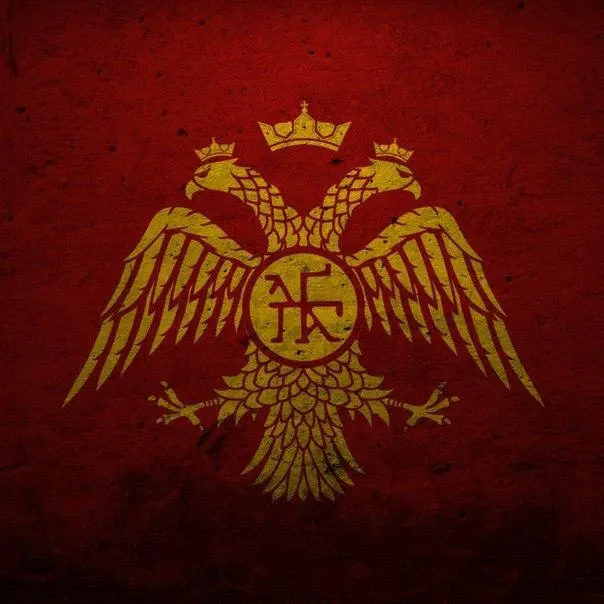
The double-headed eagle appeared on the Moscow seal only in 1497, 25 years after the wedding. 150 years earlier it had already stood on the coins of the Horde czar Janibek.
Ivan III stopped paying tribute to the Horde in 1472, the year of his wedding. Where did such boldness come from? From the alliance with the Crimean czar Mengli-Giray, Akhmat's enemy, and from Ivan's mentor, the Archbishop of Rostov Vassian Rylo, who urged him to betray his czar.
In the autumn of 1480 Akhmat came for the tribute, and the two armies stood facing each other on the Ugra. While the Moscow prince distracted his czar with this standoff, a detachment of Muscovites and Crimean Tatars, as the "Kazan History" tells it, went down the Volga, burst into Sarai, left undefended, and carried out a massacre there. On 11 November Akhmat withdrew from the Ugra. On 6 January 1481, at his winter camp at the mouth of the Donets, he was killed by the warriors of the Tyumen czar Ibak and by the Nogais.
Freed from tribute to Sarai, Moscow began paying Crimea. It was called "pominki," and Moscow paid it until 1700, when the Treaty of Constantinople with the Ottomans abolished the payment. This did not change Moscow's servile position. There was one difference: the Horde czar, when issuing a yarlyk, undertook to protect his tributary, which the Muscovites constantly took advantage of.
It turns out that there was no yoke as such. Churches and monasteries burned in the years of the invasion, and then for 200 years were being built. There was no persecution of priests; on the contrary, they were exempted from tribute and looked after. As it turned out, in vain: it was they who later pushed the Moscow princes toward betrayal. The Horde did not need to oppress and slaughter the population; the princes with their yarlyks coped with that perfectly well. In 1327 Tver rose against the Tatars, and the Moscow prince Ivan Kalita went to punish it together with the Horde's army.
The Horde was for Moscow an elder brother whom the younger one constantly deceived and robbed and in the end pushed into the abyss, kicking him in the back to be sure.
Kyiv freed itself from the Horde as early as 1362: after the Battle of Blue Waters it became part of the Grand Duchy of Lithuania, Rus' and Samogitia.
The imperial ambitions laid down in Moscow at the end of the 15th century are alive in the minds of Russians to this day. They see their state within the borders of the Horde, and Russia's war against Ukraine is a march to the West in its footsteps.