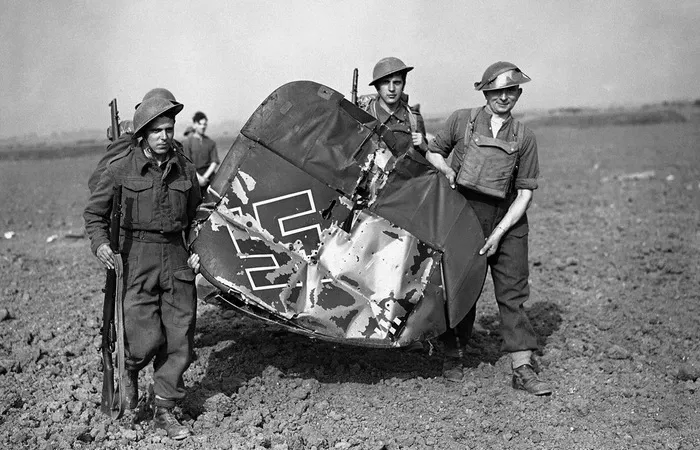
World War II is covered as early as middle school in history lessons.
World War II is covered as early as middle school in history lessons. Everyone knows about Hitler's tyranny, the Holocaust, the attack on Pearl Harbor. But there are also facts about the war that are known only to those who seriously study the history of this period.
1. The German army was considerably outnumbered by the French army
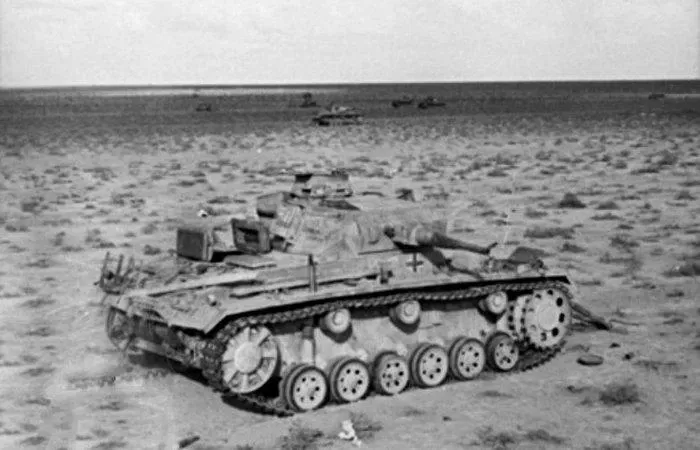
Damaged German tanks in North Africa
Many believe that in 1940 the German army greatly exceeded its opponent in numbers and weaponry. Although the German armed forces seemed very modern and mechanized, in terms of numbers the German army was outnumbered by the French army.
When the Germans attacked France on May 10, 1940, only 16 of their 135 divisions had mechanized transport. The rest used horses and carts, and even moved on foot.
France, meanwhile, had 117 divisions, all of them ready for modern war. France also had more artillery pieces (over 10,700 against Germany's 7,378). And that is not to mention the French having more tanks.
2. Britain had almost no infantry
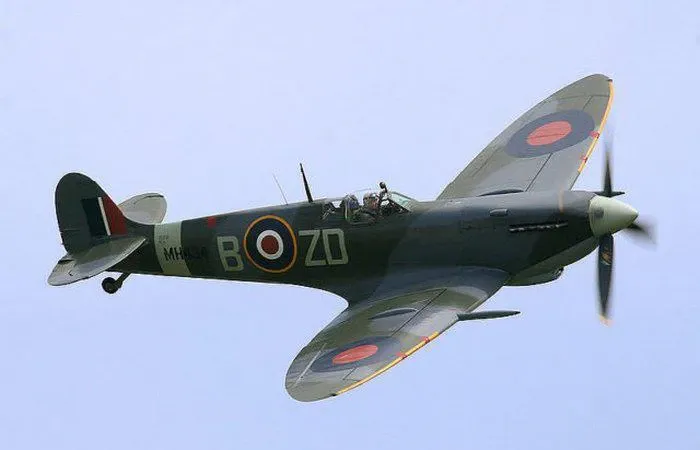
A British Spitfire
Britain's armed forces were mostly concentrated in air and naval units. But after the fall of France it turned out that the British needed more infantry.
Nevertheless, until the spring of 1944 most of the British armed forces were still concentrated in the navy and the air force. Although Britain never had more than 750 infantrymen at one time, the country built as many as 132,500 aircraft.
3. Allied ship losses amounted to about one percent
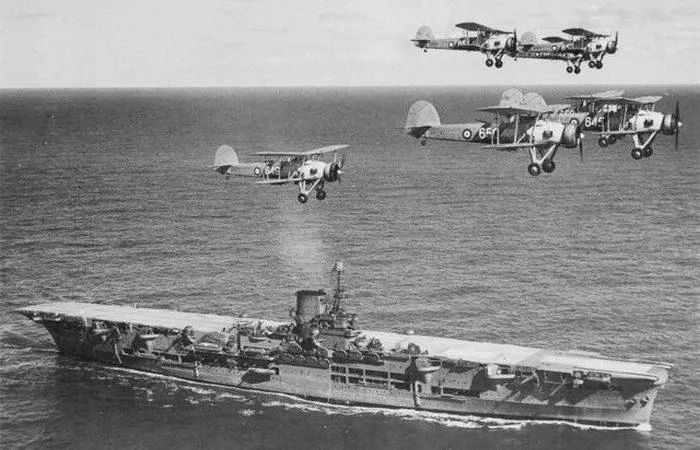
The aircraft carrier HMS Ark Royal and a flight of Swordfish
The number of Allied vessels during World War II was approximately 323,090 ships. Of these, about 4,786 vessels were sunk, 2,562 of them British.
Thus the Allied losses across the North Atlantic, the Arctic and inland waters came to 1.48% of the fleet. This figure seems all the more astonishing given the scale of losses on other fronts.
4. There was no famine in England
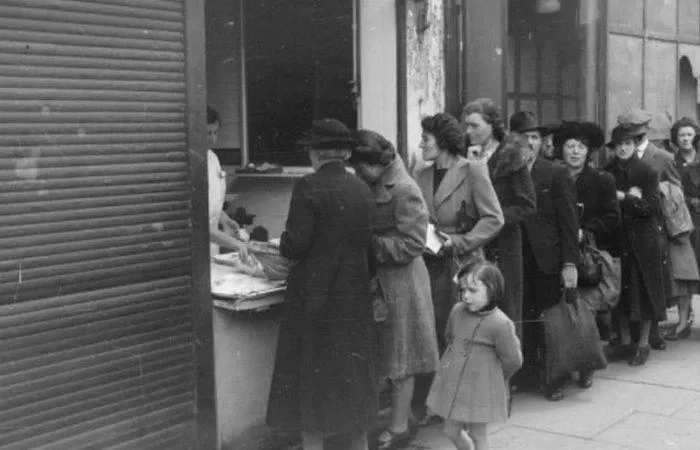
A queue for rations, London, 1945
After the war began, there was no food rationing in England and France, unlike in Germany. Germany, for its part, constantly faced hunger throughout the whole war, and not only civilians but the armed forces too.
That is why, when the Germans defeated France in June 1940, they began taking food out of the occupied territories, which led to famine and food rationing in many parts of France. In 1940 rationing began in Britain as well, but the English never truly went hungry, as people in other countries did.
5. The Japanese had rockets with kamikazes
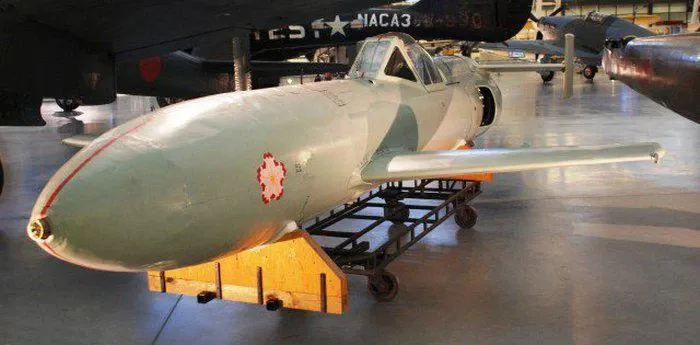
Yokosuka MXY-7 Ohka.
The Germans were not the only ones with rockets. The Japanese also had their own rockets, which were piloted by people. They were called Ohka, which translates as "cherry blossom." The Japanese armed forces had less advanced technology than the US or Britain, so they used kamikazes.
Although such rockets managed to sink several Allied ships, that was as far as it went.
6. The Luftwaffe had high requirements for pilots
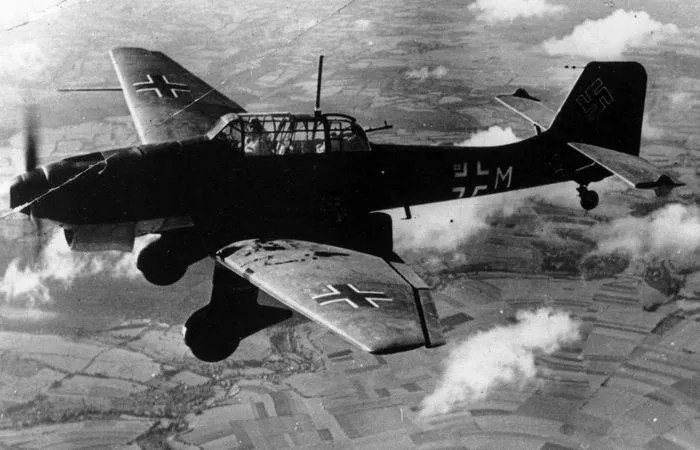
German aces had a better chance of victory.
The number of aircraft shot down differed greatly between Allied and German fighter aces. The German Luftwaffe had much higher requirements for pilots. German pilots had far more flight hours.
As a result, German aces had a much better chance of achieving higher scores than their counterparts. While the leading Luftwaffe aces shot down more than 350 opponents, the best Allied fighter ace shot down only 38 aircraft.
7. The Luftwaffe had the best aircraft
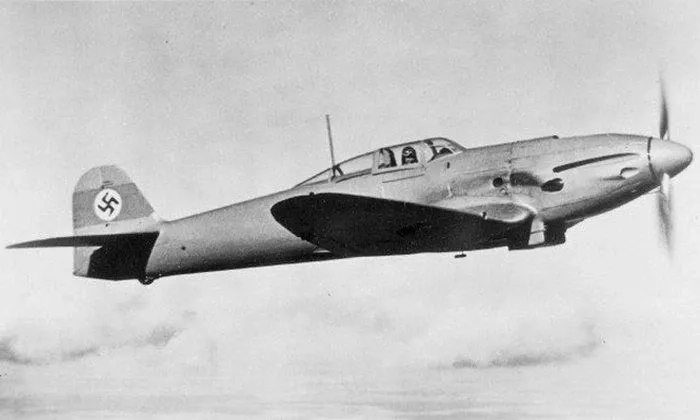
A He 112 in flight
The Luftwaffe had designs for the most modern aircraft of the time, but they were not put into service. The main aircraft produced by Messerschmidt was the Bf109 fighter, while the rival company Heinkel had its own version of a fighter, the all-metal monoplane He112.
Both aircraft were fast, reaching speeds of more than 560 km/h miles per hour, and their rate of climb was excellent.
Nevertheless, the He112 could climb to an altitude of 6 km in just 10 minutes and had an unprecedented flight range of up to 1,150 km.
However, since Heinkel allegedly had ties to Jews, Heinkel fighters were not put into mass production.
8. The famous Parsons jacket
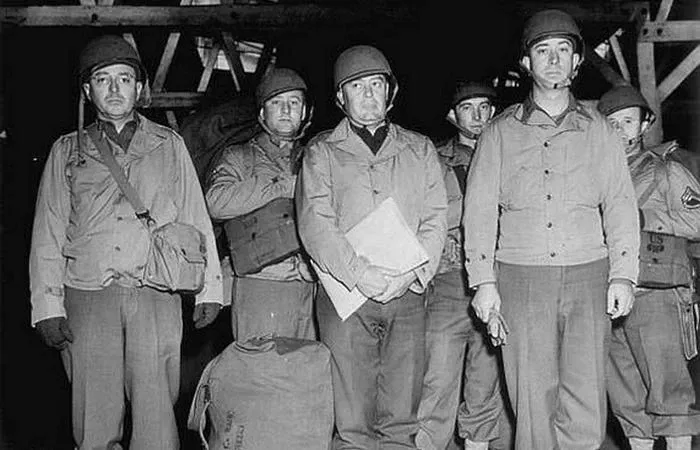
Soldiers in jackets
The most widely known tunic-style Parsons jacket, which was used by the US field army, became the standard clothing for the army.
It gained its popularity thanks to a combination of comfort and durability, unlike the other types of uniform offered at the time. The simple short jacket was perfectly suited to all seasons.
9. Germany had very little equipment
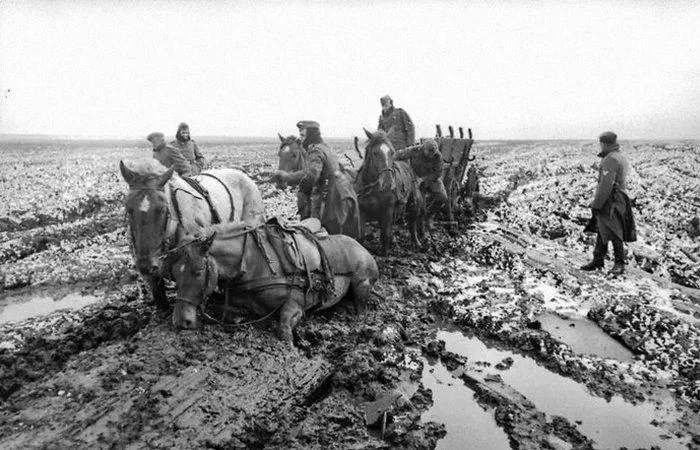
German horses stuck in the mud
German propaganda constantly praised its modern technology, but the Germans were, in fact, one of the least "automobile" societies during the war. At the start of the war Germany had only one car for every 47 people. That cannot be compared with Britain (14 people per car), France (8:1) and the US (4:1).
References:grimnir74.livejournal.com