On the eve of yet another celebration of the anniversary of the "Great Victory", I invite you to read documents that reveal the true face of the Soviet "liberators".
Of all the countries and peoples that took part in the war, the Germans were the most responsible in their approach to the sexual servicing of their soldiers.
How did the Soviet soldiers approach it?
On the eve of yet another celebration of the anniversary of the Great Victory, I invite you to read documents that reveal the true face of the liberators.
We have no moral right whatsoever to honour an army that completely dishonoured itself through the mass rape of children before their parents' eyes, the mass murder and torture of innocent civilians, plunder and legalised looting.
The liberators began committing atrocities against the population of Europe, raping and torturing peaceful citizens and then killing them, already in Crimea.
Thus the commander of the 4th Ukrainian Front, Army General Petrov, in Order No. 074 of 8 June 1944, condemned the outrageous behaviour of servicemen of his front on the Soviet territory of Crimea, which went as far as armed robbery and the murder of local residents.
In Western Belarus and Western Ukraine the atrocities of the liberators grew still worse.
The same happened in the Baltic states, in Hungary, Bulgaria, Romania and Yugoslavia, where acts of violence against the local population reached terrifying proportions. But total terror came on the territory of Poland.
There mass rapes of Polish women and girls began, and the command of the troops, which had a negative attitude toward the Poles, turned a blind eye to it.
Therefore these atrocities of the Russian soldiers absolutely cannot be explained as revenge on the Germans.
The Poles took part in this war on our side of the front, but that did not prevent the rape of Polish women to the same degree as German women.
Proceeding from this, the explanation for such conduct by the Red Army must be sought elsewhere.
The rapes that took place not only in Germany but earlier still in Poland stained not only soldiers and officers, but also the top ranks of the Soviet Army, its generals.
Many Soviet liberator-generals raped local girls.
A typical example: Major General Berestov, commander of the 331st Rifle Division, on 2 February 1945 in Petershagen near Preussisch Eylau, together with one of the officers accompanying him, raped the daughter of a local peasant woman, whom he forced to wait on him, as well as a Polish girl.
On the whole, almost the entire Soviet general staff in Eastern Germany was involved in rapes of an especially grave kind:
- the rape of children
- rapes accompanied by violence and mutilation: cutting off breasts, torturing women's genitals with all sorts of objects, gouging out eyes, cutting out tongues, nailing victims down, and so on
- the subsequent murder of the victims
Joachim Hoffmann, on the basis of documents, names the principal persons guilty of or involved in such crimes: Marshal Zhukov and the generals Telegin, Kazakov, Rudenko, Malinin, Chernyakhovsky, Khokhlov, Razbiytsev, Glagolev, Karpenkov, Lakhtarin, Ryapasov, Andreev, Yastrebov, Tymchik, Okorokov, Berestov, Papchenko, Zaretsky, and this list could be continued
All of them either personally raped German and Polish women or were complicit in it, permitting and encouraging it through their instructions to the troops and covering up these sexual crimes, which is a criminally punishable act and, under the Criminal Code of the USSR, carried the death penalty.
According to the most conservative estimates of current research in the Federal Republic of Germany, in the winter of 1944 and the spring of 1945 Soviet soldiers and officers killed 120,000 civilians on the territory they occupied, usually with the rape of women and children and with torture.
And these are not people who died in the course of combat operations!
Another 200,000 entirely innocent civilians died in Soviet camps.
More than 250,000 died in the course of the deportation into Soviet labour slavery that began on 3 February 1945.
Plus an endless number died from the occupation policy of blockade as revenge for the blockade of Leningrad; in Königsberg alone 90,000 people died within half a year of hunger and the inhuman conditions of the artificial blockade under occupation!
I would remind you that from October 1944 Stalin allowed servicemen to send home parcels with trophies: 16 kg for generals, 10 kg for officers, 5 kg for sergeants and privates.
As letters from the front prove, this was understood as:
Looting unambiguously permitted by the supreme leadership!
At the same time the leadership allowed the soldiers to rape all women.
Thus Yeliseyev, commander of the 153rd Rifle Division, announced to his troops at the beginning of October 1944:
We are going into East Prussia. Red Army men and officers are granted the following rights:
- To destroy any German
- Confiscation of property
- Rape of women
- Plunder
- Soldiers of the ROA are not taken prisoner. Not a single cartridge is to be wasted on them. They are beaten to death or trampled underfoot.
The chief looter in the Soviet Army was Marshal G.K. Zhukov, who accepted the capitulation of the German Wehrmacht.
When he fell out of favour with Stalin and was transferred to the post of commander of the troops of the Odesa Military District, Deputy Minister of Defence Bulganin reported to Stalin in a letter of August 1946 that customs authorities had detained 7 railway wagons carrying in total 85 crates of furniture by the firm Albin May from Germany, which were to be shipped to Odesa for Zhukov's personal needs.
In another report to Stalin, of January 1948, Colonel General of State Security Abakumov reported that a secret search of Zhukov's Moscow apartment and his dacha had uncovered a large quantity of looted property.
Among other things, the list specifically included: 24 gold watches, 15 gold necklaces with pendants, gold rings and other jewellery, 4,000 m of woollen and silk fabrics, more than 300 sable, fox and karakul pelts, 44 valuable carpets and tapestries, partly from Potsdam and other palaces, 55 expensive paintings, as well as crates of porcelain tableware, 2 crates of table silver and 20 hunting rifles.
On 12 January 1948, in a letter to Politburo member Zhdanov, Zhukov admitted this looting, but for some reason forgot to write about it in his memoirs, Memoirs and Reflections.
Sometimes the sadism of the liberators seems altogether hard to understand.
Here, for example, is just one of the episodes listed below.
No sooner had Soviet units invaded German territory on 26 October 1944 than they began to commit incomprehensible atrocities there.
Soldiers and officers of the 93rd Rifle Corps of the 43rd Army of the 1st Baltic Front, on one estate, nailed 5 children by their tongues to a large table and left them to die in that position.
Why?
Which of the liberators came up with such a sadistic execution of children?
And were these liberators mentally normal at all, rather than sadistic lunatics?
An excerpt from Joachim Hoffmann's book Stalin's War of Extermination:
Incited by Soviet military propaganda and by the command structures of the Red Army, soldiers of the 16th Guards Rifle Division of the 2nd Guards Tank Corps of the 11th Guards Army in the last ten days of October 1944 set about slaughtering the peasant population in the salient south of Gumbinnen.
The Germans, having retaken this place, were able, as an exception, to carry out more detailed investigations. In Nemmersdorf alone at least 72 men, women and children were killed; the women, and even girls, were raped beforehand, and several women were nailed to barn doors.
Not far from there a large number of Germans and French prisoners of war, who until then had been in German captivity, fell at the hands of the Soviet killers. Everywhere in the surrounding settlements the bodies of brutally murdered inhabitants were found, for instance in Banfeld, on the Teichhof estate, in Alt Wusterwitz (where the remains of several people burned alive were also found in a stable) and in other places.
By the road and in the yards of houses the corpses of civilians lay in masses, reported First Lieutenant Dr. Amberger; in particular, I saw many women who had been raped and then killed with shots to the back of the head, and in part the murdered children lay beside them.
On his observations in Schillmeyszen near Heydekrug in the Memel region, which units of the 93rd Rifle Corps of the 43rd Army of the 1st Baltic Front entered on 26 October 1944, gunner Erich Cherkus of the 121st Artillery Regiment stated the following at his military-court interrogation:
By the barn I found my father, lying face down with a bullet hole in the back of his head
In one room lay a man and a woman, their hands tied behind their backs and both tied to each other with a single cord
On another estate we saw 5 children with their tongues nailed to a large table. Despite an intensive search, I found no trace of my mother
On the road we saw 5 girls tied together with a single cord, their clothes almost entirely removed, their backs badly torn open. It looked as though the girls had been dragged quite a long way along the ground. In addition, by the road we saw several completely crushed wagon trains.
It is impossible to aim at depicting all the dreadful details, still less at presenting a full picture of what happened.
So let a number of selected examples give an idea of the actions of the Red Army in the eastern provinces and after the resumption of the offensive in January 1945.
The Federal Archive, in its report on the expulsion and the crimes committed during the expulsion of 28 May 1974, published precise data from the so-called summary sheets on atrocities in two selected districts, namely the East Prussian border district of Johannisburg and the Silesian border district of Oppeln, now Opole in Poland.
According to these official investigations, in the Johannisburg district, in the sector of the 50th Army of the 2nd Belorussian Front, among countless other murders, one stood out: the killing on 24 January 1945 of 120 civilians, as well as several German soldiers and French prisoners of war, from a refugee column by the Nikelsberg-Herzogdorf road south of Arys, now Orzysz in Poland.
By the Stollendorf-Arys road 32 refugees were shot, and by the Arys-Drigelsdorf road near Schlagakrug on 1 February, on the order of a Soviet officer, about 50 people, for the most part children and young people, torn from their parents and relatives in the refugee wagons.
Near Gross Rosen the Soviets at the end of January 1945 burned alive about 30 people in a field barn.
One witness saw one corpse after another lying by the road to Arys.
In Arys itself a large number of shootings were carried out, apparently at an assembly point, and in the NKVD torture cellar torments of the cruellest kind, up to death.
In the Silesian district of Oppeln, servicemen of the 32nd and 34th Guards Rifle Corps of the 5th Guards Army of the 1st Ukrainian Front by the end of January 1945 killed at least 1,264 German civilians. In part Russian Ostarbeiters, for the most part forcibly deported to work in Germany, and Soviet prisoners of war in German captivity did not escape their fate either.
In Oppeln they were driven together in a public place and, after a brief propaganda speech, slaughtered.
The same is attested of the Ostarbeiter camp Kruppamühle on the Malapane [Mała Panew] river in Upper Silesia. On 20 January 1945, after Soviet tanks reached the camp, several hundred Russian men, women and children were summoned here and, as traitors and accomplices of the fascists, shot with machine guns or ground up under tank tracks.
In Gottesdorf on 23 January Soviet soldiers shot about 270 inhabitants, including small children and 20-40 members of the Marian Brotherhood.
In Karlsruhe, now Pokój, Poland, 110 residents were shot, including the inmates of the St. Anne's shelter. In Kuppe, 60–70 residents were killed, among them the inmates of a nursing home and a priest who tried to protect women from rape, and so on in other places.
But Johannisburg and Oppeln were only two of the many districts in the eastern provinces of the German Reich occupied by units of the Red Army in 1945.
On the basis of reports from field command services, the Foreign Armies East department of the General Staff of the Army drew up several lists of violations of international law and atrocities committed by the Red Army in the occupied German territories. They do not give a complete picture either, but, written in the immediate aftermath of the events, they document many Soviet atrocities with a certain degree of reliability.
Thus Army Group A reported on January 20, 1945, that all the inhabitants of the settlements of Reichthal (Rychtal) and Glausche near Namslau, now Namysłów, Poland, which had been retaken overnight, were shot by Soviet soldiers of the 9th Mechanized Corps of the 3rd Guards Tank Army.
On January 22, 1945, according to a report from Army Group Center, near Grünhain in the Wehlau district, now Znamensk, Russia, tanks of the 2nd Guards Tank Corps overtook a column of refugees 4 kilometers long, mostly women and children, and fired on it with tank shells and machine-gun bursts, and submachine gunners finished off those who remained.
The same thing happened that day not far from there, near Gertlauken, where 50 people from a refugee column were killed by Soviet soldiers, some of them with shots to the back of the head.
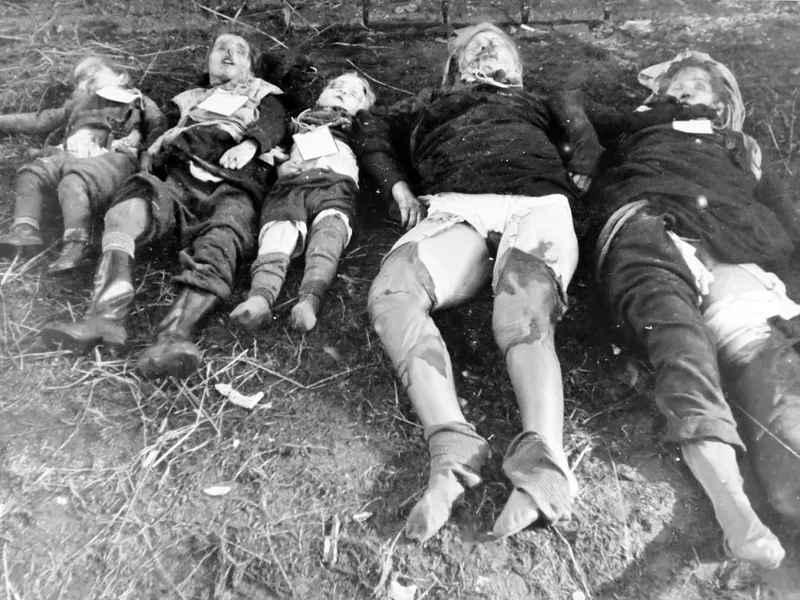
In West Prussia, in an unnamed settlement, a long refugee train was likewise overtaken at the end of January by advance Soviet tank detachments. As several surviving women reported, the tankers of the 5th Guards Tank Army doused the horses and wagons with gasoline and set them on fire:
Some of the civilians, who consisted mostly of women and children, jumped down from the wagons and tried to save themselves, some of them already looking like living torches. After that the Bolsheviks opened fire. Only a few managed to escape.
In exactly the same way, in Plonen at the end of January 1945, tanks of the 5th Guards Tank Army attacked a column of refugees and shot it up.
All women from 13 to 60 years of age in this settlement near Elbing, now Elbląg, Poland, were raped continuously and in the most brutal manner by Red Army soldiers.
German soldiers from a tank reconnaissance company found one woman with her lower abdomen slashed open by a bayonet, and another young woman on wooden bunks with her face smashed in.
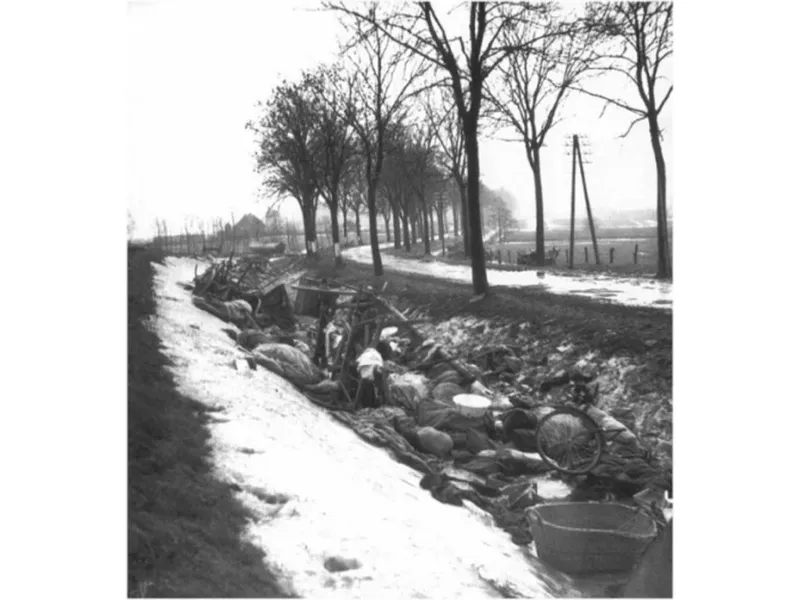
Destroyed and plundered refugee trains on both sides of the road, and the bodies of passengers lying side by side in the roadside ditch, were also found in Maislatein near Elbing.
Deliberate crushing under tank treads or shooting up of refugee trains, which stretched along the roads everywhere and were easily recognizable as such, was reported from the eastern provinces across the board, for example from the operational zone of the Soviet 2nd Guards Tank Army.
In the Waldrode district on January 18 and 19, 1945, columns of this kind were stopped, attacked and partly destroyed in several places; women and children who fell were shot or run over, or, as another report puts it, most of the women and children were killed.
Near Waldrode, Soviet tanks fired cannon and machine guns at a German hospital transport, with the result that of 1,000 wounded only 80 could be saved.
In addition, reports of attacks by Soviet tanks on refugee columns come from Schauerkirch, Gombin, where about 800 women and children were killed, from Dietfurt-Filehne and other settlements.
Several such trains were also overtaken on January 19, 1945, near Brest, south of Thorn, now Brześć Kujawski and Toruń respectively, Poland, in what was then the Warthegau, and the passengers, mostly women and children, were shot.
According to a report of February 1, 1945, in this area over three days about 4,500 women and children out of some 8,000 people were killed, and the rest were completely scattered; it can be assumed that most of them were destroyed in the same way.
Silesia
Near the border of the Reich, west of Wieluń, Soviet soldiers of the 1st Ukrainian Front doused the wagons of a refugee train with gasoline and burned them together with the passengers.
On the roads lay countless bodies of German men, women and children, some of them mutilated, with throats cut, tongues cut out, bellies slit open.
Also west of Wieluń, 25 employees of the Todt Organization, mostly front-line workers, were shot by tank crews of the 3rd Guards Tank Army.
All the men were also shot in Heinersdorf and the women raped by Soviet soldiers, and near Kunzendorf 25–30 men of the Volkssturm received bullets in the back of the head.
In the same way, in Glausche near Namslau, 18 people, including Volkssturm men and nurses, died at the hands of killers, soldiers of the 59th Army.
In Beatenhof near Ohlau, now Oława, Poland, after it was retaken, all the men were found killed by shots to the back of the head. The perpetrators were soldiers of the 5th Guards Army.
In Grünberg, now Zielona Góra, Poland, 8 families were killed by soldiers of the 9th Guards Tank Corps.
The Tannenfeld estate near Grottkau, now Grodków, Poland, became the scene of terrible crimes.
There Red Army soldiers of the 229th Rifle Division raped two girls and then killed them after abusing them. A man had his eyes gouged out and his tongue cut off.
The same was done to a 43-year-old Polish woman, who was then tortured to death.
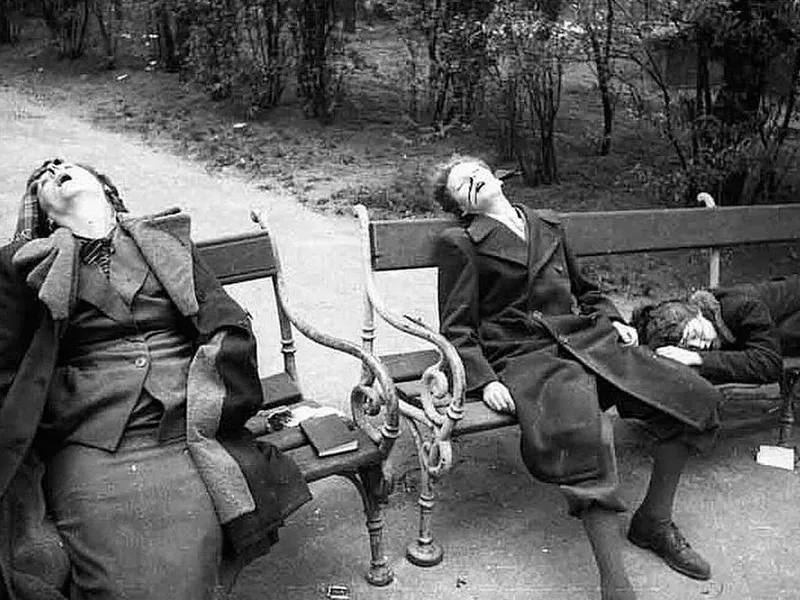
In Alt-Grottkau, soldiers of the same division killed 14 prisoners of war, cut off their heads, gouged out their eyes and crushed them with tanks.
Red Army soldiers of the same rifle division were also responsible for atrocities in Schwarzengrund near Grottkau. They raped women, including nuns, shot a peasant named Kalert, slit open his wife's belly and chopped off her hands, and shot a peasant named Christoph and his son, as well as a young girl.
On the Eisdorf estate near Merzdorf, Soviet soldiers of the 5th Guards Army gouged out the eyes of an elderly man and an elderly woman, apparently a married couple, and cut off their noses and fingers.
Nearby, 11 wounded Luftwaffe soldiers were found brutally murdered.
In the same way, in Güterstadt near Glogau, now Głogów, Poland, 21 German prisoners of war were found, killed by Red Army soldiers of the 4th Tank Army.
In the village of Heslicht near Striegau, now Strzegom, Poland, all the women were raped one after another by Red Army soldiers of the 9th Mechanized Corps.
Maria Heinke found her husband, still showing faint signs of life, dying in a Soviet guardroom. A medical examination established that his eyes had been gouged out, his tongue cut off, his arm broken several times and his skull smashed.
Soldiers of the 7th Guards Tank Corps in Ossig near Striegau raped women, killed 6–7 girls, shot 12 peasants and committed similar grave crimes in Hertwigswaldau near Jauer, now Jawor, Poland.
In Liegnitz, now Legnica, Poland, the bodies of numerous civilians shot by Soviet soldiers of the 6th Army were found.
In the small town of Kostenblut near Neumarkt, now Środa Śląska, Poland, captured by units of the 7th Guards Tank Corps, women and girls were raped, including a mother of 8 children who was about to give birth. Her brother, who tried to intercede for her, was shot.
All the foreign prisoners of war were shot, as well as 6 men and 3 women. Even the sisters of the Catholic hospital did not escape mass rape.
Pilgramsdorf near Goldberg, now Złotoryja, Poland, was the scene of numerous murders, rapes and arsons by soldiers of the 23rd Guards Motorized Rifle Brigade.
In Beralsdorf, a suburb of Lauban, now Lubań, Poland, 39 women who still remained were violated in the vilest manner by Soviet soldiers of the 7th Guards Tank Corps; one woman was shot in the lower jaw in the process and locked in a cellar. And a few days later, despite the fact that she was gravely ill with fever, three Red Army soldiers raped her one after another in the most brutal way, threatening her with a pistol.
Brandenburg, chiefly the Neumark and the Sternberger Land
A general idea of the treatment of the population in the eastern parts of the province of Brandenburg is given by the report of the Russian agents Danilov and Chirshin, sent in by the 103rd front reconnaissance section from February 24 to March 1, 1945.
According to it, all Germans aged 12 and older were ruthlessly used in building fortifications, the part of the population not so used was sent to the East, and the elderly were doomed to death by starvation.
In Sorau, now Żary, Poland, Danilov and Chirshin saw masses of bodies of women and men, killed, stabbed and shot, most often with a shot to the back of the head or the heart, lying in the streets, yards and houses.
According to the account of one Soviet officer, who was himself appalled by the scale of the terror:
All women and girls, regardless of age, were ruthlessly raped.
In Skampe near Züllichau, now Skąpe and Sulechów respectively, Poland, Soviet soldiers of the 33rd Army also unleashed a dreadful bloody terror.
In almost all the houses lay the strangled bodies of women, children and old people.
Not far beyond Skampe, by the road to Rentschen, or Bentschen, now Zbąszyń, Poland, the bodies of a man and a woman were found.
The woman's belly had been slit open, the fetus torn out, and the opening in her belly filled with filth and straw. Nearby were the bodies of three Volkssturm men who had been hanged.
In Kay near Züllichau, soldiers of the same army killed wounded men, as well as women and children from one refugee train, with shots to the back of the head.
The town of Neu-Bentschen, now Zbąszynek, Poland, was plundered by Red Army soldiers and then deliberately set on fire.
On the Schwiebus–Frankfurt road, Red Army soldiers of the 69th Army shot civilians, including women and children, so that the bodies lay on top of one another.
At Alt-Drewitz near Kalenzig, soldiers of the 1st Guards Tank Army shot a medical major, a major and medical orderlies, and at the same time opened fire on American prisoners of war who were being returned from the base camp at Alt-Drewitz, wounding 20–30 of them and killing an unknown number.
By the road in front of Gross-Blumberg on the Oder, in groups of 5 to 10, lay the bodies of about 40 German soldiers, killed with shots to the head or the back of the head and then robbed.
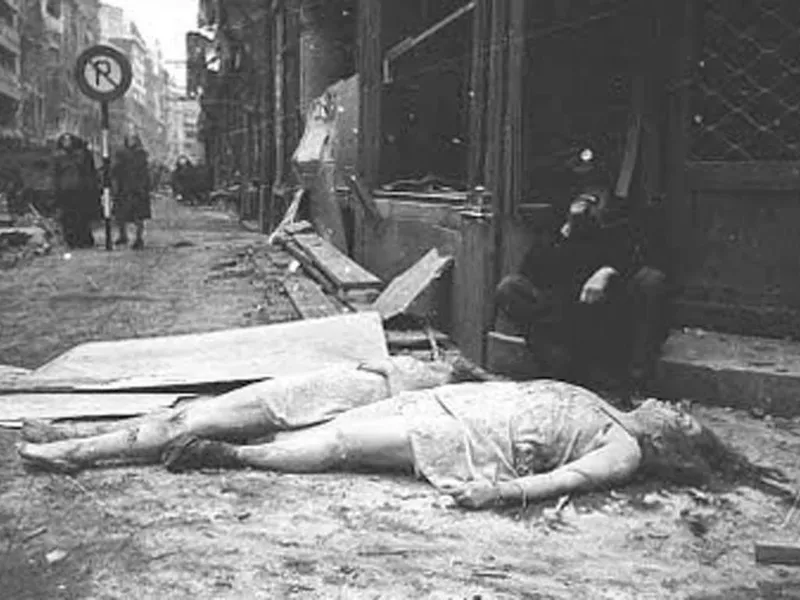
In Reppen, all the men from a passing refugee train were shot by Soviet soldiers of the 19th Army, and the women were raped.
In Gassen near Sommerfeld, now Jasień and Lubsko respectively, Poland, tanks of the 6th Guards Mechanized Corps opened indiscriminate fire on civilians.
In Massin near Landsberg, now Gorzów Wielkopolski, Poland, soldiers of the 5th Shock Army shot an unknown number of residents, raped women and minors, and carried off plundered property.
In an unidentified settlement near Landsberg, soldiers of the 331st Rifle Division shot 8 male civilians after first robbing them.
When units of the Soviet 11th Tank Corps and the 4th Guards Rifle Corps burst suddenly into the town of Lebus, west of the Oder, in early February, the robbing of the residents began at once, and a certain number of civilians were shot on the occasion. The Red Army men raped women and girls, and beat two of them to death with rifle butts.
The unexpected Soviet breakthrough to the Oder, and in places across it, became a nightmare for countless residents and German soldiers.
In Gross-Neuendorf, on the Oder, 10 German prisoners of war were locked in a barn and killed with submachine guns by soldiers of the 1st Guards Tank Army.
In Reitwein and Trettin, servicemen of the 8th Guards Army shot all German soldiers, police officers and other "fascists", as well as entire families in whose houses Wehrmacht servicemen might have found shelter.
In Wiesenau, near Frankfurt, two women aged 65 and 55 were found dying after many hours of rape.
In Zehden, now Cedynia, Poland, a Soviet woman in an officer's uniform from the 5th Guards Tank Corps shot a merchant couple.
And in Genschmar, Soviet soldiers killed a landowner, an estate manager and three workers.
On 9 February 1945, a shock group of the Vlasov army led by ROA Colonel Sakharov, with German support, retook the settlements of Neulewin and Kerstenbruch in the bend of the Oder.
According to a German report of 15 March 1945, the population of both places had been subjected to the most horrific abuse and was afterwards left under the terrible impression of bloody Soviet terror.
In Neulewin the burgomaster was found shot, as was a Wehrmacht serviceman who was home on leave.
In one barn lay the corpses of three defiled and murdered women, two of whom had their legs bound.
One German woman lay shot at the door of her house. An elderly married couple had been strangled.
Servicemen of the 9th Guards Tank Corps were identified as the perpetrators, here as in the nearby village of Neubarnim.
In Neubarnim, 19 residents were found dead.
The body of the innkeeper's wife was mutilated, her legs tied with wire.
Here, as in other settlements, women and girls were defiled, and in Kerstenbruch even a 71-year-old woman with amputated legs.
The picture of violent crimes by Soviet troops in these villages in the bend of the Oder, as everywhere in the German eastern territories, is completed by looting and deliberate destruction.
Pomerania
Relatively few reports came in from Pomerania for February 1945, since the breakthrough battles there only really began at the end of the month.
Here is the report of the Georgian lieutenant Berakashvili. Seconded by the Georgian liaison staff to the junker school in Poznań, Poland, he took part with other officers of volunteer units in the defence of the fortress and fought his way through towards Szczecin, Poland. He nonetheless conveys some impressions of the territory southeast of Szczecin.
The roads were often lined with soldiers and civilians killed by a shot in the back of the head, always half-undressed and, in any case, without boots.
Lieutenant Berakashvili witnessed the brutal rape of a peasant's wife in front of her screaming children near Schwarzenberg, and everywhere found traces of looting and destruction:
The town of Banie was horribly destroyed; many corpses of civilians lay in its streets, who, as the Red Army men explained, had been killed by them as retribution.
The situation in the settlements around Pyrzyce, Poland, fully confirmed these observations.
In Billerbeck they shot the owner of the estate as well as old and sick people, raped women and girls from the age of 10, plundered apartments and killed the remaining residents.
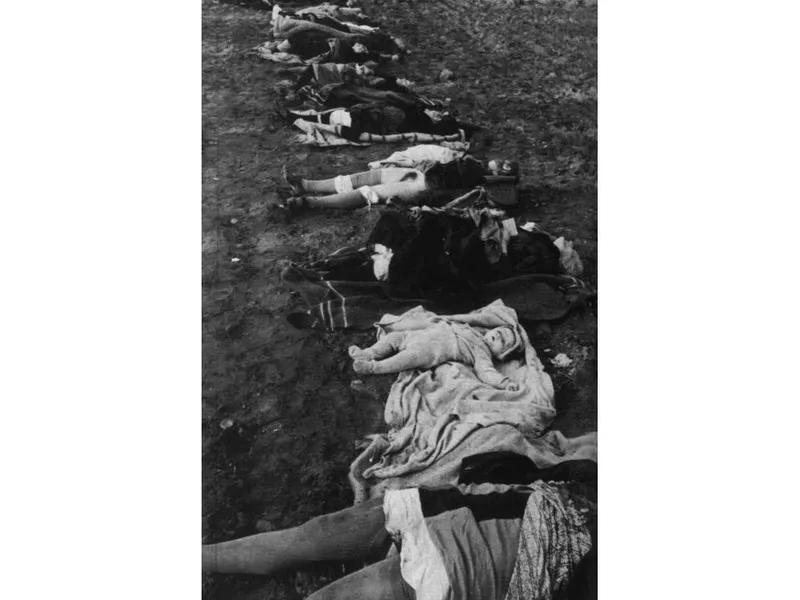
On the Brederlow estate the Red Army men defiled women and girls, one of whom was then shot, as was the wife of a Wehrmacht serviceman on leave who had fled.
In Köselitz the district chief, a peasant and a lieutenant on leave were killed; in Eichelshagen, the head of the local NSDAP unit and a peasant family of 6.
In all cases the perpetrators were servicemen of the 61st Army.
Similar things happened in the villages around Greifenhagen, now Gryfino, Poland, south of Stettin.
Thus in Jädersdorf, servicemen of the 2nd Guards Tank Army shot 10 evacuated women and a 15-year-old youth, finished off the still-living victims with bayonets and pistol shots, and also slaughtered entire families with small children.
In Rohrsdorf, Soviet soldiers shot many residents, including a wounded serviceman on leave. Women and girls were defiled and then in part also killed.
In Gross Silber near Kallies, Red Army men from the 7th Guards Cavalry Corps raped a young woman with a broom handle, cut off her left breast and crushed her skull.
In Preußisch Friedland, Soviet soldiers of the 52nd Guards Rifle Division shot 8 men and 2 women and raped 34 women and girls.
A horrifying event was reported by the commander of a German engineer-tank battalion of the 7th Panzer Division.
At the end of February 1945, Soviet officers of the 1st or 160th Rifle Division north of Konitz drove several children aged 10 to 12 onto a minefield for reconnaissance.
German soldiers heard the pitiful cries of the children, grievously wounded by exploding mines, bleeding helplessly from their torn bodies.
East Prussia
In East Prussia too, where heavy fighting was under way, the atrocities continued in February 1945 with undiminished force.
Thus by the road near Landsberg, servicemen of the 1st Guards Tank Army killed German soldiers and civilians with bayonet thrusts, rifle butts and point-blank shots, and in part butchered them.
In Landsberg, Soviet soldiers of the 331st Rifle Division herded the stunned population, including women and children, into cellars, set the houses on fire and began shooting at people running in panic.
Many burned alive.
In a village on the Landsberg–Heilsberg road, servicemen of the same rifle division held 37 women and girls locked in a cellar for 6 days and nights, in part chained them there, and with the participation of officers raped them many times every day.
Because of the desperate screams, two of these Soviet officers cut out the tongues of two women in front of everyone with a half-round knife.
The hands of two other women, laid one on top of the other, were pinned to the floor with a bayonet.
German tank crews ultimately managed to free only a few of the unfortunates; 20 women died of the abuse.
In Hansenhagen near Preußisch Eylau, now Bagrationovsk, Russia, Red Army men of the 331st Rifle Division shot two mothers who resisted the rape of their daughters, and a father whose daughter was at the same time dragged out of the kitchen and raped by a Soviet officer.
Also killed were: a married couple of teachers with 3 children, an unknown girl refugee, an innkeeper and a farmer whose 21-year-old daughter was raped.
In Petershagen near Preußisch Eylau, servicemen of this division killed two men and a 16-year-old youth named Richard von Hoffmann, and subjected women and girls to brutal violence.
In early February 1945, Soviet troops suddenly burst into the western part of Samland, taking a large number of settlements.
A few days later the Germans managed to smash and partly throw back the advance forces and, in a bold large-scale offensive operation on 19 and 20 February 1945, to restore the interrupted land and sea communication with Königsberg.
The command of the Army Group Samland and of Army Group North, with the help of the police, carried out investigations into the fate of the population in the newly liberated territory; the results are available, admittedly, for only a few settlements.
Thus servicemen of the 271st Special Motorised Battalion of the 39th Army killed 4 civilians in Georgenwalde and threw the corpses into the flames of a burning estate.
Officers and their Red Army men cruelly defiled women and girls.
In Kragau, servicemen of the 91st Guards Rifle Division raped and strangled two young women; in Medenau, servicemen of the 358th Rifle Division killed at least 11 civilians.
Here, in front of one house, lay the corpses of two murdered women, a small child and an infant.
Two elderly men and a 14-year-old youth were beaten to death, as were two women and two girls after being raped.
The completely undressed body of a woman of about 30 had stab wounds in the chest, her skull was split open, and she was riddled with bullets.
In Gross Ladtkeim, servicemen of the 91st Guards Rifle Division shot 2 German prisoners of war and 4 civilians, including the burgomaster and his wife.
No trace remained of their 18-year-old daughter. However, the corpse of a young girl was found whose breasts had been cut off and eyes gouged out after the rape.
The Soviet 91st Guards Rifle Division, which had broken through via Tierenberg into the Krattlau–Germau area, was surrounded on 7 February 1945 and partly defeated in heavy fighting.
Gross violations of international law were established in the settlements it had seized.
In Tierenberg 21 German soldiers were killed, who had been driven there from a home for disabled veterans near Sorgenau.
Elisabeth Homfeld was raped and, together with her son-in-law, killed by shots to the head; so were Minna Kottke, who tried to resist rape, and Ernst Trunz, son of the tenant of the pastor's estate.
A grenade thrown into a barn killed three women and a man locked inside, and several people were seriously wounded.
At the same time, Soviet officers and soldiers later admitted in captivity that they had raped women and even underage girls incessantly and savagely.
In Krattlau, servicemen of the 275th Guards Rifle Regiment of the 91st Guards Rifle Division killed 6 men and two German soldiers with bayonet thrusts or shots to the head.
All women and girls, including 13-year-olds, were raped incessantly; some women were subjected to sexual violence by 6 to 8 soldiers, 5 to 8 times a day.
The 3 or 4 youngest women were left for the officers, who after finishing their criminal violence handed them over to their subordinates.
In Annenthal the German liberators found the corpses of two women who had been defiled and then strangled.
Detailed investigations were possible in Germau, where, after all, the staff of the 91st Guards Rifle Division and the staff with units of the 275th Guards Rifle Regiment were located.
In Germau the corpses of 21 murdered people were found: men, women and children.
15 wounded Germans were killed by smashing their heads, and a harmonica was forced into the mouth of one of them.
According to the finding of Captain of the Medical Service Dr. Tolzien, one female body had the following injuries: a gunshot through the head, a crushed left shin, a wide open cut wound on the inner side of the left shin, and a large open wound on the outer side of the left thigh, inflicted with a knife.
Another woman, like an undressed young girl, had the back of her head crushed.
Found murdered were the married couple Retkowski, the married couple Sprengel with 3 children, a young woman with 2 children and an unknown Pole.
In a mass grave lay the bodies of an unknown woman refugee, Rosa Thiel, née Witte, and a 21-year-old Polish girl: all three were brutally killed after being raped; further, the bodies of two local craftsmen, one of whom, the miller Magun, was shot because he had tried to protect his underage daughter from rape.
On the Germau–Palmnicken road, now Yantarny, Russia, near the 5-kilometre marker, two girls were found.
Both had been shot in the head at close range, and one of them had her eyes gouged out.
The female population of Germau, about 400 women and girls, was locked in the church on the orders of Colonel Koshanov, commander of the 91st Guards Rifle Division, supposedly to protect them from outrages.
Nevertheless, Soviet officers and soldiers burst into the church and carried out mass rapes in the choir loft.
In the surrounding houses, too, women were raped without pause in the following days. An officer and several Red Army men raped 13-year-old Eva Link eight times in the church bell tower before the eyes of her desperate mother, who then suffered the same fate.
The events in Metgethen, a resort suburb west of Königsberg, have already been described in the literature more than once. In the night of 30 to 31 January 1945 it was seized by units of the Soviet 39th Army, and on 19 February, after bloody fighting, it was liberated again by units of the German 1st Infantry Division, the 561st Volksgrenadier Division and the 5th Panzer Division.
Recently they were covered in a publication of the Russian magazine Novoye Vremya under the headline "Crimes of the Red Army Men".
In this connection one should also mention the American international law specialist Alfred M. de Zayas, who pays special attention to the events in Metgethen in his research.
German soldiers made appalling discoveries in Metgethen and its immediate surroundings.
Survivors, for example the former 3rd staff officer at the headquarters of the commandant of the Königsberg fortress, reserve Major Professor Dr. G. Ipsen, were in a state bordering on madness.
Already on the approaches, the corpses of several hundred German soldiers were found, some of them mutilated beyond recognition. In almost every house and garden lay murdered men, women and children, and the women bore clear traces of rape, with their breasts often cut off.
In one place, as K.A. Knorr, a former orderly officer at the staff of the 561st Volksgrenadier Division, reported, two girls of about 20 had been torn apart by motor vehicles.
At the railway station stood at least one train of refugees from Königsberg.
In every carriage lay the bodies of brutally murdered refugees of every age and sex.
The tennis court in Metgethen was crammed full of German prisoners of war and civilians, and then an explosive charge was detonated.
Parts of human bodies were found as far as 200 m from the giant blast crater.
As early as 27 February 1945, Captain Sommer of the fortress commandant's staff happened to discover, behind a house in a gravel pit at a street and road crossing in front of Metgethen, the corpses of 12 completely undressed women and children lying together in a disorderly heap. They had been torn apart by blows of bayonets and knives.
Besides the individual corpses scattered all over the resort settlement, which numbered in the hundreds, several large mounds of earth were found, under which, as it turned out, hundreds were buried, and according to Captain Sommer and Professor Dr. Ipsen as many as 3,000 of the murdered.
The inquiry by the investigative commission appointed by the fortress commandant, General of Infantry Lasch, proved difficult, because the Soviets had doused the piles of corpses with gasoline and tried to burn them.
Nevertheless, it was established that most of the victims had not been shot but, often, cruelly killed with cutting and stabbing weapons.
Moreover, a considerable part of those killed were not Germans but Ukrainian refugees, of whom there were around 25,000 near Metgethen, as well as members of the so-called "Ukrainian labor service", who had been forcibly mobilized.
West of Metgethen, as Captain Sommer reported, corpses of civilians lay everywhere along the road as far as Powayen, either killed by shots in the back of the head, or completely undressed, raped and then brutally killed by blows of bayonets or rifle butts.
At the road crossing in front of Powayen, four undressed women were crushed to death by a Soviet tank.
Captain Sommer, as well as Major Professor Dr. Ipsen, attested to an almost symbolic vileness on the part of Soviet soldiers in the church of Gross Heydekrug. A young girl was crucified there, and to the right and left of her a German soldier had been hanged.
All this happened at the gates of the provincial center Königsberg.
The unspeakable atrocities and crimes committed by incited Soviet soldiers later, after the capture of the city on 7-9 April 1945, defy any description and found only a schematic reflection in the diaries of the doctors Deichelmann and Count von Lehndorff.
What can be said?
By the violations of international law committed on German soil, a considerable part of the Red Army placed itself outside the age-old Russian soldierly traditions.
Crimes against the unarmed like those presented above merely as examples, committed as a mass phenomenon at the instigation and with the participation of the military command, were unknown in the armies of other European states even during the Second World War, and could never have been tolerated by their command structures.
The German Wehrmacht was no exception here.
Plunder and looting, not to mention murder and rape, were threatened with serious punishment under the mandatory provisions of the German military penal code.
To maintain military discipline, German military courts, even on Soviet territory, as a rule punished offenses and crimes by Wehrmacht servicemen against the civilian population with severe penalties, and often did not hesitate to pass even death sentences.
Therefore, if the question is raised of responsibility for the war crimes committed in the eastern provinces of Germany,
then, following the old military principle under which commanders are in any case responsible for the actions of their subordinates, most of the commanders and troop commanders operating there, and many servicemen of the middle and lower command ranks, would have to be recognized as war criminals under the interpretation of the Nuremberg Charter, and shot.
Hoffmann comments on this situation as follows:
The British Field Marshal Montgomery, to whom something later reached from the Soviet occupation zone, wrote:
Their behavior, especially toward women, filled us with disgust. In some districts of the Soviet zone practically no Germans were left at all. They fled before the onslaught of barbarians.
Incidentally, he called the Russians "truly uncivilized Asians".
According to the American General Keating, who was familiar only with the situation in Berlin, in many cases their unbridled actions were akin to the actions of "the barbarian hordes of Genghis Khan".
And George F. Kennan once again confirmed orally to the American international law specialist Alfred M. de Zayas what he had written in his memoirs: that the Soviets swept the local population from the face of the earth "in a manner that has no parallels since the Asian hordes".
What is the reason for the atrocities of the Soviet army?
Accounts of these crimes against humanity remain taboo in Russia to this day.
Anyone who publishes these materials is immediately branded a "fascist", while the actions of the Horde brutes are invariably justified by atrocities of the German army for which there is no evidence, and the phrase about revenge on the Germans for their crimes on the territory of the USSR is supposed to permit even today the raping of little Polish and German girls!
Russia does not possess a single proof of genocide of the local population by the German army!
For any oppression of Ukrainians, Poles and Jews, let alone for rape, the Germans punished on the spot, to the fullest extent: with the death penalty!
A similar position applied to prisoners of war, who categorically were not to be abused.
Further
Whatever the "liberators" may say, the bloody trail of their crimes begins as early as Crimea, and the rapes began on the territory of Poland, which had nothing to do with the occupation of the USSR!
There is also evidence that by an unspoken directive, from the first days of the war, a rule was introduced in the Soviet army to not simply kill German prisoners of war, but to do so with particular cruelty!
It was permitted to gouge out eyes, cut off limbs, genitals, and so on.
In 1941-1943 almost 100% of German prisoners of war were shot, which can be explained by the Soviet army's constant retreat.
At the same time, as Hoffmann writes:
The Soviet Union was the only state that, on these grounds, renounced the Hague Convention on the Laws and Customs of War of 1907, and also refused to ratify the Geneva Convention on prisoners of war of 1929.
But how to explain the fact that the absolute majority of German prisoners of war were not simply killed, but had their eyes gouged out and their genitals cut off or crushed to a pulp?
This can no longer be interpreted as "the impossibility of transporting them during a retreat", although that would be a crime all the same. This is already a policy of intimidating the German army: look what atrocities await you.
The initiators of these atrocities were the commissars, since they were the only ones the Germans shot when taking Soviet servicemen prisoner.
Having learned of this, the German command in the spring of 1942 forbade the shooting of commissars.
Thus the Germans no longer shot any prisoners of war.
As a result, 3.8 million Soviet army servicemen ended up in German captivity in the first half-year, and 5.3 million over the whole war.
Moreover, the wicked Germans released another 330,000 Ukrainian and Belarusian prisoners of war to their homes!
It is characteristic that the Soviet command understood that gouging out the eyes and cutting off the genitals of all German prisoners of war would make their army resist to the last drop of blood.
Therefore some orders followed that reined in their sadists. But on the whole this changed the picture in no way.
According to documentary data from Hoffmann's book, in just a few months of 1941 the Soviets killed several tens of thousands of German and Romanian prisoners of war, with the crushing or cutting off of genitals accompanying it while the victims were still alive.
He draws no conclusions, but we will draw one: this is already a SEXUAL CRIME.
And when the Soviet monsters reached the female population of Poland and Germany, these sexual crimes logically continued there as rapes and other vile acts, typical today of the crimes of sexual maniacs.
Let us sum up
The brutal rapes committed by Soviet army fighters on a mass scale began on the first day of the war, so from 22 June 1941 the Soviet army was an army of sexual maniacs who cut off the genitals of their victims.
It was not only the only drunken army of boozers in the world, since only in it was vodka issued before battle, but also the only army of sexual maniacs in the world.
It turns out that the Russian army is nothing other than: drunken trash with weapons in their hands!
The blame for this, of course, lies with the leaders and commissars, who, getting the soldiers drunk, appealed to their basest human instincts: to kill, to rape and to abuse.
Of which there are thousands of examples in their appeals and proclamations of precisely this content.
As for the Horde and barbarian essence of the Russians, it, of course, immediately surfaced in these soldiers, because that is exactly what the authorities were after: their frenzy in the war.
Therefore the soldier's brutality is more the fault of the commissars, the generals and the political leadership of the USSR, and above all the Politburo and Stalin personally.
This explains the genocide by the soldiers of the USSR, but does not forgive it.
Hoffmann cites many examples (including the same Solzhenitsyn) of soldiers and officers of the Soviet army protesting against these atrocities, but they were immediately shot or repressed "for sympathy with the enemy".
The guilt remains in any case.
It is hard to gauge the scale of all this, but apparently about 80% of the "liberators" raped at least one victim, and some 40% of the "liberators of Europe from fascism" raped dozens of women and girls and then murdered them.
Many Guards divisions of the USSR particularly distinguished themselves in this: a clear trail of crimes against the civilian population follows them.
The American historian William Pierce writes about East Prussia in January 1945:
When Soviet military units intercepted columns of German refugees fleeing west, they did things Europe had not seen since the Mongol invasions of the Middle Ages. All the men, most of whom were peasants or Germans working in vital occupations and therefore exempt from military service, were usually simply killed on the spot. All the women, almost without exception, were gang-raped. Such was the fate of eight-year-old girls, of eighty-year-old women, and of women in the last stages of pregnancy. Women who resisted rape had their throats cut or were shot. Often, after the gang rape, the women were killed. Many women and girls were raped so many times that they died from that alone.
It is funny that today these units have posters hanging up: here is the heroic path of the division.
But a note needs to be added there: in this place 800 civilians were brutally murdered and 120 children raped, in this place 5 children were nailed to a table by their tongues, and in this place an entire convent of women was raped and had their throats cut.
That is the real heroic path of the division: the path of sadists and maniacs.
Under the Criminal Code of the Russian Federation, they ought to be put on trial today, not given flowers on May 9 for raping girls in front of their parents and then killing them all together, cutting off their breasts and so on.
In short, this is not even just a stain on the army of Russia.
It cancels out the Horde's right to be called any kind of army at all, and as for "liberators", let us forget that altogether.
A gathering of brutes, degenerates, rapists and torturers of the civilian population cannot be an army!
The army of Russia is bandits and sexual maniacs, and legalized marauders!
More on the subject
Leonid Nikolayevich Rabichev. From the book War Will Write It All Off, the memoirs of a signals officer of the 31st Army, 1941–1945.
Back to East Prussia, February 1945
Yes, it was five months ago, when our troops in East Prussia overtook the civilian population evacuating from Goldap, Insterburg and other cities abandoned by the German army. On carts and trucks, on foot, old people, women, children, large patriarchal families were slowly moving west along all the roads and highways of the country.
Our tankmen, infantrymen, artillerymen and signalmen caught up with them, and to clear the way they tossed into the ditches at the roadside their carts with furniture, satchels, suitcases and horses, pushed the old people and children aside and, forgetting duty and honor and the German units retreating without a fight, threw themselves by the thousands on the women and girls.
Women, mothers and their daughters, lie to the right and left along the highway, and in front of each one stands a guffawing armada of men with their trousers down.
Those drenched in blood and losing consciousness are dragged aside, and children rushing to help them are shot. Guffawing, growling, laughter, shouts and groans. And their commanders, their majors and colonels, stand on the highway, some chuckling, and some conducting, no, rather directing traffic. This is so that all their soldiers without exception take part.
No, this hellish deadly group sex is not collective guilt and not at all revenge on the accursed occupiers.
It is permissiveness, impunity, anonymity and the cruel logic of a frenzied crowd.
Shaken, I sat in the cab of a polutorka truck, my driver Demidov stood in the queue, and I kept imagining Flaubert's Carthage, and I understood that war would by no means write off everything. The colonel, the one who had just been conducting, cannot hold out and takes his place in the queue himself, and the major shoots the witnesses, the children and old people shrieking in hysterics.
To the horizon, between mountains of rags and overturned carts, lie the corpses of women, old people, children. The highway is being cleared for traffic. It is getting dark.
To the left and right are German folwarks. We receive the order to settle down for the night.
This is part of our army's headquarters: the artillery commander, air defense, the political department.
My command platoon and I get a folwark two kilometers from the highway.
In all the rooms there are corpses of children, old people, raped and shot women.
We are so tired that, paying them no attention, we lie down on the floor among them and fall asleep.
We are in Europe! We, in Europe!
I was lost in daydreams, and suddenly two sixteen-year-old German girls walk in through the open gate. There is no fear in their eyes, but a terrible anxiety.
They saw me, ran up, and, interrupting each other, try to explain something to me in German. Although I do not know the language, I hear the words "Mutter", "Vater", "Bruder".
On the steps of the house stands Major A., and two sergeants have twisted the arms of those same two girls and bent them double, while opposite stand all the army headquarters staff: drivers, orderlies, clerks, messengers.
"Nikolaev, Sidorov, Kharitonov, Pimenov," Major A. commands. "Take the girls by the arms and legs, skirts and blouses off! Form two ranks! Unbuckle your belts, trousers and drawers down! Left and right, one by one, begin!"
A. commands, and down the stairs from the house my signalmen, my platoon, come running and fall into the ranks. And the two girls I had saved lie on the ancient stone slabs, their arms in vises, their mouths stuffed with headscarves, their legs spread apart. They no longer try to break free from the hands of four sergeants, while a fifth tears off and rips to pieces their blouses, brassieres, skirts, panties.
My telephone operators ran out of the house, laughter and obscenities.
And the ranks do not shrink; some get up, others get down, and around the martyrs there are already pools of blood, and there is no end to the ranks, the guffawing and the obscenities.
The girls are already unconscious, and the orgy goes on.
Hands proudly on his hips, Major A. commands. But now the last one gets up, and the executioner sergeants fall upon the two half-corpses.
Major A. pulls a Nagant revolver from its holster and shoots into the bloodied mouths of the martyrs, and the sergeants drag their mutilated bodies to the pigsty, and the hungry pigs begin to tear off their ears, noses, breasts, and within a few minutes only two skulls, bones and vertebrae are left of them.
I am terrified, disgusted…
References:en.wikipedia.orggermanvictims.com