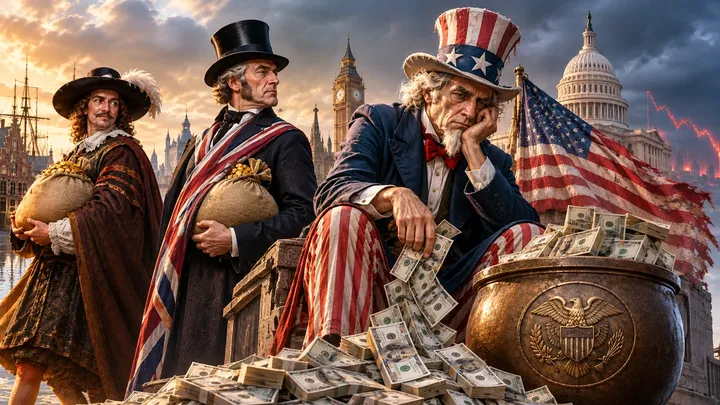
Branko Milanovic, the Serbian-American economist, former lead economist of the World Bank's research department and author of well-known work on global inequality, published 2 essays in August and November 2026 on how small countries should live next to large ones.
In the first he called the policy of the Baltic and Nordic states irresponsible and hypocritical: by his account they are calling for war with Russia and counting on the United States to fight it for them. In the second he drew a general rule: a small country does best by staying neutral between the great powers. A neutral Ukraine, he writes, would have saved more than a million lives and grown rich trading with both the European Union and Russia. His models are Cold War Finland, Switzerland, Singapore and Tito's Yugoslavia. A Russian-language digest of both essays is already in circulation, with the conclusion that Eastern Europe has one sensible path: neutrality and "Finlandization."
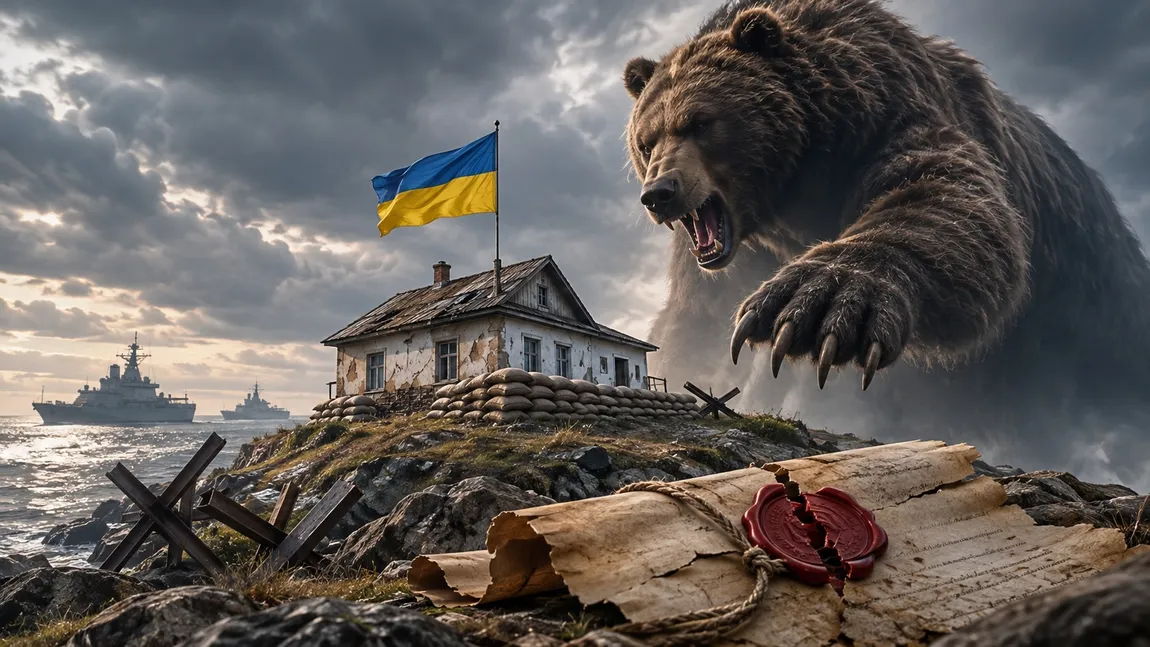
Does neutrality protect a small country whose neighbor is Russia? The claim is easy to test, because Milanovic picked the examples himself, and every one of them testifies against him. Ukraine and the Baltic states were neutral when they were attacked. The rich neutrals on his list are armed or sheltered by the strongest navy in the world. But the main point lies elsewhere: in his argument the war has no author, and the aggressor who started it is guilty of nothing. The guilty party is always the one who had the nerve to defend himself.
Milanovic writes that neutrality was enshrined in Ukraine's Constitution. That is a lie. The intention to become a neutral state was written into the 1990 Declaration of State Sovereignty, and the 1996 Constitution contains no such provision. Non-bloc status became law in 2010, under the pro-Russian president Viktor Yanukovych. That law was in force in February 2014, when Russia's fascist occupiers seized Crimea, and in the spring, when Russia invaded Ukraine's Donbas. Parliament repealed it only on December 23, 2014, by 303 votes to 8, that is, 10 months after the attack. Milanovic has the sequence backwards. Ukraine gave up neutrality after Russia attacked a neutral Ukraine, not before.
He does not write about Ukraine's peaceful intentions or its disarmament. He does not mention that 20 years earlier, in 1994, Ukraine handed over the third-largest nuclear arsenal in the world and received in return the empty Budapest Memorandum. He does not mention that it bears the signature of Russia, which promised to respect Ukraine's borders and not to use force against it.
By 2014 Ukraine was a country without nuclear weapons, outside any military bloc, holding a written promise from three nuclear powers. That is exactly the country Milanovic holds up as a model, and that is exactly the country Russia attacked. With that attack Russia confirmed that neutrality, as Milanovic describes it, means easy prey for an aggressor.
His defenders will answer that the 2010 non-bloc status was worthless, because in April 2008 the NATO summit in Bucharest wrote into its final statement that Ukraine and Georgia would become members of the alliance. At Bucharest Ukraine asked for a Membership Action Plan, the first formal step toward accession, and did not get it, because Germany and France objected. Instead of a plan it was given a sentence with no date and no procedure. Two years later Kyiv itself, by law, closed its own road into military blocs. In 2013 Moscow was squeezing Ukraine over an association agreement with the European Union, a trade and political treaty that was no military alliance. So what stood in Moscow's way was any independent choice by Ukraine, and NATO serves here only as a pretext.
He goes on to write about a million dead Ukrainians. Where he got that million, he does not say. In July 2026 the Center for Strategic and International Studies in Washington estimated Ukrainian military deaths at 125,000 to 150,000, and by early 2026 the United Nations had verified almost 15,000 civilian deaths. Milanovic's figure is several times too high and sits closer to the Russian version of Ukraine's losses, but the construction of the sentence is more telling still. These people, in his words, "are now dead," and nowhere does he say who killed them. In the November essay Russia appears as a trading partner on whom Ukraine foolishly turned its back. As the state that started the war, it does not appear even once. Nor does he ask the obvious question: how many lives would Russia have saved had it not attacked Ukraine to feed its imperial ambitions?
What is the "Finlandization" that Milanovic praises? Finland declared itself neutral at the start of the Second World War. On November 30, 1939, the Soviet Union attacked it. Under the Moscow Peace Treaty of 1940 Finland gave up 11% of its territory, including Vyborg, its second-largest city, and about 420,000 people left those lands for the interior. "Finlandization" began only after that, and after a second war in 1941-1944. In 1948 Helsinki signed a treaty of friendship, cooperation and mutual assistance with Moscow and for decades afterward looked over its shoulder at the Kremlin in its foreign policy and in its own press. In other words, Milanovic's model neutrality is the condition of a country that has already been attacked and already been stripped of land.
Milanovic, an economist by trade, writes that Finland's growth was made possible by equal trade with the Soviets and the West. It was not equal. From 1952 to 1990 the USSR took about 15% of Finnish exports; the other 85% went elsewhere, above all to the West. The Soviet share grew out of war reparations. From 1944 to 1952 Finland handed Moscow, free of charge, goods worth $300 million at 1938 prices, mostly ships and machinery of a kind it had hardly exported before the war. Moscow made Finland turn down the Marshall Plan. After the reparations, trade ran without money, on a clearing basis: the Finns delivered goods, the USSR paid in oil, and part of Finnish industry made products meant for the Soviet buyer alone. In 1991 clearing was abolished and that market vanished. By then it was worth 2.4% of Finnish GDP. Researchers attribute the 1991-1993 slump chiefly to Finland's own banking crisis and assign less than a third of the losses to the collapse of Soviet trade. From 1994 to 2000 the Finnish economy grew by more than 4% a year on average, in 1995 the country joined the European Union, and Nokia became one of the world's leading makers of mobile phones. In other words, Finland grew rich trading with the West; the Moscow share was imposed on it by the victor and fell away without harming its growth.
The Finns passed their own verdict on their neutrality on April 4, 2023, when they joined NATO, 13 months after Russia's full-scale invasion of Ukraine. Sweden, which had not fought a war since 1814, joined NATO in March 2024.
The Baltic states have tried Milanovic's recipe on themselves more than once. Estonia, Latvia and Lithuania declared neutrality before the Second World War. In September and October 1939 Moscow massed troops on their borders and, under threat of invasion, forced them to sign mutual assistance treaties and admit Soviet military bases. On October 3 Foreign Commissar Molotov warned Lithuania outright that the USSR would stop taking its neutrality into account. In June 1940 all three countries were occupied. On June 14, 1941, more than 40,000 people were shipped out of them. In March 1949, in 4 days, another 94,799 were deported, 73% of them women and children under 16. The occupation ended in 1991. All of this Milanovic calls "frustrations and traumas," which small nations supposedly want to cure at the expense of the rest of the world. That these nations have paid more than once for being unable to resist the Muscovite aggressor, he does not write, and he offers no figures for what each of Moscow's attacks cost them!
His charge that these countries call for war and bear none of its costs is backed by not a single quotation, as readers pointed out in the comments under the essay itself. Three days before he published it, on August 23, 2026, the leaders of the 8 Nordic and Baltic states signed a declaration in Kyiv. In it they backed Ukraine's readiness for a full ceasefire and put on record that it is Russia that refuses real steps toward peace. Milanovic also credits these countries with a calculation: Ukrainian lives, he suggests, are worth nothing to them. Since 2022 those 8 countries have given Ukraine more than 42 billion euros and have planned about 12.5 billion euros in military aid for 2026. On their own defense in 2026 Lithuania is spending 5.33% of GDP, Estonia 5.11% and Latvia 4.92%, the highest shares in NATO.
Milanovic asks why these countries do not attack Russia themselves, if they are so sure they are right. As if aggression were proof of being right! Defense and readiness for aggression are pragmatism, not ambition. Nobody in Vilnius, Riga or Tallinn is proposing to attack Russia. Nobody is demanding historical territories from Russia. They are quietly building defenses so that June 1940 does not happen again. Milanovic brazenly swaps defense for attack, and only after that swap can he call it warmongering.
That leaves Switzerland and Singapore. Singapore is listed in the Non-Aligned Movement, but why does Milanovic not write that since 1971 it has been party to a defense arrangement with Britain, Australia, New Zealand and Malaysia? Under a 1990 memorandum, extended in 2019 until 2035, American ships and aircraft use Singapore's military bases. Switzerland has universal conscription, and its neutrality has been recognized since 1815 by a treaty among the great powers that none of them has broken. Russia signed a similar document for Ukraine in 1994 and broke it 20 years later. A poor neutral next door to Russia meets a different fate. Moldova wrote neutrality into its Constitution in 1994, and what of it? Russian troops stand in Transnistria to this day, a knife at the throat of its independence!
Milanovic describes Yugoslavia as the only country in Central and Eastern Europe that belonged neither to the pact with the Nazis, nor to the Warsaw Pact, nor to NATO, and derives its neutrality from that. This is sleight of hand. In November 1951 Tito signed a military assistance agreement with the United States, and by mid-1955 the Americans had programmed $799.4 million in arms for Yugoslavia. In 1953 Yugoslavia concluded the Balkan Pact with Greece and Turkey, both NATO members, and on August 9, 1954, at Bled, the three countries turned it into a military alliance. Tito's non-alignment came later and grew on American weapons.
The Non-Aligned Movement, to which Milanovic credits the peace of the Cold War, never protected anyone from an attack by Moscow. On the eve of the 1961 Belgrade conference the USSR announced it was resuming nuclear tests. Tito, the host, met the news with understanding, and the American ambassador, George Kennan, cabled Washington about his deep disappointment. On November 1, 1956, Hungary declared neutrality and asked the United Nations to protect it; on November 4 Soviet tanks rolled into Budapest. Afghanistan took part in that same Belgrade conference. In December 1979, 3 months after the non-aligned summit in Havana, the USSR sent its troops into Afghanistan.
Advocates of neutrality will bring up Austria. In May 1955 it signed the State Treaty, in the autumn it declared permanent neutrality, and Soviet troops left. But from 1945 Austria had been occupied by 4 powers at once: the USSR, the United States, Britain and France. They all left together, under a common treaty, so Austrian neutrality was a deal the great powers struck among themselves. Austria was never Moscow's colony. Hungary in the autumn of 1956 stood in the Soviet sphere alone, with no American or British troops alongside the Soviet ones, and instead of a treaty it got tanks.
Why does a scholar of this caliber fail to see facts that lie on the surface? I think it comes down to where he is looking from. Milanovic was born in Belgrade and devoted a separate essay to what Serbia's foreign policy ought to be. Serbia held the same place in Yugoslavia that Moscow holds in its empire: it was the center that subordinated the rest. When the Slovenes, Croats and Bosnians, and after them the Kosovars, wanted to leave, Belgrade answered with wars in Croatia, Bosnia and Kosovo, from Vukovar to Srebrenica. From a center like that, the memory of former colonies looks like trauma, their defense looks like belligerence, and their wish to choose their own allies looks like irresponsibility. That is how Moscow looks at Ukraine and the Baltics, and that is how Milanovic looks at them.
The Serbian neutrality he holds up as a model has in practice turned out to be dependence on Moscow. In 2008 Belgrade sold Gazprom a controlling stake in its oil company NIS for 400 million euros, and some analysts regard that deal as payment for Russian backing on Kosovo. Serbia has not imposed sanctions on Russia, and the winners of the October 2026 election do not intend to either. The upshot was that in 2025 NIS fell under American sanctions because of its Russian owner, and the country's only oil refinery had to be shut down. In this arrangement Serbia serves as Moscow's viceroy in the Balkans: it receives Moscow's backing on Kosovo and its gas, and in return imposes no sanctions on it. Moscow itself, I am convinced, has held the same place under stronger powers ever since the first yarlyk, the patent to rule that its princes received from the czar of the Golden Horde: its tasks are set from outside, and the force used on its neighbors it applies itself. In such a chain, the sermon on neutrality sounds like a viceroy's morality: know your place beside the strong, trade with everyone and do not anger your elder.
What Milanovic has written I call a victim's manifesto. It leaves a small country one virtue: give the strong no excuse to eat it before he has worked up an appetite. If it is attacked anyway, then it supplied the excuse itself, and it alone is to blame for the deaths of its people, never the aggressor. What does Moscow bring to those it conquers? Culture? Prosperity? Wealth? Which of the peoples Moscow has conquered can boast of that?
The nations that were Moscow's colonies know what they are talking about. They have tried both paths and know where each one ends. The neutrality of 1939 cost Estonia, Latvia and Lithuania 51 years of occupation and roughly 135,000 deportees in just two operations. The non-bloc status of 2010 ended for Ukraine in Crimea and Donbas. That is why Lithuania puts 5.33% of its GDP into defense and Ukraine is fighting. These nations know the price of freedom, because they have already lived without it, and they are ready to fight for it. Milanovic will not grant them that, and so every one of his demands is addressed to the one who was attacked, while of the one who attacked he demands nothing. This is brazen manipulation and an open attempt to justify a bloody aggressor who started a war that has claimed numerous victims.
It is an ode to the predator, and an attempt to make his job of seizing free and independent countries easier.
If you enjoyed this piece, you might also be interested in my books: The Economics of Losses, available in English and in Ukrainian, and The Russian Myth, available in English and in Ukrainian.
References:x.comcheslavsky.substack.commedium.com